 FREE 1 to 3-Day Delivery on Orders $149+ Details

The Winter Driving Danger Map: Where Winter Roads Are Deadlies

Extreme Terrain Staff
/ Nov 2 2026
Winter changes how a vehicle behaves. Traction drops, stopping distances grow, and a road that felt fine in October can feel very different by January. But the danger isn't the same everywhere, and it doesn't always track with how much snow a state gets.
To see where winter driving is most dangerous, we combined NHTSA fatal crash data with NOAA winter-weather reports and ranked every state. The results show where winter conditions can impact roads and where crashes occur most during the winter months.
Key Takeaways
- Montana ranked highest in our winter-driving danger index, followed by Colorado and Alaska.
- Rhode Island ranked lowest in the index, followed by Massachusetts and Hawaii.
- Mississippi leads in winter-month fatal crashes per capita, at 7.39 per 100,000 residents, followed by Alabama (5.62) and New Mexico (5.36).
- Alaska had the highest share of fatal crashes in winter conditions, with 61.5% involving snow, ice, or slush on the road.
Which States Rank Most (and Least) Dangerous for Winter Driving
Our overall ranking weighs crash outcomes alongside winter-weather activity. "Winter crashes" counts fatal crashes during the winter months per 100,000 residents, regardless of the weather. "Winter-condition crash share" is the percentage of those crashes that involved snowy, icy, or slushy roads. Some of the results went against expectations.
Montana, Colorado, and Alaska rank highest in the overall ranking of the most dangerous states for winter driving. These states combine severe winter conditions with the long, remote stretches of road that make a slide-off or breakdown more serious.
At the other end, Rhode Island ranks lowest overall, followed by Massachusetts and Hawaii. Rhode Island and Massachusetts are cold and snowy New England states, yet they recorded some of the fewest fatal winter-month crashes per capita.
Where Winter Crashes Are Deadliest
Winter driving danger comes from weather, road conditions, and how prepared drivers and their vehicles are.
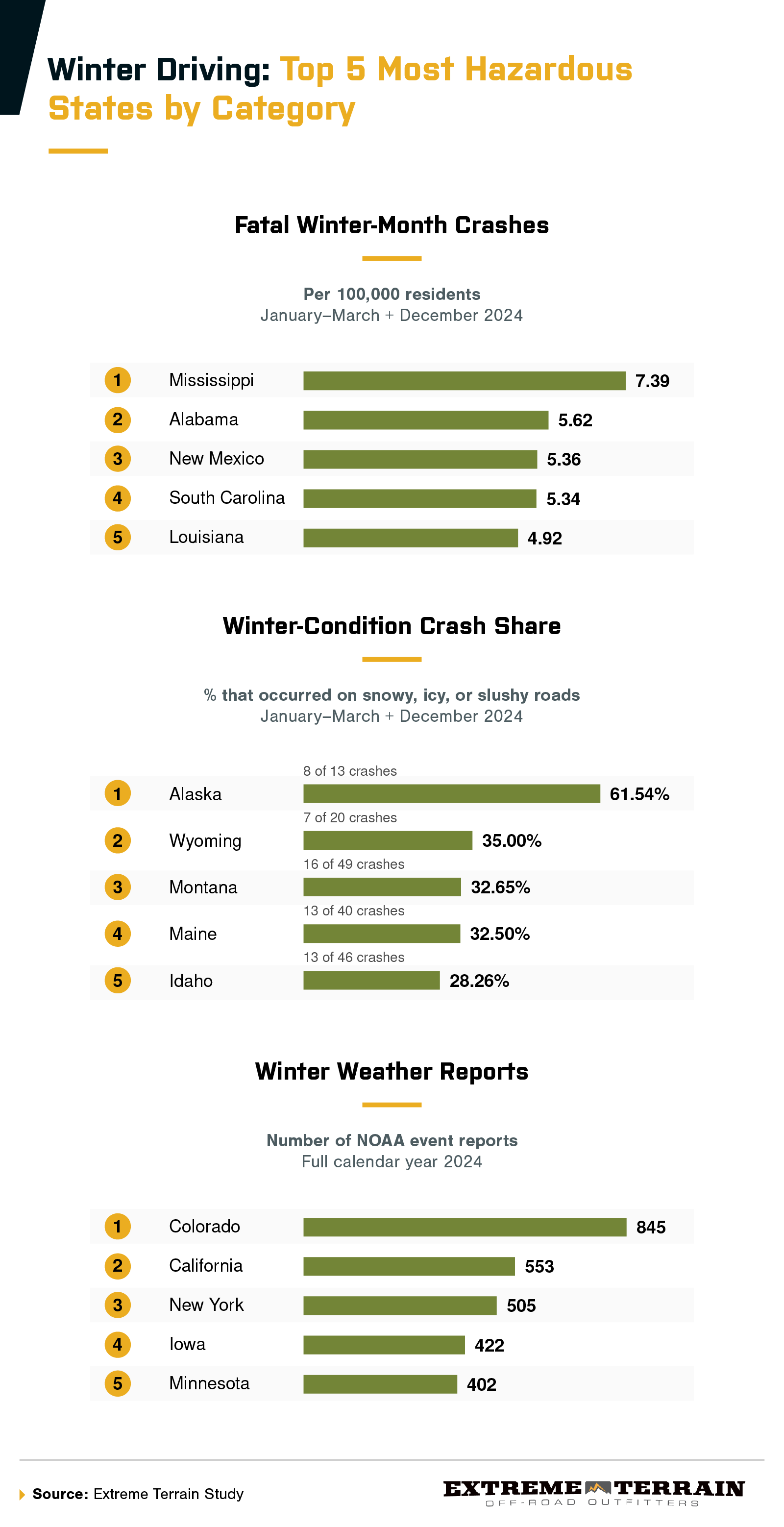
Mississippi leads in winter-month fatal crashes per capita, at 7.39 per 100,000 residents, followed by Alabama (5.62) and New Mexico (5.36). These states had the most fatal crashes from December to March. Rhode Island had the fewest, at 0.90 per 100,000, followed by Massachusetts (1.32) and New York (1.41).
Winter conditions are most often a factor in western and mountainous states. In Alaska, 61.5% of fatal winter crashes involved snow, ice, or slush on the road. Wyoming followed at 35%, then Montana and Maine (both at roughly 33%).
Colorado leads in reported winter-weather events, with 845 NOAA reports in 2024. California followed with 553 and New York with 505.
No matter the conditions, tires, wheels, and suspension are the first parts of a vehicle to meet a slick road. Worn tires or tired suspension on an older vehicle matter far more in December than July.
Staying Ahead of Winter
The states at the top of this ranking face the harshest conditions, but the per-capita results show that risk isn't limited to them. For drivers in any state that sees snow, ice, or slush, checking tire tread, tire pressure, and suspension before the first storm is a simple way to cut the odds of a bad day. Drivers who tackle trails and mountain passes year-round have a particular reason to do it.
Methodology
We ranked all 50 states, using three measures: fatal crashes during January–March and December 2024 per 100,000 residents; the percentage of those crashes involving snowy, icy, or slushy roads; and NOAA winter-weather event reports across the full 2024 calendar year.
Crash data came from NHTSA's Fatality Analysis Reporting System, with each crash counted once, and population figures came from the Census Bureau's July 1, 2024 estimates, Vintage 2025. NOAA totals included 12 winter-weather categories covering snow, ice, cold, and related conditions; these are event reports, not unique storms or all snowy days. Each measure was scaled from 0 to 100 using min–max normalization, then the three scores were averaged with equal weights. Higher scores indicate greater winter driving danger within this index, rather than a driver's risk per trip.
About Extreme Terrain
Extreme Terrain is a premier retailer specializing in Jeep parts and accessories for trail-ready builds. From daily drivers to weekend rigs, Extreme Terrain offers wheels and tires for 4x4 vehicles built to handle rough terrain, mud, rocks, and everything in between.
Fair Use Statement
Information from this article may be shared for noncommercial purposes only. If you do use or reference this content, please include a link back to Extreme Terrain for proper attribution.