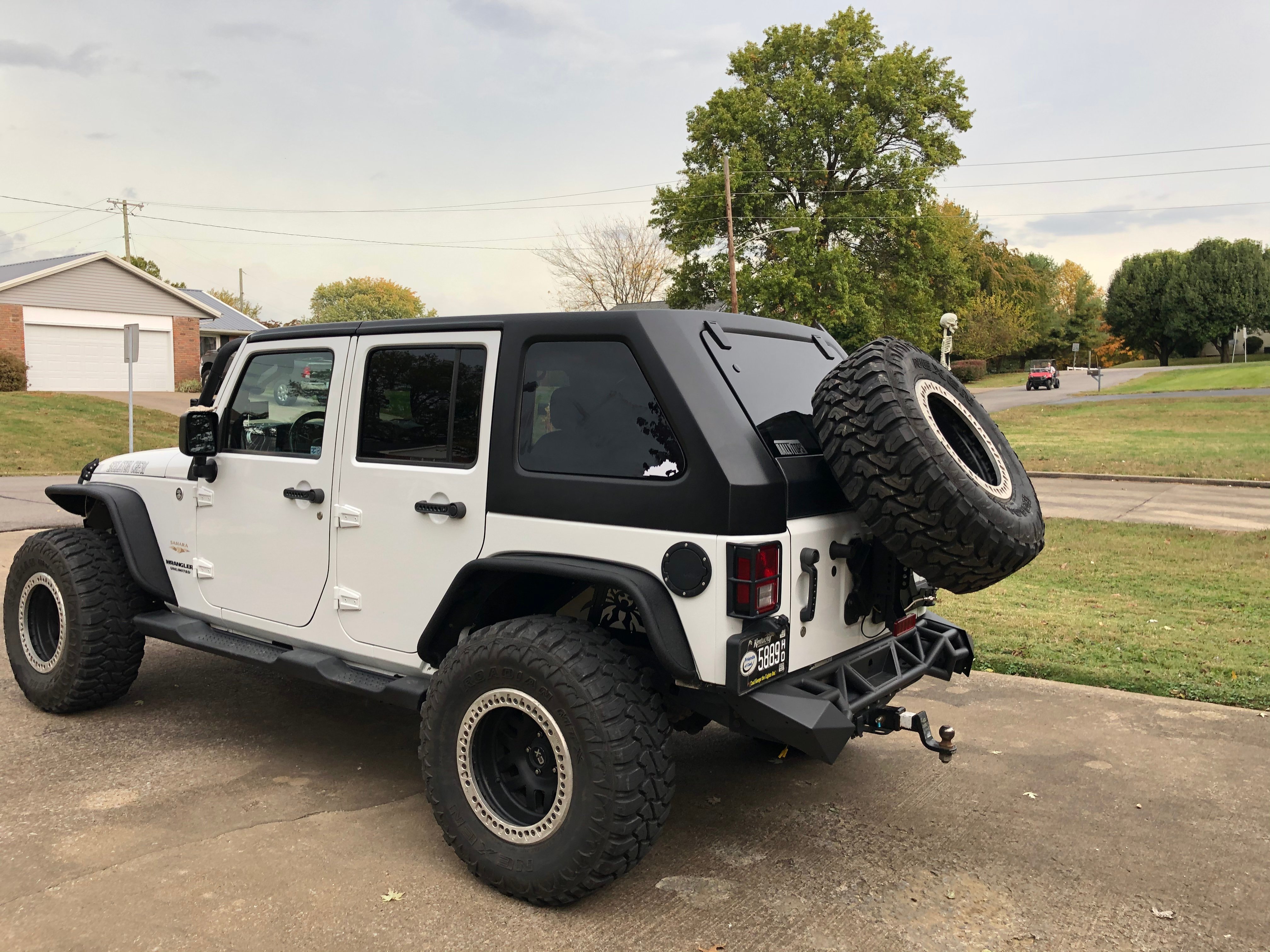
Your Jeep Wrangler's hardtop is one of the heaviest single components you will regularly remove, and getting it wrong can mean scratched paint, cracked glass, or a trip to the chiropractor. Whether you are pulling your top for the first time or you have done it every spring for a decade, this guide covers everything you need to know: how much your hardtop actually weighs by generation, the safest removal methods, the best storage solutions for your garage, and a head-to-head comparison of aftermarket hardtop brands from Smittybilt to Patriot Fastbacks. Ready to make your next hardtop swap smoother and safer? Let's get into it.
How Much Does a Jeep Hardtop Weigh?
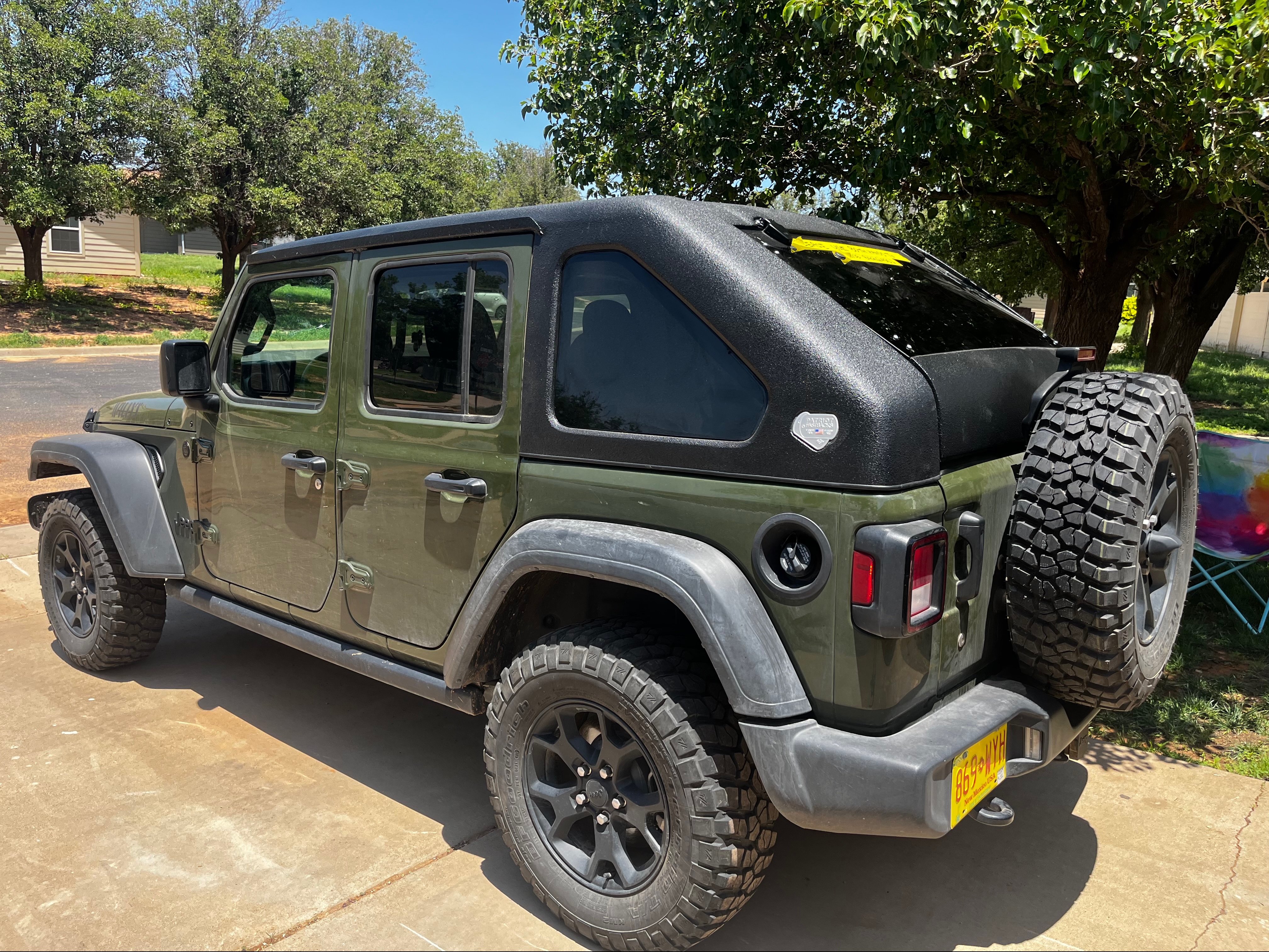
A factory Jeep Wrangler hardtop weighs between 80 and 140 pounds depending on the generation, door count, and whether Freedom Panels are included.
If you have ever tried to wrestle a hardtop off your Wrangler by yourself, you already know that weight matters. But how much does your specific top actually weigh? The number depends on which generation you are working with and whether you are driving a two-door or an Unlimited. Here is a breakdown of approximate hardtop weights across every modern Wrangler platform.
Hardtop Weight by Generation
| Generation |
Configuration |
Approx. Weight |
| TJ (1997–2006) |
2-door |
~80–90 lbs |
| JK (2007–2018) |
2-door |
~90–100 lbs |
| JK (2007–2018) |
4-door (JKU) |
~100–120 lbs |
| JL (2018–2026) |
2-door |
~85–95 lbs |
| JL (2018–2026) |
4-door (JLU) |
~100–140 lbs |
| Freedom Panels |
Per panel |
~15 lbs each |
If you are shopping for Jeep Wrangler hardtops, keep these weights in mind. The numbers above apply to OEM factory hardtops. Aftermarket options, especially raised-roof and fastback designs, can weigh significantly more.
Looking for a TJ hardtop? The TJ generation is the lightest of the bunch, making removal and storage simpler than any other platform.
Why Weight Matters for Removal and Storage
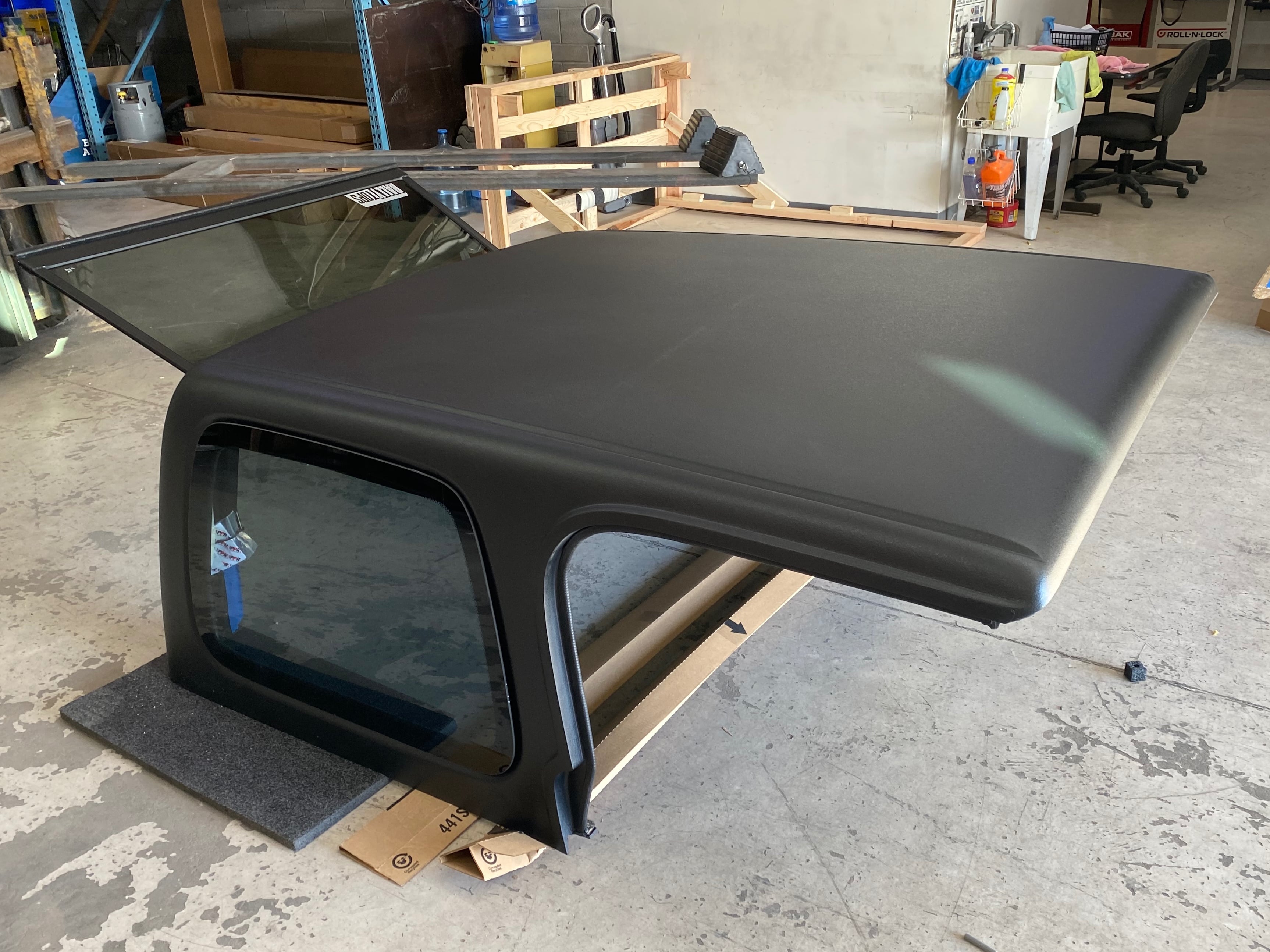
Hardtop weight directly affects two decisions you will face every spring and fall: how you get the top off and where you keep it during the off-season.
- Two-person lift threshold. Most adults can safely handle one end of an 80-pound TJ hardtop. A 140-pound JLU top is a different story. Anything above 100 pounds is best handled with a hoist.
- Storage stress. A heavier top puts more strain on wall-mounted brackets and requires sturdier ceiling-hoist hardware. Factor in the weight when choosing your storage solution.
- Vehicle impact. Removing a 100-plus-pound hardtop can improve your power-to-weight ratio on the trail and lowers your center of gravity, which helps on off-camber terrain.
How to Remove a Jeep Hardtop
Removing a Jeep hardtop safely requires either a second person or a mechanical hoist. Budget at least 20 minutes your first time and have all your hardware organized before you start.
Do you swap your top solo or with a helper? Whether this is your first removal or you have done it a dozen times, the process is the same: disconnect the wiring, unbolt the hardware, and lift. Where things differ is how you handle the lift itself. Below are two proven methods.
For a detailed walkthrough with generation-specific bolt locations, check out our guide on how to remove a Jeep hard top.
Two-Person Removal Method
- Park on level ground and remove the Freedom Panels first. Pop the latches above the driver and passenger seats, lift each panel straight up, and set them aside on a padded surface. At roughly 15 pounds each, Freedom Panels are easy to handle solo.
- Disconnect the rear wiper and defroster wiring harness. Open the tailgate, locate the wiring connector near the top of the liftgate opening, and unplug it. On JL models, there may be an additional connector for the rear washer line.
- Remove the Torx bolts along each side. JK models use six T-40 or T-50 Torx bolts (three per side). JL models use eight bolts total. Keep them in a labeled bag so you know exactly where they go back.
- Loosen or remove the rear window seal bolts if applicable. Some tops have additional hardware along the rear crossbar. Check your specific model before lifting.
- Position one person on each side. Grip the top at the rear corners near the tailgate. Lift straight up, then walk backward together to clear the windshield frame and roll bar.
- Set the top on a padded surface. A moving blanket on the garage floor works in a pinch, but a rolling cart or hoist cradle is better for long-term protection.
Using a Hardtop Hoist
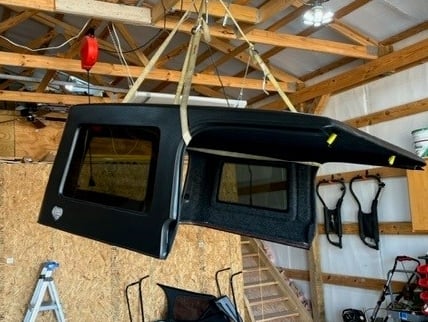
If you swap your top more than once or twice a year, a hoist is one of the best investments you can make. You get the top off solo in about 10 minutes, and it stays safely out of the way until you need it again.
- Manual crank hoist. The RedRock Manual Hard Top Hoist runs around $77 and uses a simple pulley system with nylon straps. You crank the top up to the ceiling and lock it in place. Affordable and reliable, but requires some effort on the crank.
- Power hoist with remote. The Lange Originals Power Hoist-a-Top costs around $550 and lets you raise and lower your hardtop with a wireless remote. If you are pulling your top on and off regularly, the convenience is hard to beat.
Both hoist styles mount to your garage ceiling joists and support hardtops up to 200 pounds, which covers every generation from TJ through JLU. If you are not sure which hoist setup works for your garage, our Sales Techs have hands-on experience with these products and can help you pick the right one.
Hardtop Storage Solutions
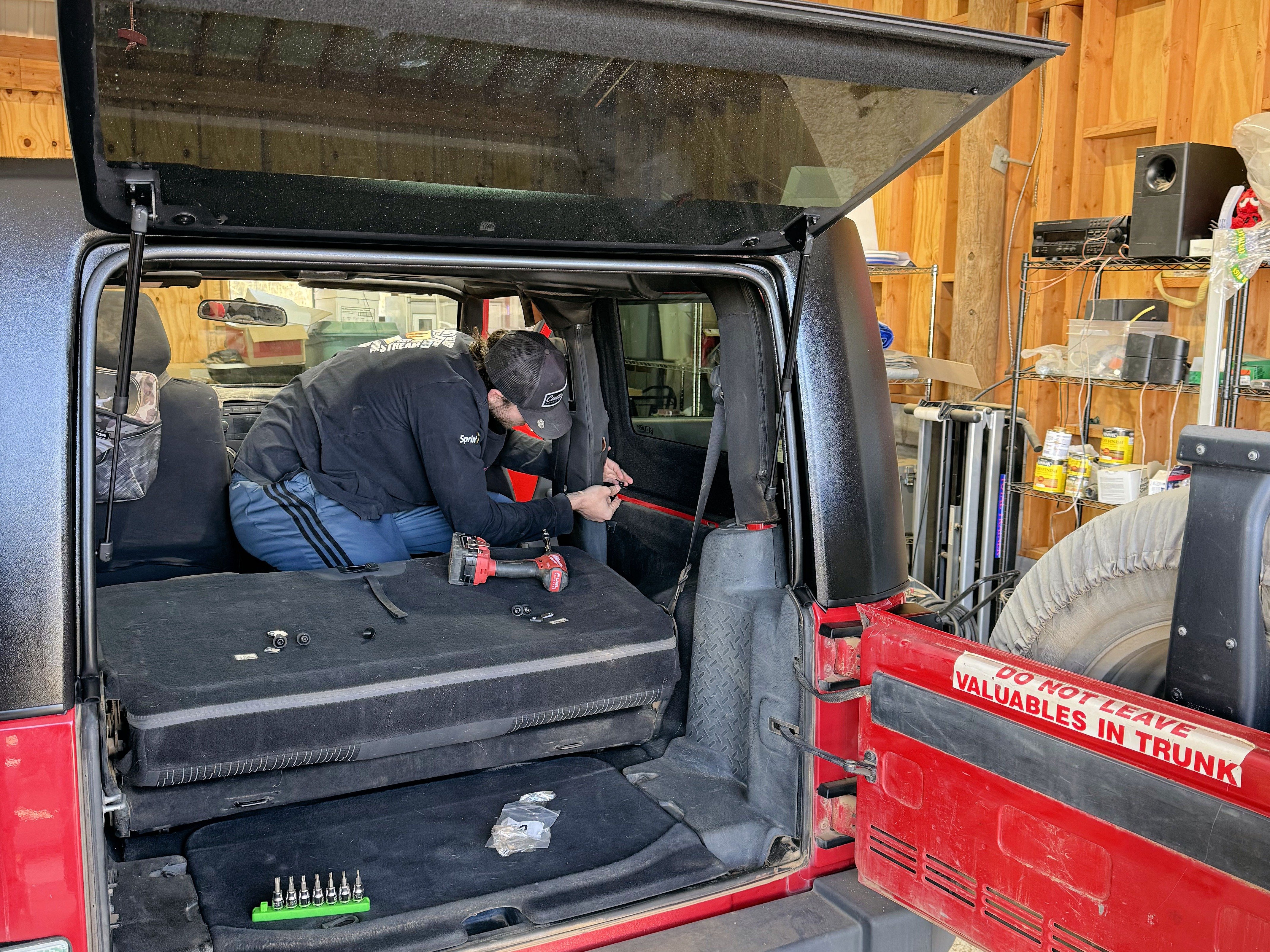
The three most popular Jeep hardtop storage methods are ceiling hoists, rolling carts, and wall-mounted brackets. Your best choice depends on garage space, budget, and whether you work alone.
Once your top is off, where are you going to put 80 to 140 pounds of fiberglass until next season? Leaning it against the garage wall is a recipe for scratches and cracks. How much garage space are you working with? Here are three purpose-built options with a comparison table to help you decide.
For more garage setup ideas, read our article on ideas for storing your Jeep hard top.
Ceiling Hoist
A ceiling hoist lifts your hardtop out of the way and keeps your floor space clear. If you are working in a single-car garage, this is often the only practical option.
- Price range: $75 (manual crank) to $550 (powered with remote)
- Pros: Frees up floor and wall space. Solo-friendly. Top stays safely overhead and out of reach of pets, kids, and stray bumps.
- Cons: Requires solid ceiling joists. Not ideal for garages with low ceilings or finished drywall without blocking.
- Best for: Owners who swap their top frequently and want a one-person solution.
Rolling Hardtop Cart
A dedicated rolling cart lets you wheel your top around the garage and park it out of the way. Most carts have padded cradles that support the top at the correct angle.
- Price range: $100–$200
- Pros: Portable. Easy to roll out of the way. No installation or ceiling work.
- Cons: Takes up floor space. You still need a second person to lift the top onto the cart.
- Best for: Garages with plenty of floor space and someone to help with the initial lift.
Wall-Mounted Bracket
Wall brackets hold your hardtop vertically against the wall, splitting the difference between floor space and ceiling clearance.
- Price range: $50–$150 (the Lange Originals Wall Storage unit runs around $95)
- Pros: Keeps the top off the floor without ceiling access. Relatively inexpensive.
- Cons: Requires wall studs rated for the load. You need a helper to lift the top into position. Can take up significant wall real estate.
- Best for: Garages where ceiling mounting is not an option and you have an open wall section.
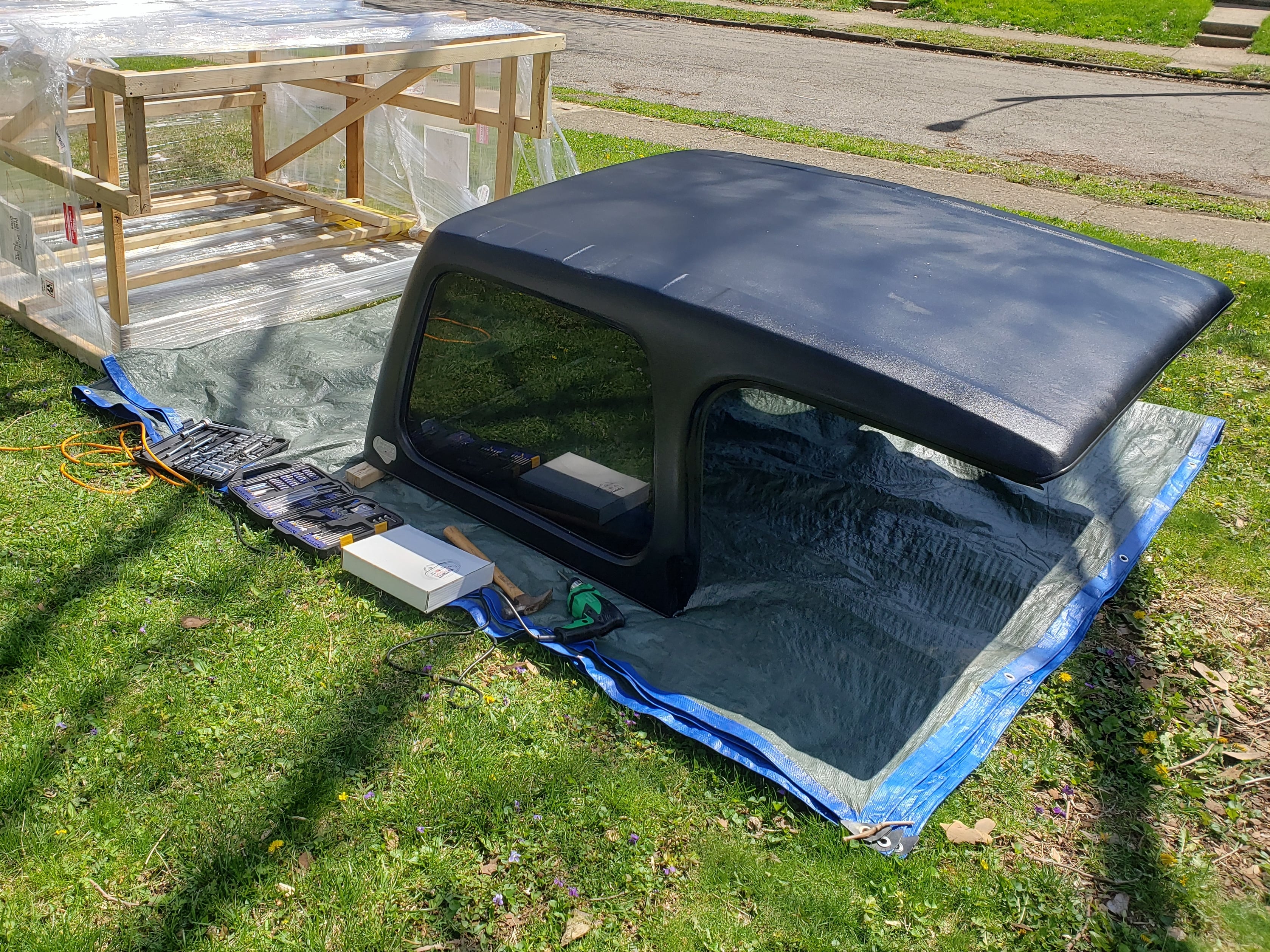
Storage Solutions Comparison
| Method |
Price Range |
Space Needed |
Solo-Friendly |
| Ceiling Hoist |
$75–$550 |
Overhead |
Yes |
| Rolling Cart |
$100–$200 |
Floor space |
No (need to lift onto cart) |
| Wall Mount |
$50–$150 |
Wall space |
No |
Aftermarket Jeep Hardtop Brand Comparison
Aftermarket Jeep hardtops range from budget-friendly raised-roof designs under $1,000 to premium fastback shells over $4,000. Your best pick depends on generation, style preference, and how much cargo and headroom you need.
The stock hardtop works fine for most daily driving, but what if you want extra headroom, a sleeker profile, or more cargo capacity? What matters most to you — cargo space, style, or budget? Here is a breakdown of the top brands available on ExtremeTerrain to help you decide.
Smittybilt Safari Hardtop
The Smittybilt Safari is one of the most recognizable aftermarket hardtops in the Jeep world, and for good reason. It is a one-piece fiberglass construction with a honeycomb core that delivers 5.5 inches of additional headroom compared to the stock top. For taller drivers or anyone hauling oversized gear, that extra space changes the game.
- Fitment: JK Wrangler only (2007–2018)
- Part numbers: SB-517702 (2-door), SB-518702 (4-door Unlimited)
- Weight: Approximately 320 lbs (Unlimited version)
- Roof height: 5.5 inches above stock
- Cargo space: 14.25 extra cubic feet on the four-door model
- Glass: DOT-legal safety glass with 31% tint on portal windows
- Finish: UV-stable gel coat with textured grain, available in black
- Interior: Military-spec mildew-free carpeted headliner
- Rear window: Opens outward with gas-charged lift struts
- Price: Approximately $900
The Safari is heavier than a factory top, so plan on using a hoist for removal. But at around $900, it is significantly less expensive than fastback alternatives and adds more usable interior volume than any other option on this list.
Pair the Safari with the right supporting mods from our Jeep JK accessories and parts catalog.
OEM/Mopar Factory Hardtop
If your factory top has seen better days, a Mopar replacement is the simplest swap. You get the same fit, the same seal points, and a factory-matched paint option that keeps your Wrangler looking stock.
- Fitment: All generations (TJ, JK, JL)
- Style: Factory standard
- Price range: $2,000–$3,000
- Key advantage: Exact factory fit and paint-matched finish
OEM tops are a straightforward replacement, but they do not add headroom, cargo space, or any visual upgrade. If you want something that changes the look or function of your rig, the aftermarket options below are worth considering.
DV8 Offroad Hardtops
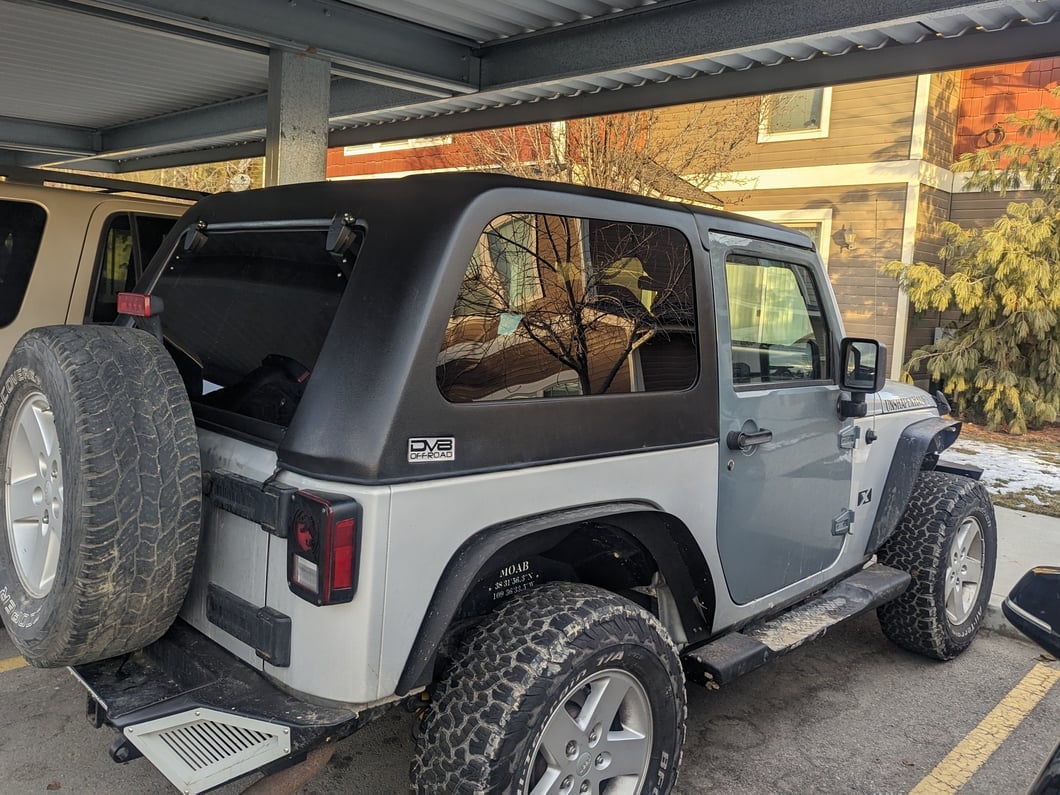
DV8 Offroad offers two fastback profiles: the Ranger Fastback and the Razor Fastback. Both deliver a low-slung, aggressive profile that completely changes the look of your Wrangler.
- Fitment: JK (2007–2018) and JL (2018–2026)
- Styles: Ranger Fastback, Razor Fastback
- Price range: $3,200–$3,700 (JK), $3,500–$4,000 (JL)
- Key advantage: Sleek, low-profile design that stands out on the trail and in the parking lot
DV8 fastbacks trade some headroom for style. If you are prioritizing looks over cargo volume, these are a strong choice. Browse more Jeep JL parts and accessories to complement the build.
Rugged Ridge Fastback
Rugged Ridge offers a streamlined fastback design for the JK generation. The roof line tapers smoothly from the windshield to the tailgate, giving the Wrangler a more modern silhouette.
- Fitment: JK (2007–2018)
- Style: Fastback
- Price range: Approximately $3,000
- Key advantage: Clean, streamlined profile with proven Rugged Ridge build quality
Patriot Fastbacks
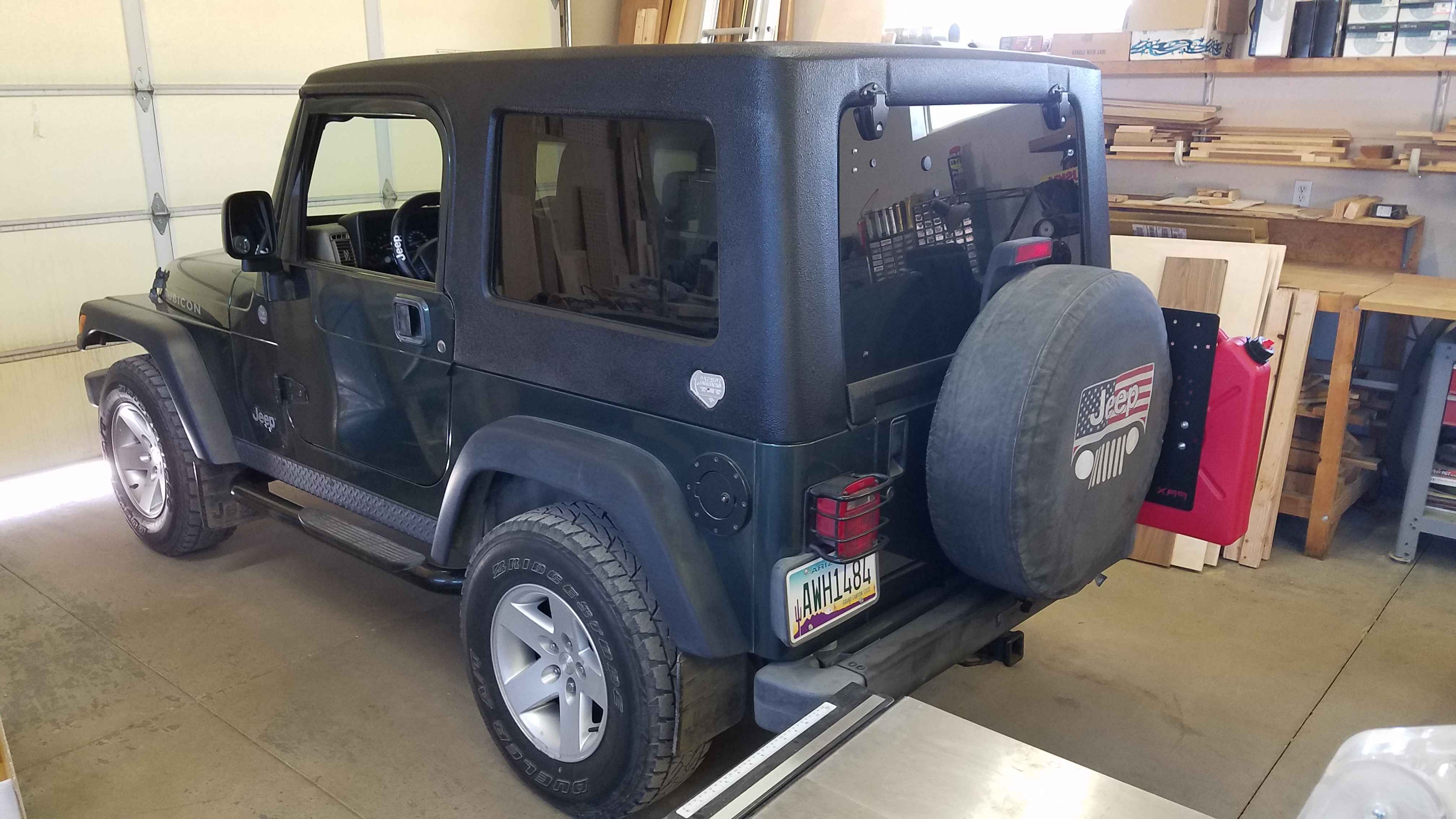
Patriot Fastbacks is a premium brand that offers more styles than any other manufacturer on this list. Whether you want a surf-rack-ready Surfrider, a cargo-hauling Guardian, or an armored Sentry, Patriot has a purpose-built option.
- Fitment: TJ (1997–2006), JK (2007–2018), JL (2018–2026)
- Styles: Surfrider, Guardian, Sentry, Recon, Victory
- Price range: $2,950–$3,895 (TJ), $3,289–$4,375 (JK), $3,881+ (JL)
- Key advantage: Broadest style lineup and widest generation coverage in the aftermarket
Patriot Fastbacks sit at the top of the aftermarket price range, but the build quality and style variety justify the premium for owners who want a truly custom look.
Not sure which hardtop brand fits your build? Our Sales Techs are real enthusiasts who can walk you through fitment, pricing, and style options for your specific generation — no scripts, just real experience.
Aftermarket Hardtop Brand Comparison
| Brand |
Generations |
Style |
Price Range |
Key Feature |
| OEM/Mopar |
All |
Factory |
$2,000–$3,000 |
Paint-matched factory fit |
| Smittybilt Safari |
JK |
Raised roof |
~$900 |
Extra headroom and cargo space |
| DV8 Offroad |
JK, JL |
Fastback |
$3,200–$4,000 |
Sleek, aggressive profile |
| Rugged Ridge |
JK |
Fastback |
~$3,000 |
Streamlined design |
| Patriot Fastbacks |
TJ, JK, JL |
Multiple |
$2,950–$4,375 |
Broadest style lineup |
Seasonal Swap Considerations
Most Wrangler owners run a hardtop through winter and switch to a soft top or bikini top once the weather warms up. Timing that swap right makes the process easier and protects your top from unnecessary wear.
When to Swap
The ideal swap windows are mid-spring and mid-fall, when temperatures are mild and rain is less likely to catch you mid-removal. Avoid swapping in direct summer sun because the top surface gets hot enough to make handling uncomfortable, and the seal surfaces can soften.
- Spring (March–April): Remove the hardtop and switch to a soft top or bikini for open-air driving.
- Fall (October–November): Reinstall the hardtop before freezing temperatures, snow, and road salt arrive.
Why Run a Hardtop in Winter
A hardtop outperforms a soft top in cold weather on every practical measure.
- Insulation: A hardtop holds heat significantly better, reducing heater load and keeping the cabin comfortable.
- Noise: Road noise drops noticeably with a rigid top versus a fabric one, especially at highway speeds.
- Security: A hardtop is far harder to break into than a zippered soft top, which matters if you park in public lots.
- Snow and ice: Hard surfaces shed snow and ice more easily, and you do not risk the weight of accumulated snow collapsing a fabric panel.
Why Run a Soft or Bikini Top in Summer
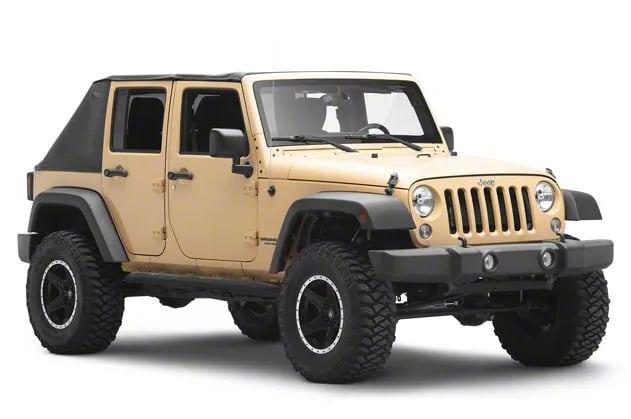
When the sun is out and the trails are dry, nothing beats the open-air experience of a Wrangler without its hardtop.
- Weight savings: Dropping 80 to 140 pounds off the top of your rig improves acceleration and handling.
- Open-air driving: A bikini top gives you sun protection without the boxed-in feel of a full top.
- Easier removal: Soft tops and bikini tops can come on and off in minutes without a hoist or helper.
Not sure which top style is right for your warm-weather setup? Compare hard vs bikini vs soft tops or explore the full range of types of Jeep Wrangler tops to find the right fit for your driving style.
Frequently Asked Questions About Jeep Hardtops
Whether you are weighing your removal options or shopping for an aftermarket hardtop, these common questions cover the essentials every Wrangler owner should know.
How Much Does a Jeep Wrangler Hardtop Weigh?
A factory Jeep Wrangler hardtop weighs between 80 and 140 pounds depending on the generation and door count. Two-door models like the TJ and JK weigh roughly 80 to 100 pounds, while four-door JKU and JLU hardtops range from 100 to 140 pounds. Freedom Panels add about 15 pounds each.
Can One Person Remove a Jeep Hardtop?
Removing a Jeep hardtop solo is possible with a ceiling-mounted hoist or a dedicated hardtop lift, but it is not recommended without mechanical assistance. The rear section alone weighs 80 to 110 pounds and is bulky enough to risk dropping. A two-person lift or hoist is the safest approach.
How Do You Store a Jeep Hardtop?
The most popular storage options are a garage ceiling hoist, a rolling hardtop cart, or a wall-mounted bracket. Ceiling hoists save floor space and keep the top safely overhead. Rolling carts let you wheel the top around your garage. Whichever method you choose, store on a padded surface to prevent scratches.
Is a Jeep Hardtop Better Than a Soft Top?
Hardtops provide superior insulation, reduced road noise, better security, and a more finished appearance. Soft tops are lighter, easier to remove solo, more affordable, and fold down for storage. Most owners in cold climates prefer a hardtop for winter and switch to a soft or bikini top for summer driving.
How Much Does It Cost to Add a Hardtop to a Jeep Wrangler?
Aftermarket Jeep hardtops range from approximately $1,500 for a basic factory-style replacement to over $4,000 for premium fastback designs from brands like DV8, Patriot Fastbacks, or Rugged Ridge. OEM replacement hardtops from Mopar typically run between $2,000 and $3,000 depending on availability and generation.
How Long Does a Jeep Hardtop Last?
A well-maintained Jeep hardtop can last 10 years or more. Fiberglass and ABS hardtops resist dents and corrosion but can develop hairline cracks from UV exposure over time. Regular waxing, storing out of direct sunlight when removed, and avoiding pressure washers on seals will extend the life of your top.
What Is the Smittybilt Safari Hardtop?
The Smittybilt Safari Hardtop is an aftermarket one-piece fiberglass hardtop designed for JK Wranglers. It features overhead portal windows, 5.5 inches of additional headroom, 14.25 extra cubic feet of cargo space on four-door models, and a honeycomb core construction that keeps weight at approximately 320 pounds for the Unlimited version.
Do I Need a Hoist to Remove My Jeep Hardtop?
If you remove your hardtop more than once or twice per year, a hoist is a worthwhile investment. Manual crank hoists start around $75 and power hoists with wireless remotes run up to $550. The time and effort savings, combined with reduced risk of scratching or dropping the top, make a hoist the safest long-term option.