Whether you just picked up a project CJ-7 or you are trying to verify the factory specs on a numbers-matching CJ-5, your Vehicle Identification Number is the single best source of truth. Every Jeep CJ built between 1971 and 1986 carries a VIN that encodes the model, engine, transmission, year, and more into a short string of letters and numbers. The catch? The format changed significantly in 1981, and the codes themselves shifted across production years. Not sure what engine or transmission your CJ left the factory with? This Jeep CJ VIN decoder guide breaks down every character, position by position, so you can identify exactly what your rig rolled off the line with.
Where to Find the VIN on a 1971-1986 Jeep CJ
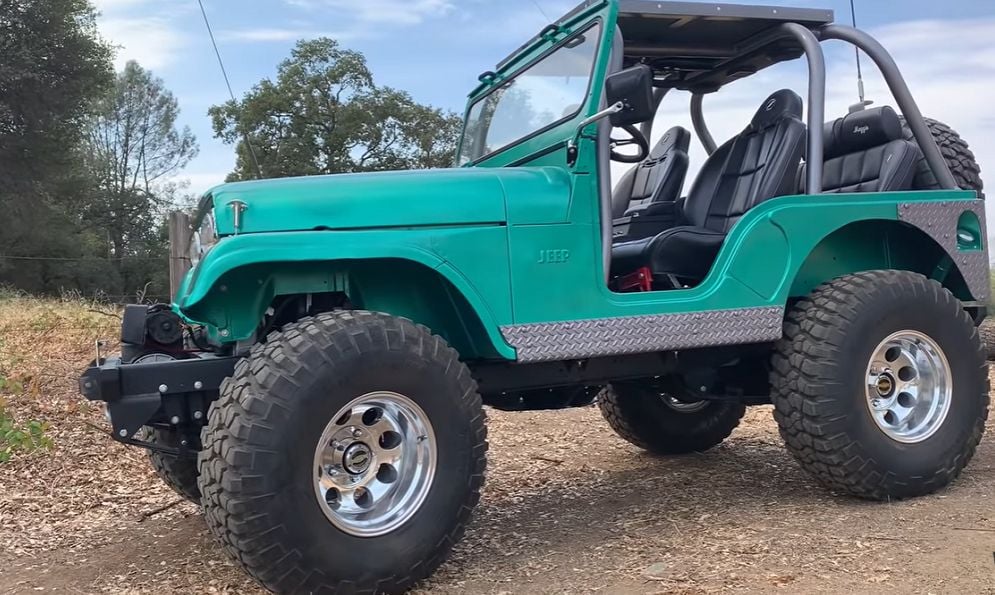
The VIN on a 1971-1986 Jeep CJ is located on a stamped tin plate on the driver's side firewall, typically near the brake master cylinder. Additional VIN locations include the driver's side dash, the inside body panel near the parking brake lever, the windshield wiper motor cover (mid-1980s models), and an abbreviated VIN on the passenger-side frame rail above the rear wheel.
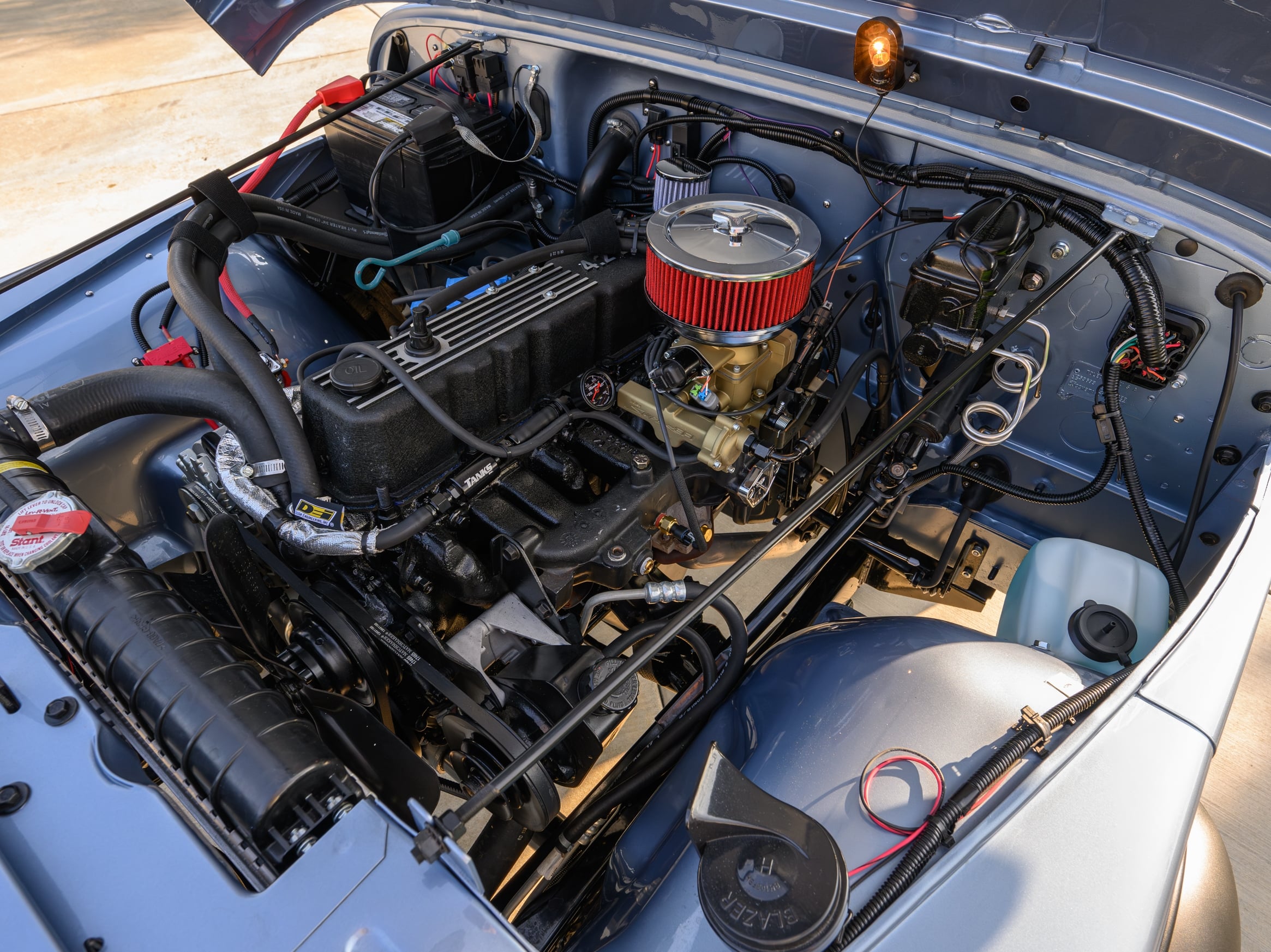
If you are crawling under the hood for the first time, start on the driver's side firewall. Look near the brake master cylinder for a small riveted tin plate. This is the primary VIN location on all 1971-1986 CJ models, and it is the plate that carries the full, unabbreviated number you will need for registration, insurance, and parts ordering.
You may also find a VIN on the driver's side dash or stamped into the inside body panel near the parking brake lever on the floor. On mid-1980s models (generally 1984-1986 CJ-7s and CJ-8 Scramblers), look for an additional plate on the windshield wiper motor cover inside the cab.
There is also an abbreviated VIN stamped on the top of the passenger-side frame rail above the rear wheel. This partial number is useful for quick identification but typically does not include every character you need for a full decode.
Tin Plate vs. Stamped VIN
The firewall tin plate is a separate riveted tag that can, unfortunately, be removed or replaced. If you are inspecting a CJ for purchase, compare the tin plate VIN to the frame-stamped number to make sure they match. A mismatch can indicate a replaced body, a salvage swap, or other title issues. The frame stamping is much harder to alter, which makes it the more reliable reference when numbers do not agree.
Pre-1981 vs. Post-1981 VIN Format: What Changed
Pre-1981 Jeep CJ VINs use a 13-character format created by Jeep Corporation (later AMC). Starting with the 1981 model year, the National Highway Traffic Safety Administration (NHTSA) required all vehicles sold in the United States to use a standardized 17-character VIN, which is the same format still used today.
This is the single biggest thing you need to understand before decoding any CJ VIN. If your VIN has 13 characters, you have a 1971-1980 model that follows Jeep's proprietary format. If it has 17 characters, you have a 1981-1986 model that follows the federal standard.
The two formats organize information differently. In the pre-1981 system, the model year is the second character and the engine code sits at position eight. In the post-1981 system, the model year moves to position ten, and the engine code shifts to position four. The positions, the codes, and even what information is included all changed, so you cannot decode a 1978 VIN the same way you would decode a 1983 VIN.
Why This Matters for CJ Owners
- Parts ordering: Many parts suppliers ask for VIN-based lookups. Knowing whether you have a 13- or 17-character VIN helps you provide the right information and avoid wrong-year parts.
- Registration and insurance: Some DMV offices and insurance databases have trouble processing 13-character VINs because their systems are built for the 17-character standard. Having the full decode on hand can save you time at the counter.
- Buying and selling: If you are shopping for a CJ, decoding the VIN before you show up with cash tells you whether the seller's claims about the engine, model year, and trim match what the factory actually installed.
For CJ models built before 1971, the VIN format is different again. Check out the 1955-1971 Jeep CJ VIN decoder for those earlier vehicles. And for a broader look at how Jeep VINs fit into the brand's full history, see the Jeep history timeline.
1971-1974 Jeep CJ VIN Decoder Table
The 1971-1974 Jeep CJ VIN is a 13-character code. During this era, only the CJ-5 and CJ-6 were in production. The CJ-7 would not arrive until 1976. Here is what each position means.
|
Position
|
Description
|
Values
|
|
1st
|
Make
|
J = Jeep
|
|
2nd
|
Model Year
|
1 = 1971, 2 = 1972, 3 = 1973, 4 = 1974
|
|
3rd
|
Plant / Transmission
|
A = Toledo, Auto/LHD | F = Toledo, 3-Speed/LHD | M = Toledo, 4-Speed/LHD
|
|
4th & 5th
|
Model
|
83 = CJ-5 | 84 = CJ-6
|
|
6th
|
Body Type
|
5 = Open Body
|
|
7th
|
GVW (Gross Vehicle Weight)
|
R = 4,750 lbs | S = 4,500 lbs | T = 3,750 lbs
|
|
8th
|
Engine
|
A = 258ci Std | B = 258ci Low Comp | E = 232ci Std | F = 232ci Low Comp | H = 304ci V8 Std
|
|
9th-13th
|
Sequential Serial Number
|
5-digit production sequence (e.g., 00001)
|
Reading a 1971-1974 VIN: Example
Take the VIN J2F83-5-T-A-10045. Breaking it down: J = Jeep, 2 = 1972 model year, F = Toledo plant with 3-speed manual, 83 = CJ-5, 5 = open body, T = 3,750-lb GVW, A = 258ci inline-6 standard compression, and 10045 = sequential serial number. In about five seconds, you know this is a 1972 CJ-5 with a 258ci six-cylinder and a 3-speed manual transmission.
Engine Notes for 1971-1974
Three engines were available during this era. The 232ci (3.8L) AMC inline-6 was the base engine, offering dependable power for trail use. The 258ci (4.2L) AMC inline-6 was the step-up option and the engine most CJ-5 buyers chose. The 304ci (5.0L) AMC V8 was the performance option, delivering significantly more torque but also adding weight over the front axle. The "low compression" variants (codes B and F) were designed to run on lower-octane fuel that became common during the early 1970s emissions transitions.
1975-1980 Jeep CJ VIN Decoder Table
The 1975-1980 era brought significant changes to the CJ lineup. The CJ-7 debuted in 1976, the CJ-6 was discontinued after 1975, and engine options evolved with new emissions requirements. The VIN format stays at 13 characters but the position assignments shift slightly from the 1971-1974 layout.
|
Position
|
Description
|
Values
|
|
1st
|
Make
|
J = Jeep Corporation
|
|
2nd
|
Model Year
|
5 = 1975, 6 = 1976, 7 = 1977, 8 = 1978, 9 = 1979, 0 = 1980
|
|
3rd
|
Transmission
|
A = Automatic | F = 3-Speed Manual | M = 4-Speed Manual
|
|
4th & 5th
|
Model
|
83 = CJ-5 | 84 = CJ-6 (1975 only) | 93 = CJ-7 (1976+)
|
|
6th
|
GVW (Gross Vehicle Weight)
|
A = 3,750 lbs | E = 4,150 lbs
|
|
7th
|
Engine
|
A = 258ci 1-Barrel | C = 258ci 2-Barrel | E = 232ci 1-Barrel | H = 304ci 2-Barrel V8
|
|
8th-13th
|
Sequential Serial Number
|
6-digit production sequence (e.g., 000001)
|
Key Changes in This Era
Notice that the body type position from the 1971-1974 format is gone. The GVW rating moved up to position six, and the engine code shifted from position eight to position seven. Also note that the serial number expanded from five digits to six, reflecting higher production volumes.
The introduction of the CJ-7 in 1976 is the headline change. Identified by model code 93, the CJ-7 brought a longer wheelbase, the option for a factory hardtop, and the Quadra-Trac full-time four-wheel drive system. If your 1976-1980 VIN shows "93" in positions four and five, you have a CJ-7.
Engine Notes for 1975-1980
Pay close attention to the difference between engine codes A and C. Both represent the 258ci inline-6, but code A indicates the 1-barrel carburetor version while code C indicates the 2-barrel version. The 2-barrel setup produces noticeably more power and is generally the more desirable option if you are buying. The 232ci inline-6 (code E) was phased out during this period, and the 304ci V8 (code H) remained available with a 2-barrel carburetor.
By 1980, AMC also introduced the GM-sourced 151ci (2.5L) Iron Duke 4-cylinder as a base engine option on some CJ models. This engine does not always appear in the VIN code chart for the 13-character format because it overlaps with the transition to the 17-character system in 1981.
1981-1986 Jeep CJ VIN Decoder Table
Starting in 1981, all Jeep CJ VINs switched to the 17-character NHTSA-standardized format. This format adds a country code, manufacturer identifier, vehicle type, check digit, and assembly plant code that did not exist in the earlier 13-character system. The 17-character format is also used by every other vehicle manufacturer, which makes post-1981 CJ VINs much easier to look up in modern databases.
|
Position
|
Description
|
Values
|
|
1st
|
Country of Origin
|
1 = United States
|
|
2nd
|
Manufacturer
|
J = Jeep (AMC)
|
|
3rd
|
Vehicle Type
|
C = Multi-Purpose Vehicle (MPV) | E = Export LHD | F = Export RHD
|
|
4th
|
Engine
|
B = 151ci (2.5L) 4-Cyl | C = 258ci (4.2L) I-6 | H = 304ci (5.0L) V8 | L = 232ci (3.8L) I-6 | F = Isuzu C240 Diesel
|
|
5th
|
Transmission
|
A = Auto Column Shift | B = Auto Floor Shift | M = 4-Speed Manual | N = 5-Speed Manual
|
|
6th & 7th
|
Model
|
85 = CJ-5 | 87 = CJ-7 | 88 = CJ-8 Scrambler
|
|
8th
|
GVW (Gross Vehicle Weight)
|
A = 3,750 lbs | E = 4,150 lbs
|
|
9th
|
Check Digit
|
Calculated verification digit (0-9 or X)
|
|
10th
|
Model Year
|
B = 1981, C = 1982, D = 1983, E = 1984, F = 1985, G = 1986
|
|
11th
|
Assembly Plant
|
T = Toledo, Ohio
|
|
12th-17th
|
Sequential Serial Number
|
6-digit production sequence (e.g., 000001)
|
Understanding the Check Digit (Position 9)
The ninth character is not a code you look up in a table. It is a mathematically calculated check digit based on a formula applied to the other 16 characters in the VIN. Its purpose is fraud prevention. If someone alters any character in the VIN, the check digit will no longer match the recalculated value, flagging the VIN as potentially tampered. When you are buying a CJ, you can verify the check digit yourself using the NHTSA's published algorithm, or use any free online VIN check tool to confirm the number is valid.
The CJ-8 Scrambler Arrives
The 1981-1986 decoder table introduces model code 88 for the CJ-8 Scrambler. Built from 1981 to 1985, the Scrambler combined the CJ-7's front end with a longer pickup-style bed and a 103.4-inch wheelbase. Only 27,792 CJ-8 Scramblers were produced, making them one of the most collectible Jeep models. If you see "88" in positions six and seven, you have a Scrambler.
The Diesel Option (Code F)
Engine code F in position four identifies the Isuzu C240 diesel, a 2.4-liter (145ci) naturally aspirated four-cylinder. This engine was primarily an export option and is rare in US-market CJs. If your VIN shows engine code F, your CJ was likely built for an overseas market or was one of a very small number of diesel-equipped units that made it stateside.
AMC 4-Cylinder Changes: 151ci vs. 150ci
Engine code B covers the 4-cylinder option, but the actual engine changed during this period. From 1980 to 1982, the 4-cylinder was the GM-sourced 151ci (2.5L) Iron Duke. Starting in 1983, AMC replaced it with their own 150ci (2.5L) inline-4. Both use engine code B in the VIN, so you will need to check the model year (position 10) to determine which 4-cylinder your CJ actually has. The AMC 150 is generally considered the better engine for Jeep applications due to its higher torque output.
CJ Model Differences: CJ-5, CJ-6, CJ-7, and CJ-8 Scrambler
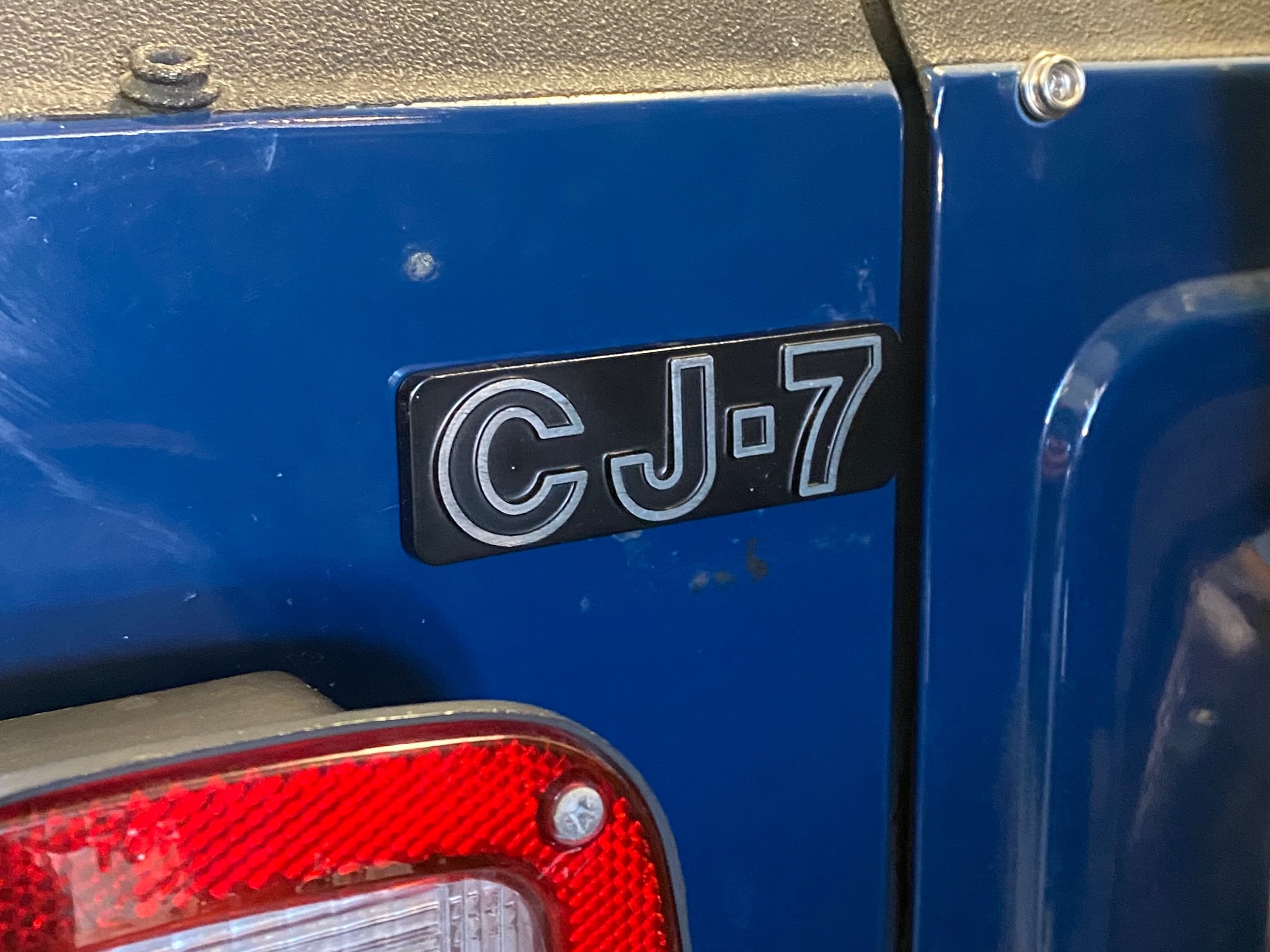
The CJ-5 is a short-wheelbase (83.5-inch) open-body Jeep built from 1955 to 1983. The CJ-7 has a longer 93.4-inch wheelbase and was produced from 1976 to 1986 with optional hardtops and automatic transmissions. The CJ-6 is a long-wheelbase variant of the CJ-5 built until 1975, and the CJ-8 Scrambler is a pickup-bed version of the CJ-7 with a 103.4-inch wheelbase, produced from 1981 to 1985.
Your VIN identifies which CJ model you have, but understanding the differences between them helps you make better decisions about parts compatibility, modifications, and value. Here is a quick breakdown of each model. For a deeper comparison, see how to identify CJ-5, CJ-6, CJ-7, and CJ-8 models.
CJ-5 (1955-1983)
The CJ-5 is the most recognizable and most produced CJ model. With its 83.5-inch wheelbase and rounded fender openings, the CJ-5 is compact and nimble on the trail. Within the 1971-1986 VIN range, CJ-5 production ran through 1983. The VIN model codes are 83 (1971-1980) and 85 (1981-1983).
- Wheelbase: 83.5 inches
- Engines: 232ci I-6, 258ci I-6, 304ci V8, 151ci 4-cyl (1980-1982), 150ci 4-cyl (1983)
- Key trait: No factory hardtop option, manual transmission only until the CJ-7 era
CJ-6 (1955-1975)
The CJ-6 is essentially a stretched CJ-5 with a 101-inch wheelbase — about 20 inches longer. It was far more popular in export markets than in the United States. Within the 1971-1986 VIN range covered by this guide, the CJ-6 was only produced through 1975. VIN model code: 84.
- Wheelbase: 101 inches
- Engines: Same as CJ-5 of the same era
- Key trait: Rare in the US market; longer cargo area behind the seats
CJ-7 (1976-1986)
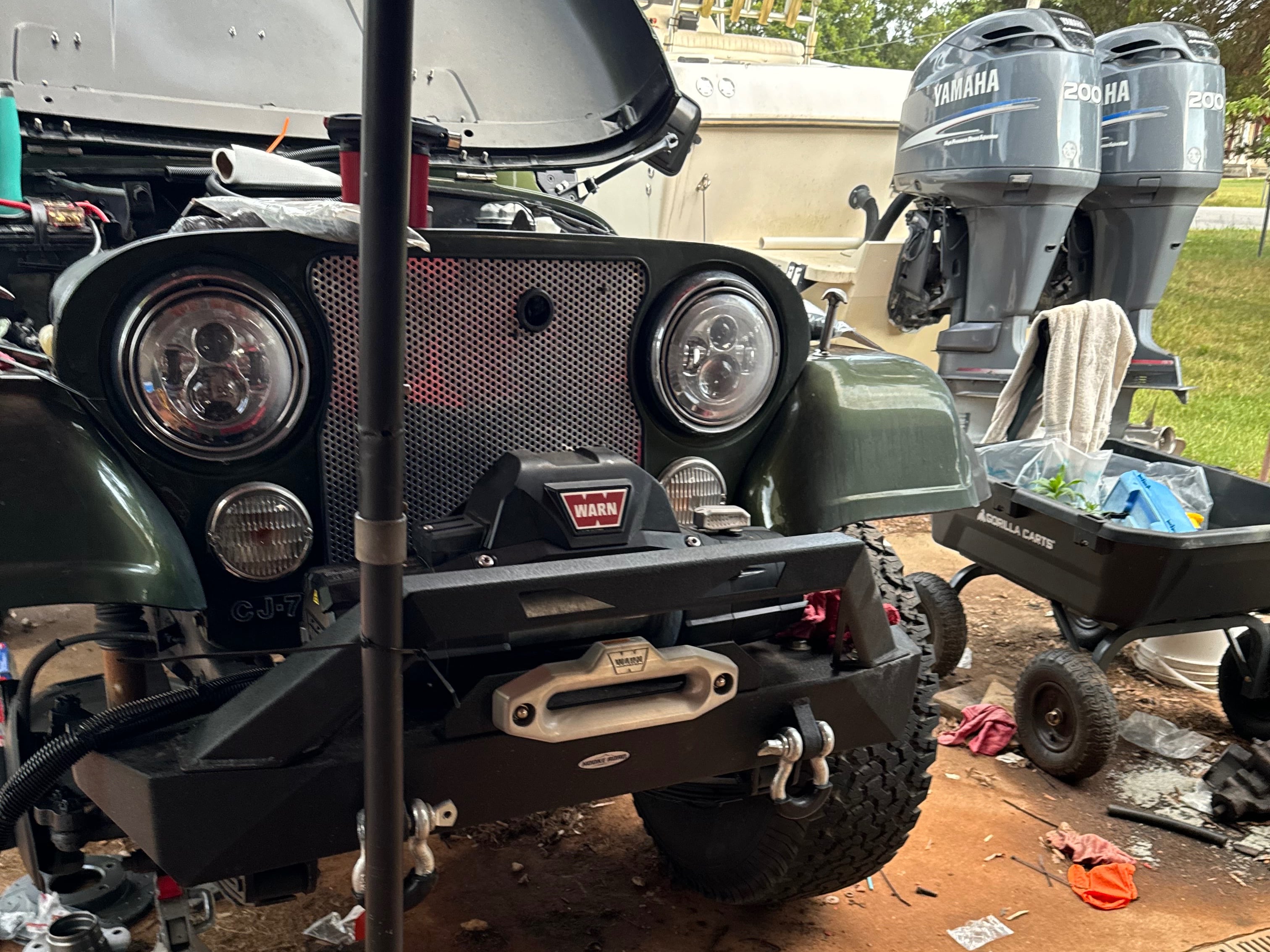
The CJ-7 replaced the CJ-6 as Jeep's longer-wheelbase CJ option and quickly became the bestseller. Its 93.4-inch wheelbase was long enough to accommodate a factory hardtop, a steel full-door option, and the Quadra-Trac full-time four-wheel drive system — none of which were available on the CJ-5. VIN model codes: 93 (1976-1980) and 87 (1981-1986).
- Wheelbase: 93.4 inches
- Engines: 258ci I-6, 304ci V8, 151ci 4-cyl (1980-1982), 150ci 4-cyl (1983-1986)
- Key trait: First CJ with factory hardtop and automatic transmission options
CJ-8 Scrambler (1981-1985)
The CJ-8 Scrambler took the CJ-7's front clip, dash, and drivetrain and mated them to a longer frame with a small pickup bed. Only 27,792 were built across five model years, making the Scrambler a sought-after collector vehicle. VIN model code: 88.
- Wheelbase: 103.4 inches
- Engines: 258ci I-6, 151ci 4-cyl (1981-1982), 150ci 4-cyl (1983-1985)
- Key trait: Pickup-style bed, longest CJ wheelbase, highly collectible
You can also use the Jeep identifier guide to cross-reference body style, production years, and specifications if you are not sure which model you are looking at.
Jeep CJ Engine Codes Explained
You can identify your Jeep CJ's engine from the VIN by checking position 8 on 1971-1974 models, position 7 on 1975-1980 models, or position 4 on 1981-1986 models. Common engine codes include A for the 258ci 1-barrel inline-6, C for the 258ci 2-barrel inline-6, H for the 304ci V8, B for the 151ci or 150ci 4-cylinder, and F for the Isuzu diesel.
The engine code in your VIN tells you what powerplant your CJ was born with. Need to order a replacement gasket set and not sure which version of the 258 you have? This is the section that answers that. Here is a complete breakdown of every engine offered in a 1971-1986 Jeep CJ.
AMC 232ci (3.8L) Inline-6
The 232 was the base inline-6 in early CJs. It is a reliable, low-output engine that shares its architecture with the more popular 258. VIN codes: E (standard compression), F (low compression, 1971-1974 only).
- Displacement: 232 cubic inches / 3.8 liters
- Configuration: Inline-6
- Carburetor: 1-barrel
- Available: 1971-1979
AMC 258ci (4.2L) Inline-6
The 258 is the most common engine you will find in a Jeep CJ. It is essentially a longer-stroke version of the 232 and became the standard CJ engine for most of the production run. Pay attention to the carburetor type: the 1-barrel (code A) produces less power than the 2-barrel (code C). VIN codes: A (1-barrel), B (low compression, 1971-1974), C (2-barrel, 1975+).
- Displacement: 258 cubic inches / 4.2 liters
- Configuration: Inline-6
- Carburetor: 1-barrel or 2-barrel depending on year and code
- Available: 1971-1986
When ordering spark plugs, ignition parts, or fuel system components for a 258-equipped CJ, knowing whether you have the 1-barrel or 2-barrel version matters. Check our Jeep CJ spark plug specifications guide for the correct plug by engine and year.
AMC 304ci (5.0L) V8
The 304 was the only V8 offered in the CJ during this era. It shares the AMC V8 family architecture with the larger 360 and 401 engines. The 304 provides a noticeable power bump over the inline-6 options but adds weight over the front axle. VIN code: H.
- Displacement: 304 cubic inches / 5.0 liters
- Configuration: V8
- Carburetor: 2-barrel
- Available: 1971-1981
GM 151ci (2.5L) Iron Duke 4-Cylinder
GM supplied the Iron Duke 4-cylinder as a fuel-economy base engine starting in 1980. It is adequate for road use but underpowered for serious off-roading. VIN code: B (1980-1982 models).
- Displacement: 151 cubic inches / 2.5 liters
- Configuration: Inline-4
- Available: 1980-1982
AMC 150ci (2.5L) Inline-4
AMC replaced the GM Iron Duke with their own 2.5-liter four-cylinder starting in the 1983 model year. It shares VIN code B with the Iron Duke, so check the model year code to determine which 4-cylinder you have. The AMC unit produces more torque and is generally better suited for CJ duty.
- Displacement: 150 cubic inches / 2.5 liters
- Configuration: Inline-4
- Available: 1983-1986
Isuzu C240 Diesel (2.4L)
The Isuzu C240 is a naturally aspirated diesel four-cylinder that was offered primarily in export-market CJs. It is very rare in the United States. VIN code: F (1981-1986 format only).
- Displacement: 145 cubic inches / 2.4 liters
- Configuration: Inline-4, diesel
- Available: 1981-1985 (primarily export)
Jeep CJ Transmission and Drivetrain Codes
The transmission code in a Jeep CJ VIN identifies whether your CJ was built with an automatic or manual transmission. On 1971-1980 models, the transmission code is in position 3. On 1981-1986 models, it moves to position 5. Common codes include A for automatic, F for 3-speed manual, M for 4-speed manual, and N for 5-speed manual.
Your VIN encodes the transmission type, which is useful for parts ordering and for verifying whether the gearbox currently in your CJ is the factory-original unit. Here is the full list of transmission codes across all three VIN eras.
Transmission Codes by Era
|
VIN Code
|
Transmission
|
Available Years
|
|
A
|
Automatic (column shift, 1971-1980; column shift, 1981-1986)
|
1971-1986
|
|
B
|
Automatic (floor shift)
|
1981-1986
|
|
F
|
3-Speed Manual
|
1971-1980
|
|
M
|
4-Speed Manual
|
1971-1986
|
|
N
|
5-Speed Manual
|
1981-1986
|
The most common manual transmission in CJs of this era is the T-150 3-speed (1976-1979) and the T-176 4-speed (1980-1986). The 5-speed manual (code N) was offered later in the production run and is the T-5 unit. Automatic-equipped CJs typically run the TH400 (pre-1980) or the TF999 (1980-1986).
Transfer Cases
The VIN does not directly encode the transfer case, but the model year tells you which unit your CJ has. CJs built from 1971 to 1979 use the Dana 20 transfer case, a cast-iron gear-driven unit. Starting in 1980, Jeep switched to the Dana 300, which is widely regarded as one of the strongest transfer cases ever put in a CJ. If you are building or upgrading your CJ's drivetrain, the Dana 300 is a keeper.
CJ-7 models equipped with Quadra-Trac (a full-time four-wheel drive system offered from 1976 to 1979) use a BorgWarner 1339 chain-drive transfer case instead of the Dana 20. Quadra-Trac CJ-7s can be identified by the absence of a manual transfer case shifter on the floor — they use a single lever for range selection only.
For fluid types and capacities for your specific transfer case and transmission combination, check the Jeep CJ fluid capacities guide.
Axles and Differentials
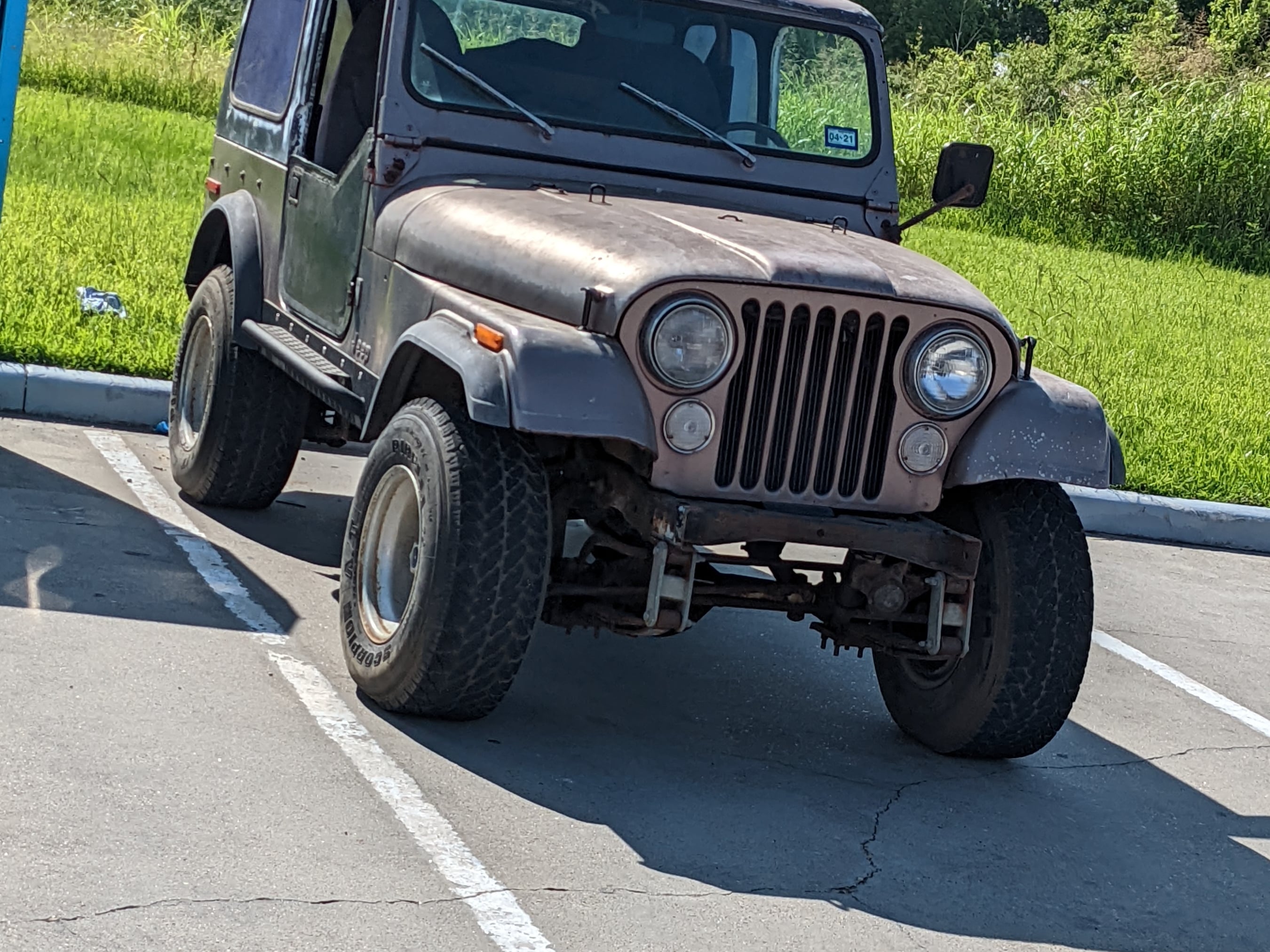
While the VIN does not encode axle information, knowing your model and year narrows down what came from the factory:
- Front axle: Dana 30 (standard on most CJ models 1971-1986)
- Rear axle: AMC Model 20 (most common), Dana 44 (some later CJ-7 and CJ-8 models)
The rear axle type matters for gear ratio compatibility and differential upgrades. A Dana 44 rear is the more desirable axle for off-road builds due to its stronger ring gear and better aftermarket support.
Summary
- VIN location: Look for the tin plate on the driver's side firewall near the brake master cylinder. Cross-check it against the frame stamping on the passenger-side rail to verify authenticity.
- Format matters: Pre-1981 CJs use a 13-character Jeep-specific VIN; 1981-1986 models use the standardized 17-character NHTSA format. The character positions and codes differ between the two systems.
- Engine identification: Check position 8 (1971-1974), position 7 (1975-1980), or position 4 (1981-1986) to identify your engine — from the common 258ci inline-6 to the rare 304ci V8 and export-only Isuzu diesel.
- Model codes: CJ-5 = 83/85, CJ-6 = 84/86, CJ-7 = 93/87, CJ-8 Scrambler = 88, depending on whether you have a pre-1981 or post-1981 VIN.
- Drivetrain: The VIN identifies your transmission type; the model year tells you whether your CJ has a Dana 20 or Dana 300 transfer case.
Now that you can decode every character of your CJ's VIN, put that knowledge to work. Whether you are tracking down the right engine gasket set, confirming factory specs before a purchase, or just satisfying your curiosity about what left Toledo on the day your CJ was built, the VIN is your definitive source. Browse CJ7 parts and accessories to find what you need for your build, or check out the Jeep CJ service information guide for maintenance specs and torque values. Have a VIN character you cannot place, or need help finding the right parts for your specific engine and transmission combination? ExtremeTerrain's Sales Techs are Jeep enthusiasts — not script-readers — and they can help you match the right components to your exact CJ.
Frequently Asked Questions About Jeep CJ VIN Numbers
Jeep CJ VIN numbers can be tricky to decode, especially since the format changed between pre-1981 and post-1981 models. Here are answers to the most common questions about CJ VIN decoding.
How Do You Decode a Jeep CJ VIN Number?
Locate the VIN plate on the driver's side firewall near the brake master cylinder. For 1971-1980 CJs, the VIN has 13 characters starting with "J" for Jeep. For 1981-1986 models, the VIN follows the standardized 17-character format starting with "1J" for USA-built Jeeps. Each character position identifies a specific detail like year, engine, transmission, and model.
Where Is the VIN Number on a Jeep CJ?
Jeep CJ VIN numbers are typically found on a tin plate riveted to the driver's side firewall near the brake master cylinder. Additional locations include the driver's side dash, the inside body panel near the parking brake lever, and on mid-1980s models, the windshield wiper motor cover. An abbreviated VIN may also appear on the passenger side frame rail above the rear wheel.
What Is the Difference Between Pre-1981 and Post-1981 Jeep CJ VINs?
Pre-1981 Jeep CJ VINs use a 13-character format that was unique to Jeep Corporation, starting with "J" followed by the model year digit. Post-1981 models follow the NHTSA-mandated 17-character standard starting with "1JC" and include a check digit in the 9th position. The character order and meanings differ significantly between the two formats.
How Can You Tell What Year a Jeep CJ Is From the VIN?
For 1971-1974 CJs, the 2nd character indicates the year (1=1971, 2=1972, 3=1973, 4=1974). For 1975-1980 models, the 2nd character uses 5-0 (5=1975 through 0=1980). For 1981-1986 CJs, the 10th character identifies the year using letters B through G (B=1981, C=1982, D=1983, E=1984, F=1985, G=1986).
How Do You Identify a CJ-5 vs. CJ-7 vs. CJ-8 From the VIN?
The model code in the VIN identifies each CJ variant. For pre-1981 VINs, check positions 4-5: 83=CJ-5, 84=CJ-6, and 93=CJ-7 (introduced in 1976). For 1981-1986 VINs, check positions 6-7: 85=CJ-5, 87=CJ-7, and 88=CJ-8 Scrambler. The CJ-6 was discontinued after 1975 and does not appear in 1981-1986 VINs. The CJ-8 Scrambler was only produced from 1981 to 1985.
What Engine Does My Jeep CJ Have Based on the VIN?
Engine codes vary by era. For 1971-1974 CJs, the 8th character indicates the engine: A=258ci standard, E=232ci standard, H=304ci V8. For 1975-1980 models, the 7th character identifies it: A=258ci 1-barrel, C=258ci 2-barrel, H=304ci 2-barrel. For 1981-1986, the 4th character designates the engine: B=151ci 4-cylinder, C=258ci inline-6, H=304ci V8, F=diesel.
What Transmission Does My Jeep CJ Have Based on the VIN?
The VIN reveals transmission type through specific character positions. For 1971-1974 CJs, the 3rd character indicates: A=automatic, F=3-speed manual, M=4-speed manual. For 1975-1980, the same 3rd position applies. For 1981-1986 models, the 5th character tells you: A=automatic column, B=automatic floor, M=4-speed manual, N=5-speed manual.
Which Manufacturer Made the Jeep CJ From 1971 to 1986?
American Motors Corporation (AMC) manufactured all Jeep CJ models from 1970 to 1986. AMC acquired the Jeep brand from Kaiser Jeep in 1970. During this era, CJ production took place at the Toledo, Ohio assembly plant, identified by the letter "T" in the plant position of 1981-1986 VINs. Chrysler purchased AMC in 1987 and ended CJ production.