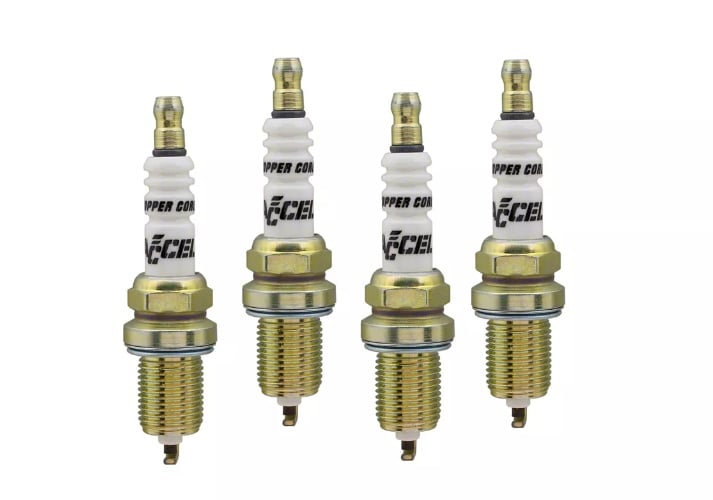
Whether you are replacing worn-out plugs on a trail-ready CJ-7 or setting up a fresh tune on a CJ-5 project build, getting the right spark plug specs matters. The wrong gap or torque can cause misfires, fouling, or even cracked threads in an aging cast-iron head. This guide covers the correct spark plug gap, type, torque spec, and firing order for every Jeep CJ engine from 1971 to 1986 — plus a step-by-step replacement walkthrough and guidance for modified ignition setups. Everything here is matched to the CJ platform so you can order the right parts and get back on the trail.
Jeep CJ Spark Plug Specifications by Engine
The Jeep CJ (1971-1986) uses NGK or Champion copper-core spark plugs across all engine variants, with a standard gap of 0.035 inches for the 4.2L, 5.0L, 5.9L, and 2.5L AMC engines. The lone outlier is the GM-sourced 2.5L Iron Duke, which calls for a wider 0.060-inch gap.
|
Engine
|
Years
|
Plug Type
|
Recommended Brands
|
Gap
|
Torque
|
|
4.2L 258ci I6
|
1971-1986
|
Copper Core
|
NGK, Champion
|
0.035" (0.89mm)
|
14-22 ft-lbs
|
|
5.0L 304ci V8
|
1971-1981
|
Copper Core
|
NGK, Champion
|
0.035" (0.89mm)
|
14-22 ft-lbs
|
|
5.9L 360ci V8
|
1971-1978
|
Copper Core
|
NGK, Champion
|
0.035" (0.89mm)
|
14-22 ft-lbs
|
|
2.5L 150ci I4 (AMC)
|
1983-1986
|
Copper Core
|
NGK, Champion
|
0.035" (0.89mm)
|
14-22 ft-lbs
|
|
2.5L 151ci I4 (Iron Duke)
|
1976-1982
|
Copper Core
|
NGK, Champion
|
0.060" (1.52mm)
|
7-15 ft-lbs
|
Notice the Iron Duke stands apart from every other CJ engine. Its wider gap and lower torque spec reflect the GM-designed combustion chamber and head casting — so double-check which four-cylinder you have before ordering spark plugs. If your CJ was built between 1976 and 1982 with a 2.5L, pull the valve cover or check the engine stamp to confirm whether you have the Iron Duke (151ci) or the later AMC 150ci.
Jeep CJ Spark Plug Firing Order
The firing order for the Jeep CJ 4.2L (258ci) inline-six is 1-5-3-6-2-4, while the 5.0L and 5.9L V8 engines use 1-8-4-3-6-5-7-2.
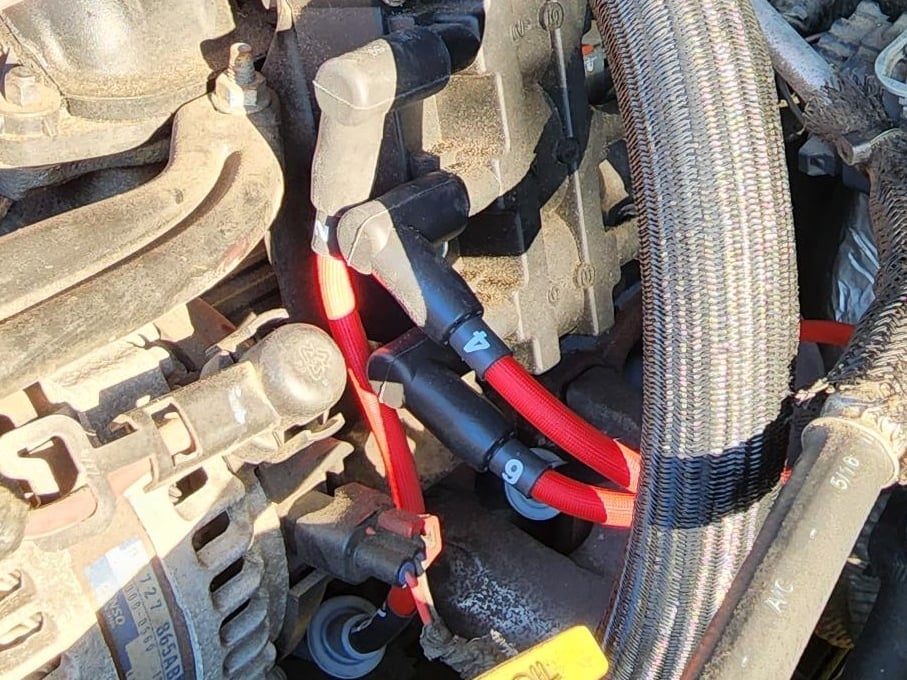
Why does the firing order matter? If you cross even one spark plug wire, your engine will misfire, run rough, or refuse to start altogether. On the inline-six, cylinder numbering runs front to back — number one is closest to the radiator.
|
Engine
|
Firing Order
|
|
4.2L 258ci I6
|
1-5-3-6-2-4
|
|
5.0L 304ci V8
|
1-8-4-3-6-5-7-2
|
|
5.9L 360ci V8
|
1-8-4-3-6-5-7-2
|
|
2.5L 150ci I4 (AMC)
|
1-3-4-2
|
|
2.5L 151ci I4 (Iron Duke)
|
1-3-4-2
|
A good habit: before you pull any wires, use masking tape and a marker to label each wire with its cylinder number. This takes 30 seconds and saves you from a frustrating no-start scenario after a plug swap. If you are chasing a misfire or planning a deeper ignition upgrade, browse CJ engine performance parts for coils, wires, and distributor components that pair with your new plugs.
How to Change Spark Plugs on a Jeep CJ
Swapping spark plugs on a CJ is one of the most straightforward maintenance jobs you can do in your driveway. No lift required, no specialty tools — just a few basics and about 30 to 45 minutes of your time. Here is what you need and how to get it done.
Tools You Will Need
- 3/8" ratchet with a 5/8" spark plug socket (magnetic or rubber-insert type)
- 6" extension bar
- Gap gauge or feeler gauge
- Torque wrench (ft-lb range covering 7-22)
- Anti-seize compound
- Dielectric grease
- Compressed air or a clean rag
- Masking tape and a marker (for labeling wires)
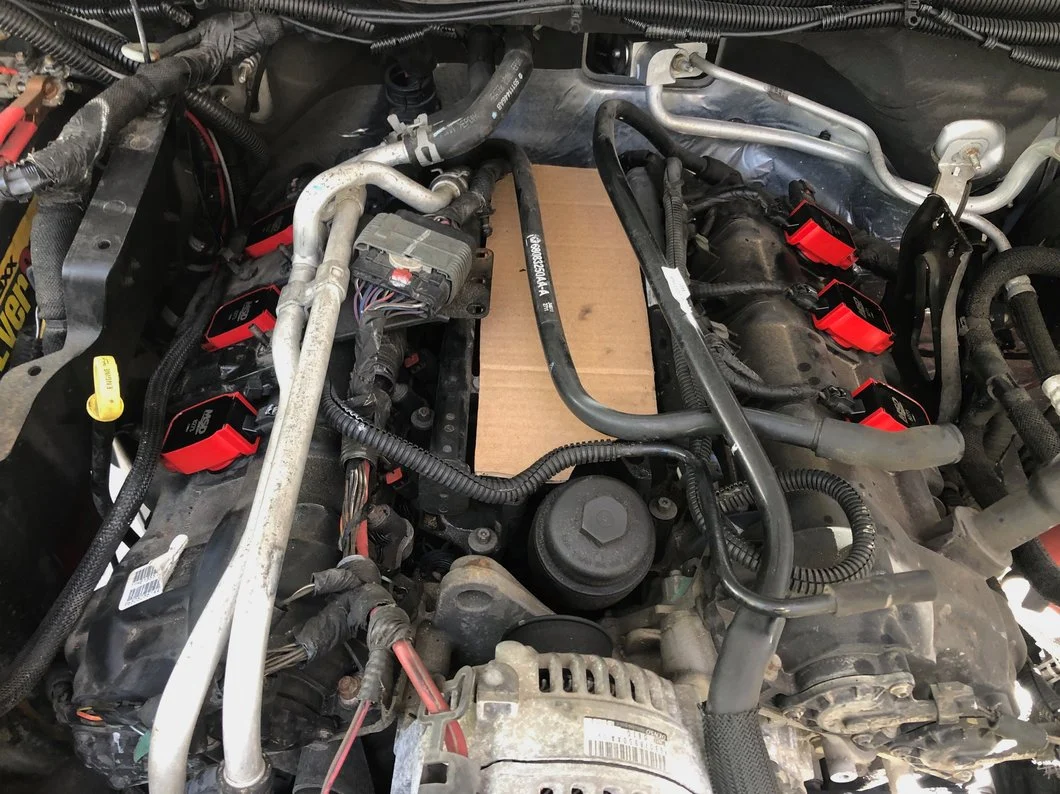
Step-by-Step Spark Plug Replacement
- Let the engine cool completely. Cast-iron heads hold heat for a long time. Give your CJ at least an hour after running before you start pulling plugs.
- Label each spark plug wire. Use masking tape to mark every wire with its cylinder number before you disconnect anything. This keeps your firing order intact.
- Remove one spark plug wire at a time. Twist the boot a quarter-turn to break the seal, then pull straight off the plug. Never yank the wire itself — you will damage the conductor inside.
- Clean the area around the plug. Hit the plug well with compressed air or wipe it down with a rag. You do not want dirt or debris falling into the cylinder when the plug comes out.
- Remove the old spark plug. Attach your spark plug socket to the ratchet and extension, then turn counterclockwise until the plug is free. Inspect the old plug — heavy carbon fouling, oil deposits, or a worn electrode can tell you a lot about engine health.
- Check the gap on your new plug. Use a feeler gauge to verify the gap matches your engine's spec (0.035" for most CJ engines, 0.060" for the Iron Duke). Adjust by gently bending the ground electrode if needed.
- Apply a thin coat of anti-seize to the threads. This protects against corrosion and makes future removal easier — especially important on older cast-iron heads.
- Hand-thread the new plug into the hole. Start it by hand or with the socket (no ratchet) for the first few turns. If it resists, back it out and try again. Cross-threading a spark plug hole on a CJ head is an expensive mistake.
- Torque to spec. Use your torque wrench to tighten the plug to 14-22 ft-lbs (or 7-15 ft-lbs for the Iron Duke). Do not over-torque — you can crack the porcelain insulator or strip the threads.
- Apply dielectric grease and reconnect the wire. Put a small dab of dielectric grease inside the spark plug wire boot, then push the boot firmly onto the new plug until you feel it click. Move on to the next cylinder and repeat the process.
Once all plugs are in, start the engine and let it idle for a minute. Listen for smooth, even firing. If you hear a miss, shut it down and double-check your wire routing against the firing order table above. Need ignition parts like wires, caps, or rotors to finish the job? Browse the full selection of CJ7 parts and accessories to make sure everything under the hood is fresh.
Spark Plug Gap for Modified Ignition Systems
For a stock Jeep CJ ignition system, maintain the factory-recommended 0.032-0.035-inch gap. With an upgraded HEI distributor or MSD ignition, you can safely widen the gap to improve combustion efficiency and throttle response.
If you have upgraded your CJ's ignition system — and plenty of owners do — your spark plug gap should change with it. A hotter ignition coil and higher-energy spark can jump a wider gap, which means a bigger flame kernel and more complete combustion. But go too wide for your system's output and you will get misfires under load.
|
Ignition Type
|
Recommended Gap
|
|
Stock Points / Electronic
|
0.032" - 0.035"
|
|
HEI Conversion
|
0.040" - 0.045"
|
|
MSD 6A / CDI
|
0.045" - 0.055"
|
When adjusting your gap for a modified ignition, start at the low end of the range and work up. Widen the gap in 0.005-inch increments and test-drive between changes. You are looking for smoother idle, crisper throttle response, and no misfires at wide-open throttle. If the engine stumbles under heavy load or at high RPM, close the gap back down slightly. Not sure which gap is right for your specific ignition setup? Our Sales Techs can help you dial in the right spec for your build.
Keep in mind that spark plug wires matter here too. Worn or high-resistance wires can limit how much gap your ignition can reliably fire across. If you are running an MSD box with stock 40-year-old wires, you are leaving performance on the table. Check out how engine mods impact your Wrangler for a deeper look at how ignition upgrades work together on the CJ platform.
Choosing the Right Spark Plug for Your Jeep CJ
Walk into any parts store and you will see copper, platinum, and iridium spark plugs on the shelf. So which one belongs in your CJ? For most owners, the answer is straightforward: copper.
Copper-core plugs offer the best conductivity and the strongest spark — and on a carbureted or throttle-body-injected engine with a points or basic electronic ignition, that raw spark energy matters more than longevity. Platinum and iridium plugs are designed for modern computer-controlled engines with precise fuel metering and coil-on-plug setups. They last longer, but they do not fire hotter. On a CJ, that longevity advantage is marginal because you should be checking and re-gapping your plugs as part of regular tune-ups anyway.
There is one scenario where platinum or iridium might make sense: if you have converted to a modern fuel injection and ignition system and want a longer service interval. But for a stock or mildly modified CJ running a carburetor and a distributor, copper is the proven choice. Not sure which plug is right for your specific build? Our Sales Techs are CJ enthusiasts who can help you match the right spec to your engine and ignition setup.
- Copper: Best spark energy, lowest cost, shortest lifespan (10,000-20,000 miles). Ideal for stock and mildly modified CJ engines.
- Platinum: Slightly lower conductivity, longer lifespan (30,000-60,000 miles). Better suited for modern fuel-injected setups.
- Iridium: Finest electrode, longest lifespan (60,000-100,000+ miles). Overkill for most carbureted CJ applications.
Stick with NGK or Champion copper-core plugs matched to your specific engine and year — they are the OEM recommendation for a reason. If you want to dig deeper into how your ignition system works as a whole, the Jeep Wrangler ignition system guide covers coils, distributors, wires, and how they all tie together.
Ready to get your CJ running right? Browse the full lineup of CJ7 accessories and parts to find spark plugs, ignition components, and everything else you need to keep your rig on the trail. You can also shop CJ engine parts by year and engine to find exact-fit plugs, wires, and ignition upgrades matched to your build.
Frequently Asked Questions About Jeep CJ Spark Plugs
Here are the most common questions Jeep CJ owners ask about spark plug specifications, replacement, and maintenance for the 1971-1986 platform.
What Is the Spark Plug Gap on a Jeep CJ7?
The standard spark plug gap for most Jeep CJ7 engines is 0.035 inches (0.89mm), including the 4.2L inline-six, 5.0L V8, and 2.5L AMC four-cylinder. The only exception is the 2.5L 151ci Iron Duke four-cylinder (1976-1982), which requires a wider 0.060-inch gap due to its GM-designed combustion chamber.
What Kind of Spark Plugs Does a Jeep CJ Use?
Jeep CJ models use copper-core spark plugs, with NGK and Champion being the recommended brands across all engine variants. Copper plugs deliver the strongest spark energy, which is important for the CJ's carbureted or throttle-body-injected engines. Platinum and iridium plugs are unnecessary for most CJ applications.
What Is the Firing Order for a Jeep CJ 258?
The firing order for the Jeep CJ 4.2L 258ci inline-six engine is 1-5-3-6-2-4. Cylinder number one is located at the front of the engine nearest the radiator, and numbering runs sequentially toward the rear. The V8 engines (5.0L and 5.9L) use a different firing order of 1-8-4-3-6-5-7-2.
How Often Should You Change Spark Plugs on a Jeep CJ?
Copper-core spark plugs in a Jeep CJ should be inspected every 10,000 miles and replaced every 15,000 to 20,000 miles as part of a regular tune-up. Heavily used trail rigs or engines running rich may need replacements sooner. Always inspect the old plugs for carbon fouling, oil deposits, or electrode wear when you pull them.
Can You Use Iridium Spark Plugs in a Jeep CJ?
You can physically install iridium spark plugs in a Jeep CJ, but they offer no real advantage over copper plugs in this application. Iridium plugs are designed for modern computer-controlled engines with coil-on-plug ignition. On a carbureted or basic electronic ignition CJ, copper-core plugs provide better spark energy at a lower cost.
What Is the Spark Plug Torque Spec for a Jeep CJ?
Most Jeep CJ spark plugs with 14mm threads should be torqued to 14-22 ft-lbs using a torque wrench. The exception is the 2.5L Iron Duke (1976-1982), which uses a lower torque range of 7-15 ft-lbs. Over-torquing can crack the porcelain insulator or strip threads in the cylinder head, so always use a calibrated torque wrench.
What Happens if the Spark Plug Gap Is Too Wide on a CJ?
If your spark plug gap is too wide for your ignition system's output, the coil may not produce enough voltage to fire across the gap consistently. This causes misfires, rough idle, hesitation under load, and poor fuel economy. Stock CJ ignition systems are designed for a 0.035-inch gap — going beyond that without upgrading the ignition risks unreliable performance.