Introduction
Your JK's spark plugs do one job — fire at the right time, every time — and getting the spec wrong can cost you performance on the trail and money in the shop. Whether you are running a stock 3.8L or a modified 3.6L Pentastar, the gap, torque, and plug type differ between these two engines, and the details matter more than most JK owners realize. This guide covers the complete Wrangler JK spark plug specs for both engines, walks you through a proper replacement, and breaks down which brands and upgrades make sense for your build.
Wrangler JK Spark Plug Specifications by Engine
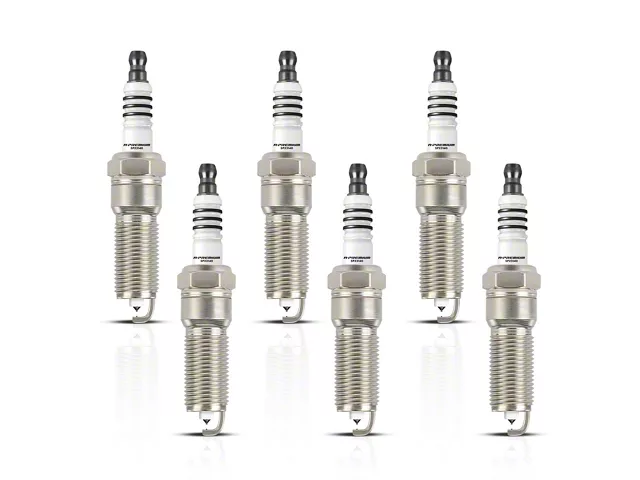
The 2007–2011 Jeep Wrangler JK with the 3.8L V6 uses Champion RE14PLP5 Double Platinum spark plugs gapped at 0.050 inches and torqued to 12 ft-lbs. The 2012–2018 JK with the 3.6L Pentastar V6 uses Champion RER8ZWYCB4 plugs gapped at 0.043 inches and torqued to 13 ft-lbs. Getting these Wrangler JK spark plug specs right matters — the wrong gap or torque value can cause misfires, rough idle, or in the worst case, real engine damage.
Your JK rolled off the line with one of two engines, and each one takes a different plug. Here is the full breakdown:
|
Spec
|
3.8L V6 (2007–2011)
|
3.6L Pentastar V6 (2012–2018)
|
|
OEM Spark Plug
|
Champion RE14PLP5
|
Champion RER8ZWYCB4
|
|
Mopar Part Number
|
—
|
SP149125AD
|
|
Plug Type
|
Double Platinum
|
Iridium
|
|
Gap
|
0.050 in / 1.27 mm
|
0.043 in / 1.10 mm
|
|
Torque
|
12 ft-lbs
|
13 ft-lbs (+/-2) / 17.5 N·m
|
|
Thread Size
|
14mm
|
12mm
|
|
Socket Size
|
5/8"
|
5/8"
|
|
Plug Count
|
6
|
6
|
|
Ignition System
|
Spark plug wires (Part# 68017712AC)
|
Coil-on-plug (no wires)
|
|
Firing Order
|
1-5-3-6-2-4
|
1-2-3-4-5-6
|
A few things worth noting. The 3.8L uses traditional spark plug wires — a dealer wire set (Part# 68017712AC) runs around $60, and you should inspect them any time you pull plugs. The 3.6L Pentastar switched to a coil-on-plug setup, so there are no wires to worry about. Both engines take six plugs total, and both use a 5/8-inch spark plug socket despite the different thread diameters.
If you are shopping for JK ignition parts, always confirm your engine year first. Swapping a 3.8L plug into a 3.6L head — or vice versa — is not just the wrong fit, it can strip threads or leave you with a gap that is too wide or too narrow for the ignition coil to fire properly.
Recommended Spark Plug Brands for the JK
Yes, you can use NGK spark plugs in a Jeep JK. NGK Laser Iridium and V-Power plugs are widely used alternatives to the OEM Champion plugs and deliver comparable performance. That said, Champion remains the factory choice for a reason — these are the plugs Chrysler engineered the ignition timing around. Here is how the major brands stack up:
Champion (OEM)
Champion is the original equipment manufacturer for both JK engines. The RE14PLP5 (3.8L) and RER8ZWYCB4 (3.6L) are purpose-built for these applications. If you want the plug your JK's ignition timing was engineered around — the baseline that proven off-road builds start from — Champion is the reliable foundation.
NGK
NGK offers three solid options for the JK:
- Laser Iridium — Premium long-life plug. Fine-wire iridium center electrode for consistent spark and extended service life. A direct competitor to the OEM iridium plug on the 3.6L.
- V-Power — Copper-core plug with a V-grooved center electrode. Budget-friendly and popular with JK owners who change plugs more frequently, especially on modified 3.8L builds.
- G-Power — Platinum-tipped option that splits the difference between the Laser Iridium and V-Power in price and longevity.
Bosch
Bosch plugs are another acceptable alternative. Their iridium and platinum lines cross-reference to the JK applications. Make sure you match the correct gap specification — Bosch plugs are sometimes pre-gapped differently than the JK requires.
No matter which brand you choose, always verify the gap matches your engine spec (0.050 inches for the 3.8L, 0.043 inches for the 3.6L) before installation. For a deeper look at how the entire system works together, check out our Jeep Wrangler ignition system guide.
How to Change Spark Plugs on a Jeep Wrangler JK
![]() Do not use anti-seize on Champion spark plugs in your JK. Champion plugs have a factory-applied thread coating that prevents seizure in aluminum heads. Adding anti-seize on top of that coating can cause over-torquing and damage the cylinder head threads.
Do not use anti-seize on Champion spark plugs in your JK. Champion plugs have a factory-applied thread coating that prevents seizure in aluminum heads. Adding anti-seize on top of that coating can cause over-torquing and damage the cylinder head threads.
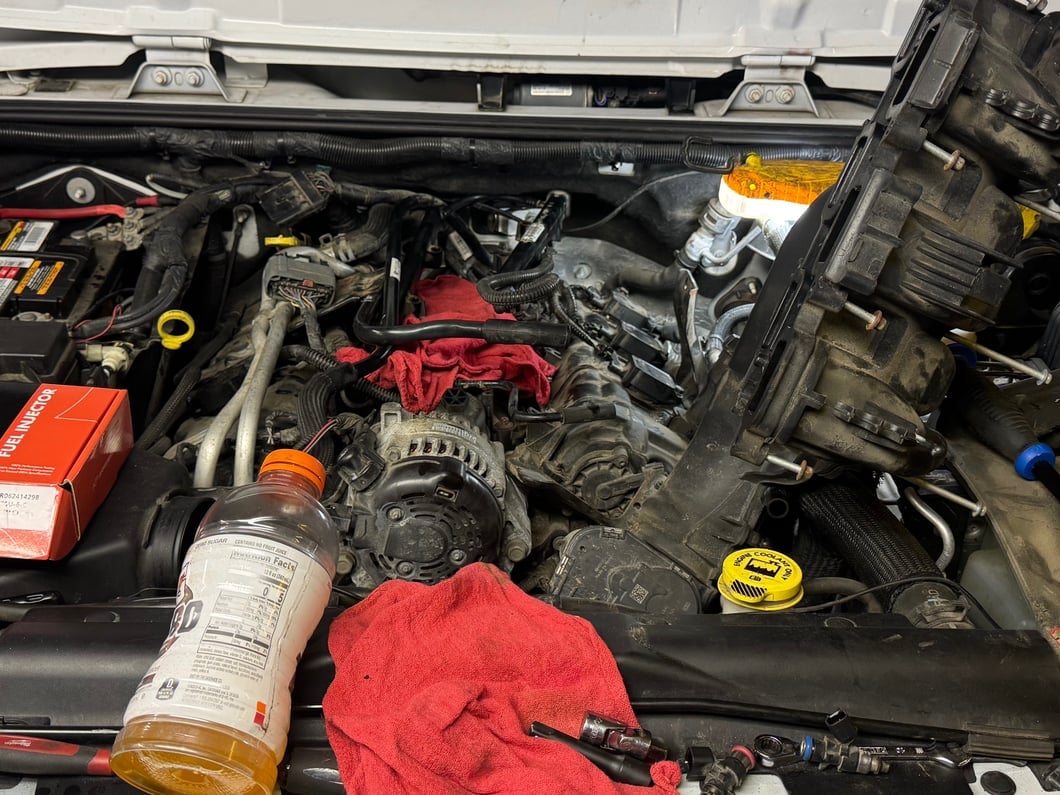
Spark plug replacement on a JK is a straightforward job that most owners can knock out in an hour or two. Here is what you need and how to do it.
Tools You Will Need
- 3/8-inch drive ratchet
- 3/8-inch drive torque wrench (ft-lb range)
- 5/8-inch spark plug socket (magnetic or rubber insert)
- 6-inch and 10-inch extensions
- Dielectric grease
- Gap gauge or feeler gauge
- Compressed air or shop vacuum (for cleaning plug wells)
Step-by-Step Replacement
- Let the engine cool. Work on a cold engine. Pulling plugs from hot aluminum heads increases the risk of thread damage.
- Clean the plug wells. Use compressed air or a vacuum to blow debris out of each spark plug well before removing anything. Dirt falling into an open cylinder is a problem you do not want.
- Remove the ignition source. On the 3.8L, disconnect the spark plug wire by pulling the boot — not the wire — straight off the plug. On the 3.6L, unclip the electrical connector from the coil-on-plug pack and unbolt the coil (typically one 10mm bolt).
- Remove the old plug. Seat your 5/8-inch spark plug socket and break the plug loose. Turn it out by hand once it is free.
- Check the gap on the new plug. Even pre-gapped plugs can shift during shipping. Verify 0.050 inches for the 3.8L or 0.043 inches for the 3.6L.
- Install the new plug by hand. Thread each plug in by hand first to avoid cross-threading. You should feel smooth, consistent resistance — if it binds, stop and re-align.
- Torque to spec. Use your torque wrench: 12 ft-lbs for the 3.8L, 13 ft-lbs for the 3.6L.
- Apply dielectric grease. Put a thin coat of dielectric grease inside the spark plug wire boot (3.8L) or on the coil-on-plug boot (3.6L). This prevents moisture intrusion and makes the next removal easier.
- Reconnect and repeat. Reattach the wire or coil pack, then move to the next cylinder.
Torque Warning for 3.6L Pentastar
This is critical: the 3.6L Pentastar uses 12mm thread plugs in aluminum heads. These smaller-thread plugs are far less tolerant of over-torquing than the 14mm plugs in the 3.8L. If you exceed the torque spec, the plug shell can stretch, creating a gap between the shell and the insulator. That gap becomes a hot spot that causes pre-ignition and can lead to serious engine damage — cracked pistons, scored cylinder walls, the kind of failure that ends a build.
Use a torque wrench. Do not guess. The spec is 13 ft-lbs (+/-2), and staying at the low end of that range is perfectly fine.
For more on how engine mods and their impact affect your ignition system, take a look at our dedicated guide.
When to Replace Spark Plugs on Your JK
Chrysler recommends replacing spark plugs on the Jeep Wrangler JK every 102,000 miles. However, modified JKs or those used in severe conditions should have plugs inspected at 60,000 miles. If your rig has a cold air intake, aftermarket exhaust, or sees regular trail duty with extended low-speed crawling, that 102,000-mile number is optimistic.
Here are the signs your plugs need attention sooner:
- Misfires or rough idle — The most obvious symptom. A worn electrode cannot maintain a consistent spark, and you will feel it at idle and under light throttle.
- Reduced fuel economy — Incomplete combustion from a degraded spark means unburned fuel leaving the cylinder. If your MPG drops without another explanation, plugs are worth checking.
- Hard starts — Worn plugs require more voltage to fire. Cold morning starts are usually where you notice this first.
- Check engine light — Misfire codes (P0300–P0306) point directly at the ignition system. Plugs are the cheapest and easiest thing to rule out.
For modified rigs, a practical approach is to pull one plug at 60,000 miles and inspect the electrode. If it is worn, rounded, or shows heavy deposits, replace the full set. If it looks clean with a sharp edge, you can push closer to the factory interval.
Keeping your ignition system in good shape also helps improve fuel economy — something every JK owner appreciates, especially after adding bigger tires and a lift.

Spark Plugs for Modified JK Engines
If your JK is running anything beyond bolt-ons, your spark plug choice gets more important. The stock plugs are tuned for a stock engine — change the combustion dynamics, and the plug needs to keep up.
Cold Air Intakes and Headers
Bolt-on breathing mods like cold air intakes and long-tube headers typically do not require a different plug. Stick with the OEM Champion or an equivalent NGK Laser Iridium at the factory gap. The increased airflow is still within the stock ignition system's capability.
Supercharged and Forced-Induction Builds
This is where plug selection matters. Forced induction increases cylinder pressure and temperature, which raises the risk of pre-ignition. For supercharged 3.8L builds, many experienced builders run NGK V-Power plugs one step colder than stock. A colder heat range plug pulls heat away from the electrode faster, reducing the chance of detonation under boost.
If you are running a supercharger kit on the 3.6L Pentastar, consult the kit manufacturer for their specific plug recommendation. Most will specify a colder-range iridium plug with a tighter gap (often 0.028–0.032 inches under boost).
Tuned Engines
If you have had your JK professionally tuned, your tuner may have specified a particular plug and gap. Always follow tuner recommendations over factory specs — the tune was built around that plug. If you are exploring JK engine performance parts or looking at horsepower upgrades, factor plug selection into the build plan from the start.
A Note on Gap Adjustments
Any time you change the gap from factory spec, make sure your ignition system can support it. A wider gap needs more voltage to fire. A narrower gap fires easier but produces a smaller flame kernel. For heavily modified engines, tuning and tire recalibration should account for the plug spec you are running.
When in doubt, reach out to one of our Sales Techs. They are real enthusiasts who build and drive these rigs — not reading from a script. Whether you need help matching a plug to your build or picking the right ignition components, they can walk you through it.
Ready to get your JK's ignition dialed in? Browse our full selection of JK engine performance parts and ignition upgrades, or connect with a Sales Tech to find the right spark plugs for your specific build.
Frequently Asked Questions About JK Spark Plugs
These are the most common spark plug questions JK owners ask, pulled from Google's People Also Ask and AI search results.
What Is the Spark Plug Gap for a Jeep JK 3.8L?
The correct spark plug gap for the 2007–2011 Jeep Wrangler JK with the 3.8L V6 engine is 0.050 inches (1.27 mm). The OEM plug is a Champion RE14PLP5 Double Platinum. Always verify the gap with a feeler gauge before installation, even on pre-gapped plugs.
What Is the Spark Plug Gap for a Jeep JK 3.6L?
The 2012–2018 Jeep Wrangler JK with the 3.6L Pentastar V6 uses a spark plug gap of 0.043 inches (1.10 mm). The OEM plug is a Champion RER8ZWYCB4 Iridium, also sold under Mopar part number SP149125AD. Do not adjust the gap on iridium plugs using a traditional taper gauge — use a wire-style or tong-style gapper to avoid damaging the electrode tip.
What Are the Best Spark Plugs for a Jeep JK?
The OEM Champion plugs (RE14PLP5 for the 3.8L, RER8ZWYCB4 for the 3.6L) are the factory-recommended choice and work well for stock and lightly modified engines. NGK Laser Iridium plugs are a popular aftermarket alternative offering comparable performance and longevity at a competitive price.
How Often Should You Change Spark Plugs on a Jeep JK?
Chrysler recommends replacing JK spark plugs every 102,000 miles under normal driving conditions. For modified rigs, vehicles used off-road frequently, or JKs driven in severe conditions, inspect plugs at 60,000 miles and replace if the electrode is worn or deposits are visible.
What Torque Should Jeep JK Spark Plugs Be Tightened To?
The 3.8L V6 spark plugs should be torqued to 12 ft-lbs. The 3.6L Pentastar spark plugs require 13 ft-lbs (+/-2), which equals 17.5 N·m. The 3.6L uses smaller 12mm thread plugs that are highly sensitive to over-torquing — always use a torque wrench to prevent shell stretching and potential engine damage.
Should You Use Anti-Seize on Jeep JK Spark Plugs?
Champion does not recommend applying anti-seize to their spark plugs. Champion plugs include a factory-applied thread coating designed to prevent seizure in aluminum cylinder heads. Adding anti-seize on top of this coating reduces friction, which can lead to over-torquing and damaged threads.
Can You Use NGK Spark Plugs in a Jeep JK Instead of Champion?
Yes, NGK spark plugs are a widely used and reliable alternative to the OEM Champion plugs in the JK. NGK Laser Iridium, V-Power, and G-Power all have cross-referenced part numbers for both the 3.8L and 3.6L engines. Verify the gap matches your engine spec before installing.
What Is the Firing Order for a Jeep JK 3.8L?
The firing order for the 2007–2011 Jeep Wrangler JK 3.8L V6 engine is 1-5-3-6-2-4. This is important to know when replacing spark plug wires to ensure each wire connects to the correct cylinder and coil pack terminal.