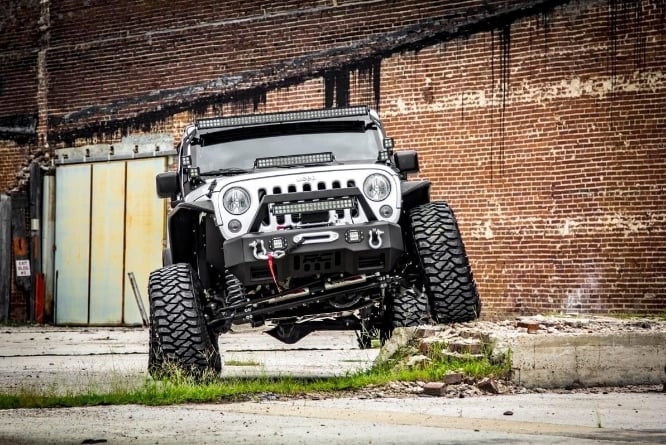
Whether you are building a weekend trail rig or keeping your daily driver dialed in, your Jeep Wrangler's shocks are one of the most impactful upgrades you can make. They control how your suspension system responds to every bump, dip, and obstacle — and the wrong set will leave you bouncing down the highway or bottoming out on the trail. The problem? There are dozens of brands, four major shock technologies, and fitment that changes based on your lift height and Wrangler generation. This guide breaks down everything you need to know about Jeep Wrangler shocks so you can match the right type, brand, and travel length to your build.
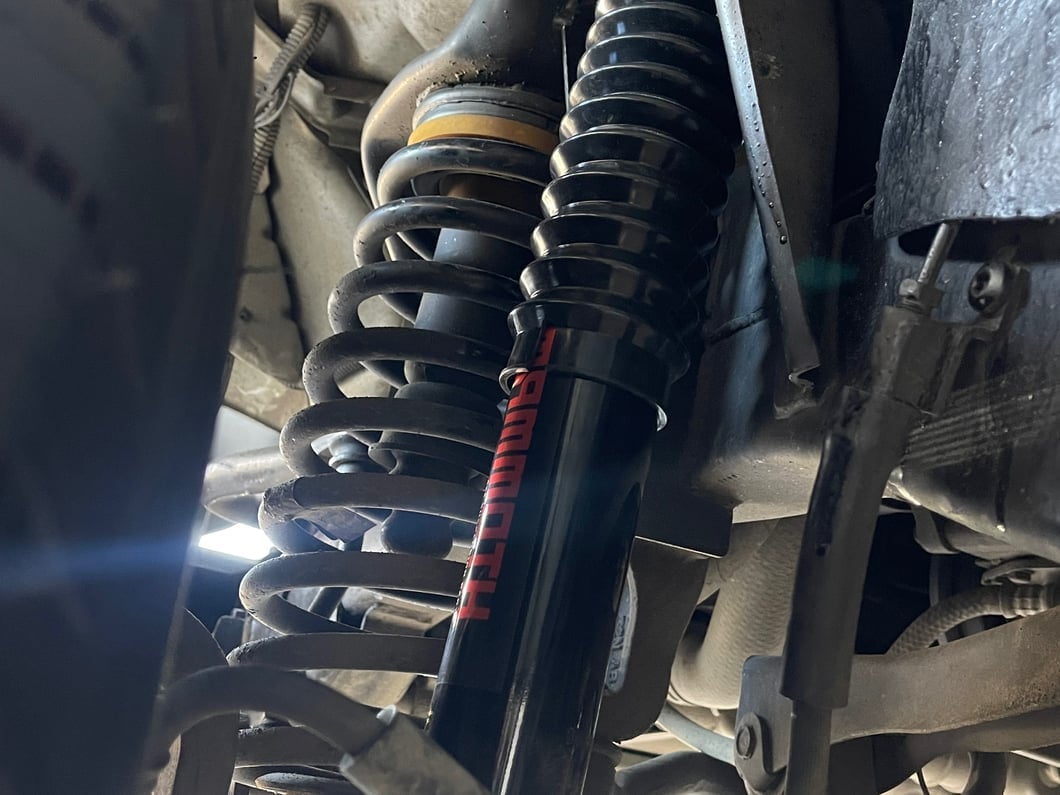
Understanding Jeep Wrangler Shock Types
Jeep Wrangler shocks fall into four categories: twin-tube, monotube, reservoir, and internal bypass. Twin-tube shocks are the most affordable and work well for street driving. Monotube shocks offer better heat dissipation and consistent damping for mixed use. Reservoir and bypass designs are built for sustained off-road performance where heat buildup and terrain severity push standard shocks past their limits.
Before you start shopping for brands, you need to understand how each shock type works. The design directly affects heat management, damping consistency, and how well your Wrangler handles different terrain. Here is a closer look at each technology and where it fits best.
Twin-Tube Shocks
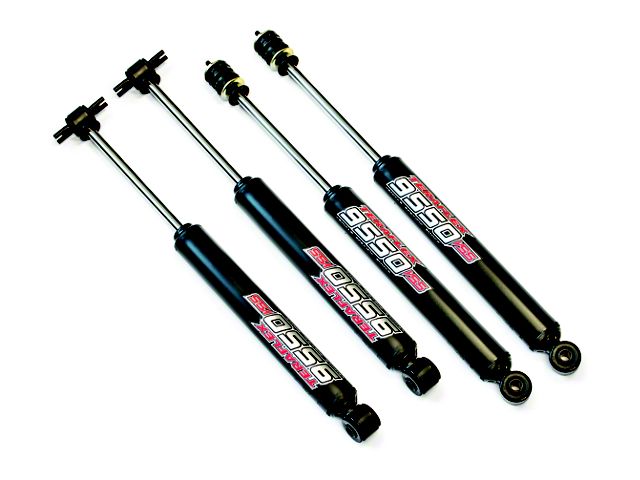
Twin-tube shocks use two concentric cylinders — an inner working tube and an outer reserve tube. As the piston moves through the inner tube, hydraulic fluid passes through valves between the two cylinders to control damping. This is the most common and affordable design on the market.
Twin-tube shocks work well for on-road driving and light-duty use, but they have a key weakness: heat. When you push them hard on rough trails, the hydraulic fluid heats up and the damping characteristics change — a condition called shock fade. If you are primarily a street driver who hits mild fire roads on occasion, twin-tube shocks are a solid budget option. If you are regularly running technical trails, you will want to step up to a monotube or reservoir design.
Monotube Shocks
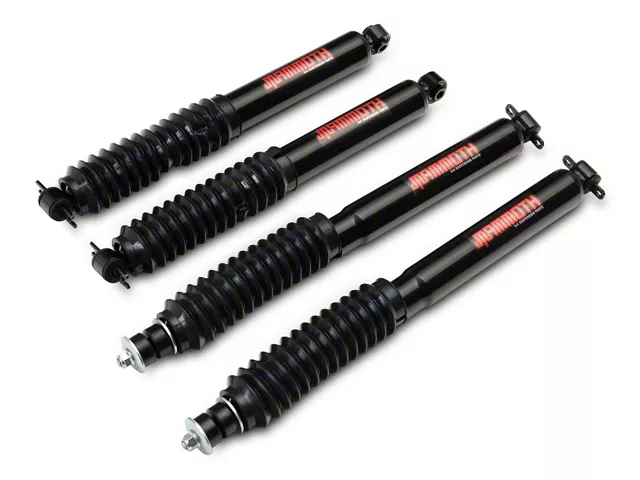
Monotube shocks use a single cylinder with a free-floating piston that separates the hydraulic oil from a high-pressure nitrogen gas charge. This design gives the oil more surface area in contact with the outer body, which means significantly better heat dissipation than a twin-tube.
The result is more consistent damping performance during extended off-road sessions. Monotube shocks also tend to be more responsive to small inputs, which translates to a smoother ride on highway driving. They sit in the mid-range price point and represent the sweet spot for most Wrangler owners who split time between daily driving and weekend wheeling.
Reservoir Shocks
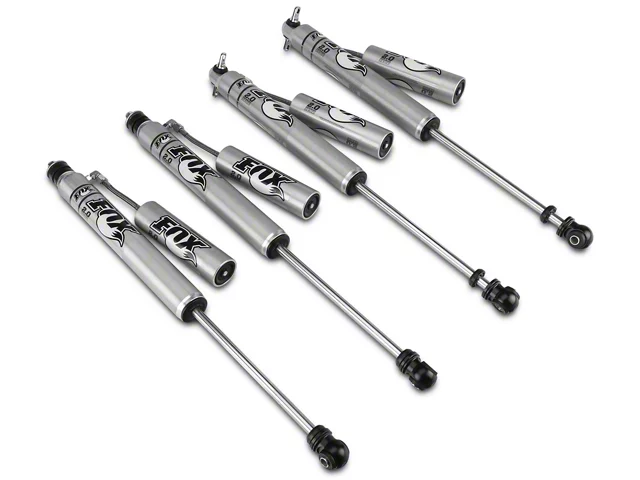
Reservoir shocks (also called remote reservoir shocks) add an external oil reservoir connected to the main shock body by a high-pressure hose. This extra reservoir increases total oil capacity, which dramatically improves heat management during aggressive off-road driving.
More oil means more thermal mass, so the shock can absorb and dissipate heat over a longer period before fade sets in. Many reservoir shocks also feature external compression adjustment knobs, letting you tune damping on the fly — softer for highway cruising, firmer for rock crawling. These are the go-to choice for serious off-roaders and competition builds, but they come at a premium price.
Internal Bypass Shocks
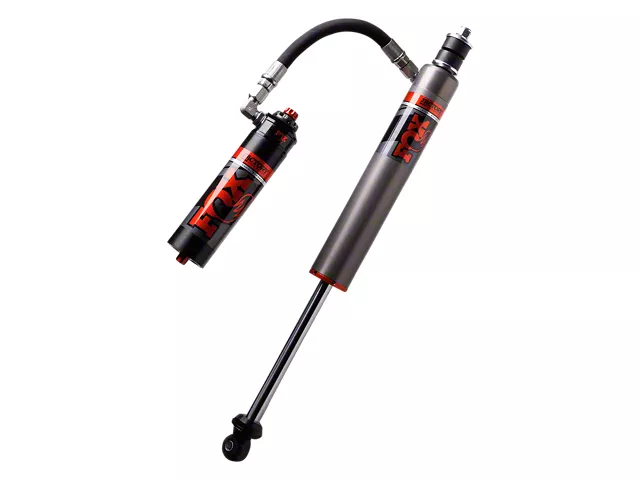
Internal bypass shocks are the top tier of shock technology. They use a series of bypass ports machined into the shock body along with specially designed pistons to deliver position-sensitive damping. In the mid-stroke range (highway cruising, moderate trail driving), the shock is relatively soft and compliant. As the shock compresses deeper into its travel — like when you drop off a ledge or slam into a deep rut — it progressively firms up to prevent bottoming out.
This variable damping rate gives you the best of both worlds: a comfortable ride on the street and aggressive support on the trail. King Shocks is one of the most recognized names in internal bypass technology, and their units are fully rebuildable for long-term value. If you are building a high-performance trail rig or a rock bouncer, internal bypass shocks are worth the investment.
Shock Type Comparison
| Type |
Construction |
Heat Management |
Best For |
Price Range (Per Shock) |
| Twin-Tube |
Two concentric cylinders |
Basic |
Street driving, light-duty |
$30–$70 |
| Monotube |
Single cylinder, floating piston |
Good |
Daily/trail combo |
$60–$150 |
| Reservoir |
Monotube + external reservoir |
Excellent |
Serious off-road, competition |
$200–$400 |
| Internal Bypass |
Position-sensitive porting |
Excellent |
High-performance builds |
$300–$500+ |
Need a deeper dive into how all these parts work together? Check out the full breakdown of suspension components to see where shocks fit into the bigger picture.
Best Jeep Wrangler Shocks by Brand
The best shocks for a Jeep Wrangler depend on your driving style and budget. Bilstein 5100 Series monotube shocks are the top all-around value for daily driving and moderate off-roading. Fox 2.0 Performance Series shocks deliver superior on-road comfort, while Fox 2.5 Factory Series and King reservoir shocks are the go-to choices for aggressive trail use and competition builds.
Once you know what type of shock you need, it is time to narrow down the brand. Each manufacturer brings a different strength to the table — some prioritize ride comfort, others focus on trail durability, and a few cater to the overland and expedition crowd. Here are the top Jeep Wrangler shock brands and what each one does best.
Bilstein 5100 Series
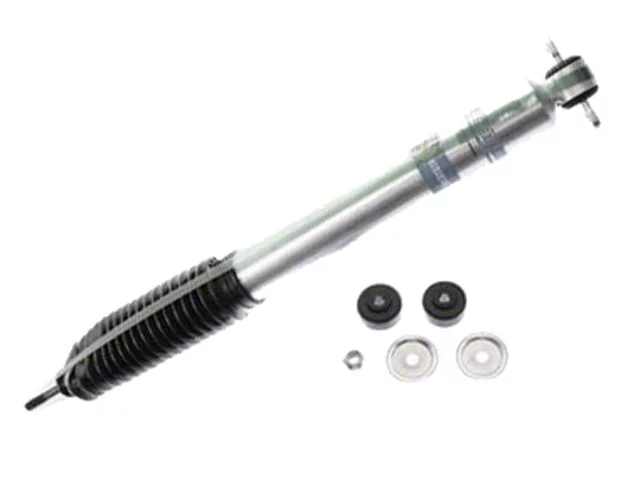
The Bilstein 5100 is one of the most popular Jeep Wrangler shock upgrades for good reason. It is a monotube design with a zinc-plated body for corrosion resistance and Bilstein's position-sensitive damping technology. The 5100 handles daily driving with a smooth, controlled ride and transitions well to moderate trail use. If you are looking for one shock that handles both roles without breaking the bank, this is the benchmark.
- Type: Monotube
- Best for: All-around daily and trail use
- Lift range: Stock to 2.5 inches (varies by application)
Fox 2.0 Performance Series
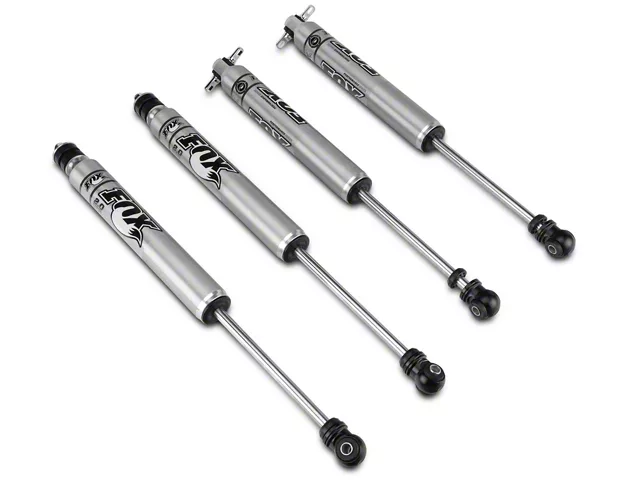
Fox 2.0 Performance Series shocks use an internal floating piston (IFP) monotube design that delivers outstanding on-road comfort with solid off-road capability. They are known for smooth bump compliance — the shock absorbs small impacts quietly without transmitting harshness into the cabin. This makes them a favorite for Wrangler owners who put on a lot of highway miles but still want to hit the trail on weekends.
- Type: Monotube (IFP)
- Best for: On-road comfort with trail capability
- Lift range: Stock to 3 inches
Fox 2.5 Factory Series
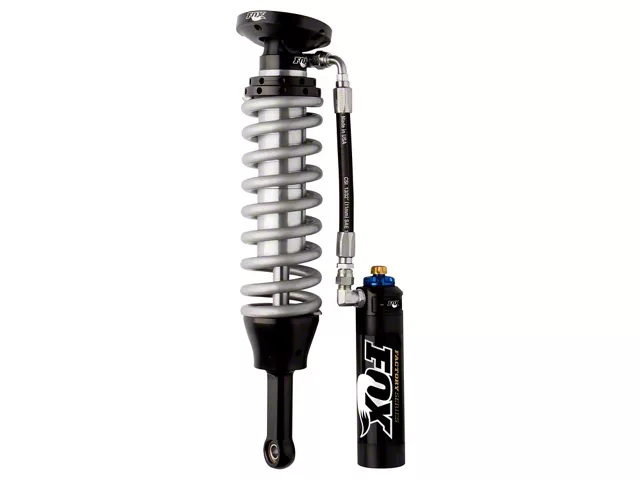
When you step up to the Fox 2.5 Factory Series, you are getting into serious off-road territory. These shocks feature an external reservoir for extended oil capacity and adjustable compression damping so you can tune the ride for different terrain. The larger 2.5-inch bore provides more damping force, and the reservoir keeps temperatures in check during sustained high-speed desert runs or technical rock crawling.
- Type: Reservoir (external)
- Best for: Aggressive off-road, desert racing, rock crawling
- Lift range: 2 to 6 inches
King Shocks
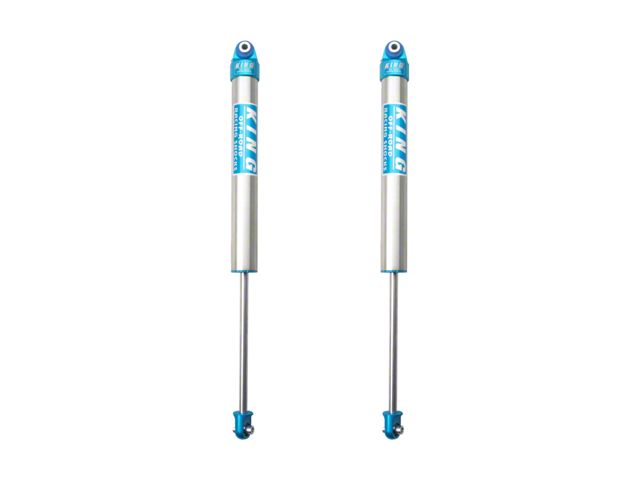
King Shocks are a premium, race-proven choice built for long-travel suspension systems and extreme terrain. Their internal bypass technology delivers position-sensitive damping that adjusts automatically based on where the shock is in its travel. Every King shock is rebuildable and re-valvable, which means you can have them refreshed and re-tuned instead of replacing them. If you are building a dedicated off-road rig or competing, King is in a class of its own.
- Type: Internal bypass / reservoir
- Best for: Premium off-road, long-travel builds, competition
- Lift range: 2 to 6+ inches
Old Man Emu (OME) by ARB
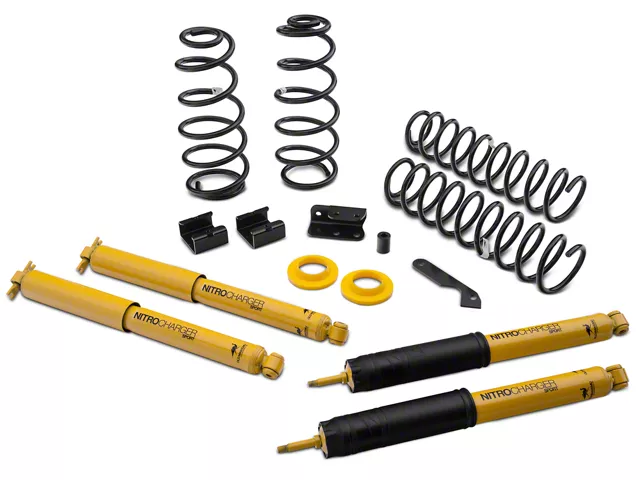
Old Man Emu shocks are engineered in Australia by ARB and designed specifically for overland and expedition builds. OME tunes their valving for loaded vehicles — if you are running a roof rack, bumpers, a winch, and recovery gear, OME shocks are designed to handle that extra weight without sagging or losing ride quality. They offer ride height correction for heavily loaded Wranglers, making them a favorite in the overland community.
- Type: Monotube / twin-tube (varies by application)
- Best for: Overland builds, heavy-load hauling
- Lift range: Stock to 3 inches
Rough Country N3
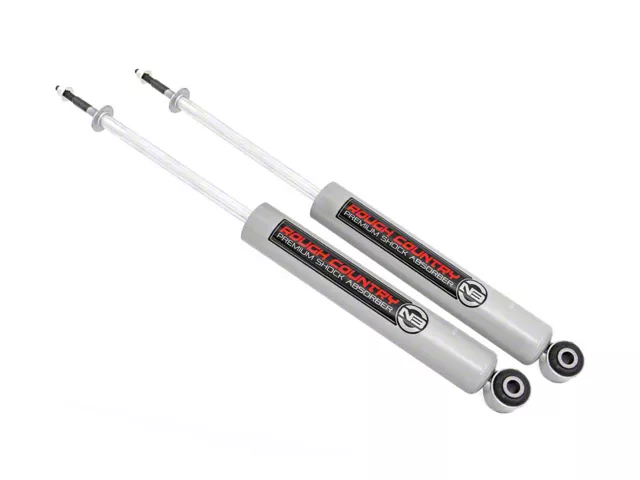
If you are on a budget, the Rough Country N3 is one of the best bang-for-your-buck shock upgrades you can bolt on. These nitrogen-charged twin-tube shocks feature 10-stage velocity-sensitive valving that delivers a noticeable improvement over worn factory shocks. They are not going to compete with premium monotube or reservoir setups, but for the price, they are a smart upgrade for street-driven Wranglers or builds where the budget is going elsewhere.
- Type: Twin-tube (nitrogen charged)
- Best for: Budget-friendly upgrade
- Lift range: Stock to 4 inches (varies by model)
Teraflex Falcon
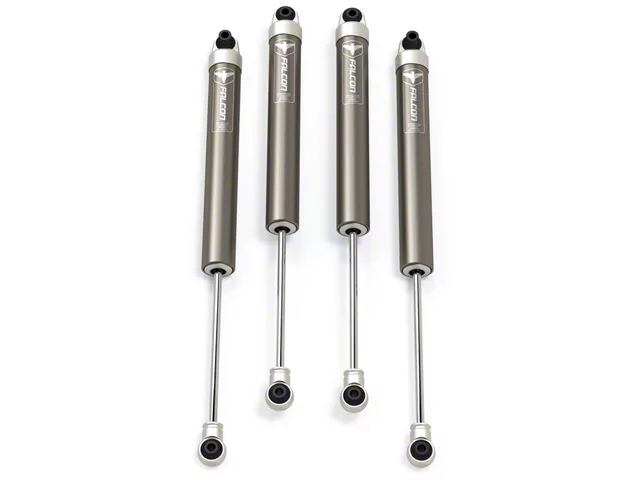
Teraflex Falcon shocks are a strong option for JL and JK owners who want adjustable ride tuning. The Falcon line includes multiple tiers — the 2.1 monotube for daily driving, the 3.1 piggyback with adjustable compression, and the 3.3 Fast Adjust with a tool-free external compression adjuster. The ability to dial in your ride from the parking lot to the trailhead makes the Falcon series stand out.
- Type: Monotube / piggyback (varies by model)
- Best for: Adjustable ride tuning for JL and JK builds
- Lift range: Stock to 6 inches
Brand Comparison
| Brand |
Type |
Best For |
Lift Range |
Price Per Shock |
| Bilstein 5100 |
Monotube |
All-around daily/trail |
Stock–2.5" |
$70–$120 |
| Fox 2.0 |
Monotube (IFP) |
On-road comfort, trail capable |
Stock–3" |
$80–$140 |
| Fox 2.5 Factory |
Reservoir |
Serious off-road, racing |
2"–6" |
$250–$400 |
| King Shocks |
Internal bypass |
Premium off-road, competition |
2"–6+" |
$300–$500+ |
| Old Man Emu |
Monotube/twin-tube |
Overland, heavy loads |
Stock–3" |
$60–$120 |
| Rough Country N3 |
Twin-tube |
Budget upgrade |
Stock–4" |
$40–$60 |
| Teraflex Falcon |
Monotube/piggyback |
Adjustable tuning |
Stock–6" |
$100–$300 |
Ready to start shopping? Browse the full catalog of Jeep Wrangler shocks and filter by your specific model year.
Recommended Shocks by Lift Height
Lifted Jeep Wranglers require shocks specifically rated for the installed lift height. Stock-length shocks on a lifted Jeep will bottom out or top out prematurely, causing harsh rides and potential damage. Always match your shock travel length to your exact lift — manufacturers specify compatible ranges like 0–2 inches, 2–3.5 inches, or 3.5–6 inches.
This is one of the most common mistakes Wrangler owners make: upgrading the lift kits but running stock-length or mismatched shocks. Your lift height directly dictates how much travel your shocks need. Go too short and you will top out over every bump. Go too long and the shock cannot control body movement effectively. Here is what to run at each lift level.
Stock Height (0–2 Inch Lift)

At stock height or with a mild leveling kit, you do not need extended-travel shocks. This is where direct-fit replacements shine. Your best options at this height deliver ride quality improvements without requiring any suspension geometry changes.
- Bilstein 5100 Series — position-sensitive monotube, excellent daily driver upgrade
- Fox 2.0 Performance Series — smooth IFP monotube, outstanding on-road comfort
- Rough Country N3 — nitrogen-charged twin-tube, best budget pick
Mid-Range Lift (2–3.5 Inches)

A 2- to 3.5-inch lift is the most popular range for Wrangler builds that want improved ground clearance and larger tires without major drivetrain modifications. At this height, you need shocks with extended travel and valving tuned for the changed suspension geometry.
- Fox 2.0 IFP — available in extended-travel lengths for mid-range lifts
- Bilstein 5100 (extended travel) — application-specific lengths for popular lift kits
- Teraflex Falcon 3.1 — piggyback design with adjustable compression for fine-tuning
If you are running 3-inch lift kits, pay close attention to shock specifications. Three inches is right at the boundary where stock-replacement shocks will not work, and you need the extended-travel versions.
Tall Lift (3.5–6 Inches)

Once you are above 3.5 inches of lift, you are in serious off-road territory. You need long-travel shocks with significant oil capacity to handle the increased suspension travel and the aggressive terrain that typically comes with this kind of build.
- Fox 2.5 Factory Series — external reservoir, adjustable compression, built for sustained hard use
- King 2.5 Reservoir — race-proven, rebuildable, position-sensitive internal bypass available
- Teraflex Falcon 3.3 — Fast Adjust external compression tuning for on-the-fly changes
Lift-Height Recommendation Summary
| Lift Height |
Recommended Shocks |
Key Feature |
| 0–2" |
Bilstein 5100, Fox 2.0, Rough Country N3 |
Direct-fit, ride quality upgrade |
| 2–3.5" |
Fox 2.0 IFP, Bilstein 5100 (extended travel), Falcon 3.1 |
Extended travel, adjustability |
| 3.5–6" |
Fox 2.5 Factory, King 2.5, Falcon 3.3 |
Reservoir cooling, maximum travel |
Shocks by Wrangler Generation
Jeep Wrangler shocks are not one-size-fits-all. Each generation — JL, JK, TJ, and YJ — has different mounting hardware, shock lengths, and suspension geometry. Always confirm your shock fitment by selecting your exact model year before purchasing, and keep in mind that aftermarket options are most plentiful for the JK and JL platforms.
Your Wrangler's generation affects everything from mounting style to available shock options. Here is a quick breakdown of what to expect for each platform.
JL Wrangler (2018–Present)
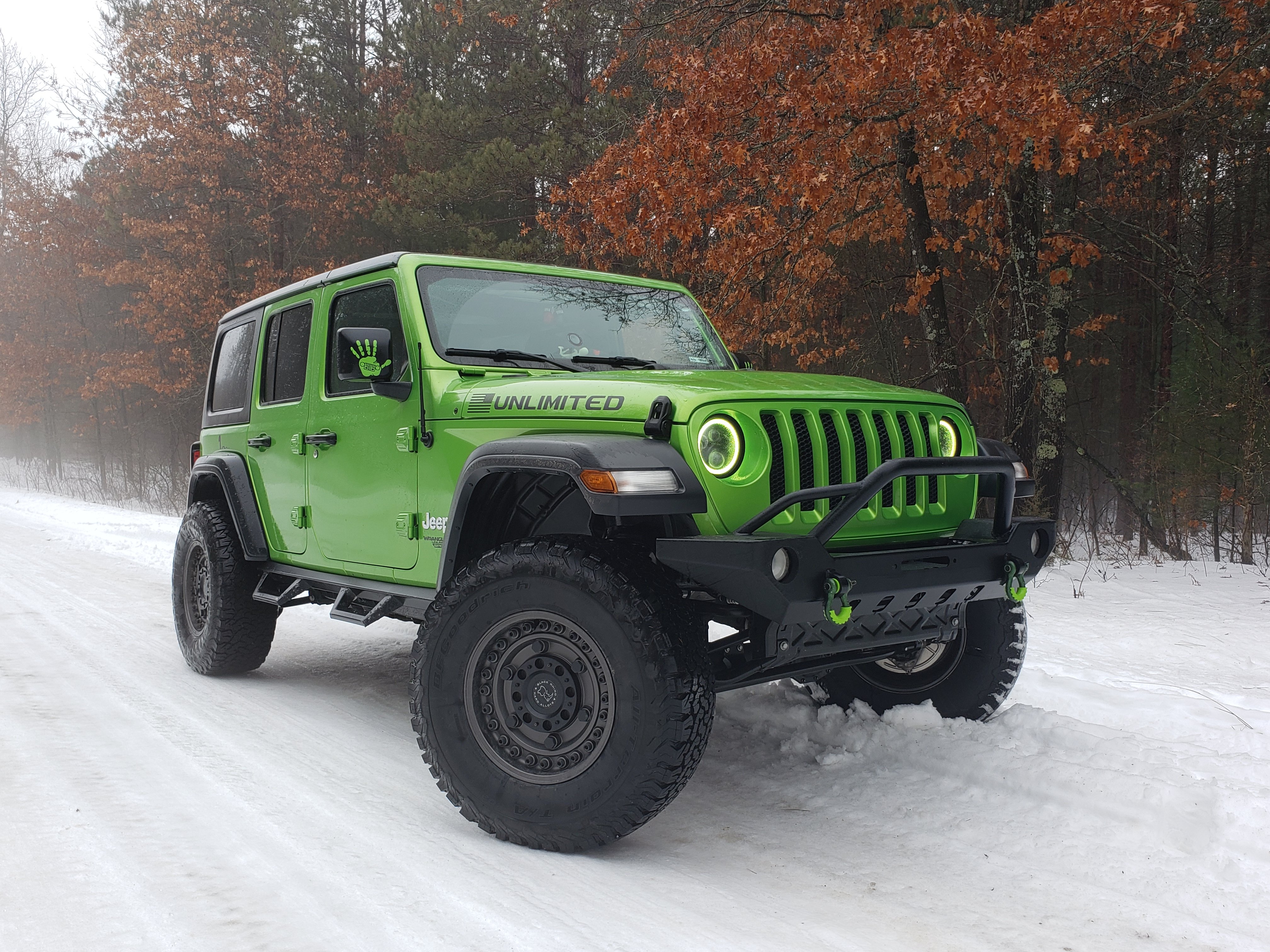
The JL platform features a more refined suspension design with improved geometry over the JK. The factory shocks are better than previous generations, but aftermarket upgrades still make a significant difference. Every major brand listed in this guide offers JL-specific applications, and the Teraflex Falcon line was specifically developed with the JL's suspension tuning in mind.
JK Wrangler (2007–2018)
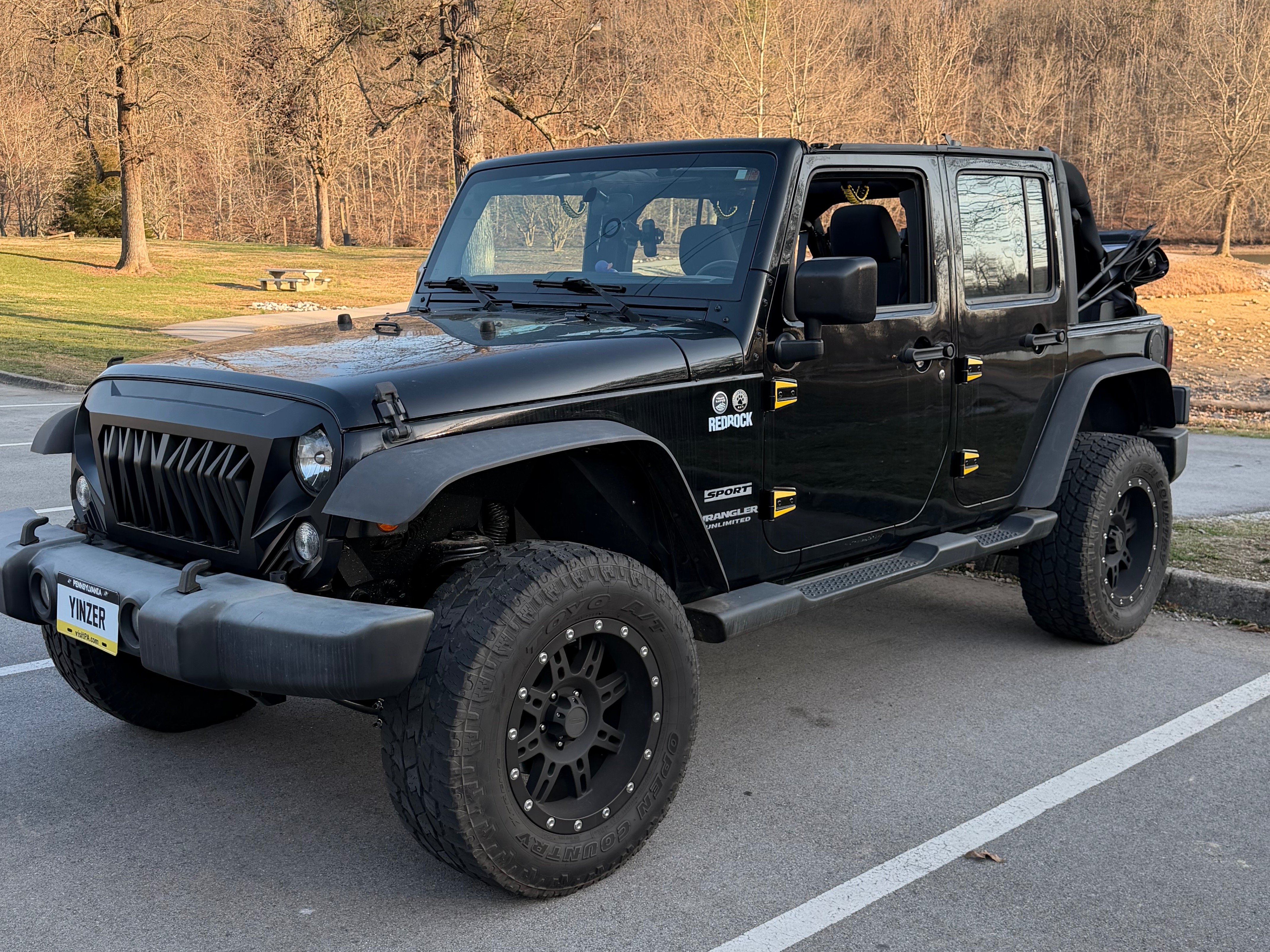
The JK is the most popular platform for aftermarket shock upgrades. It ran for over a decade, has an enormous aftermarket catalog, and nearly every shock brand offers JK-specific options in multiple lift heights. Whether you are building a 2-door for tight trails or a 4-door Unlimited for overlanding, you will find shocks tuned for your exact setup. Browse JK shocks to see available options by lift height.
TJ Wrangler (1997–2006)
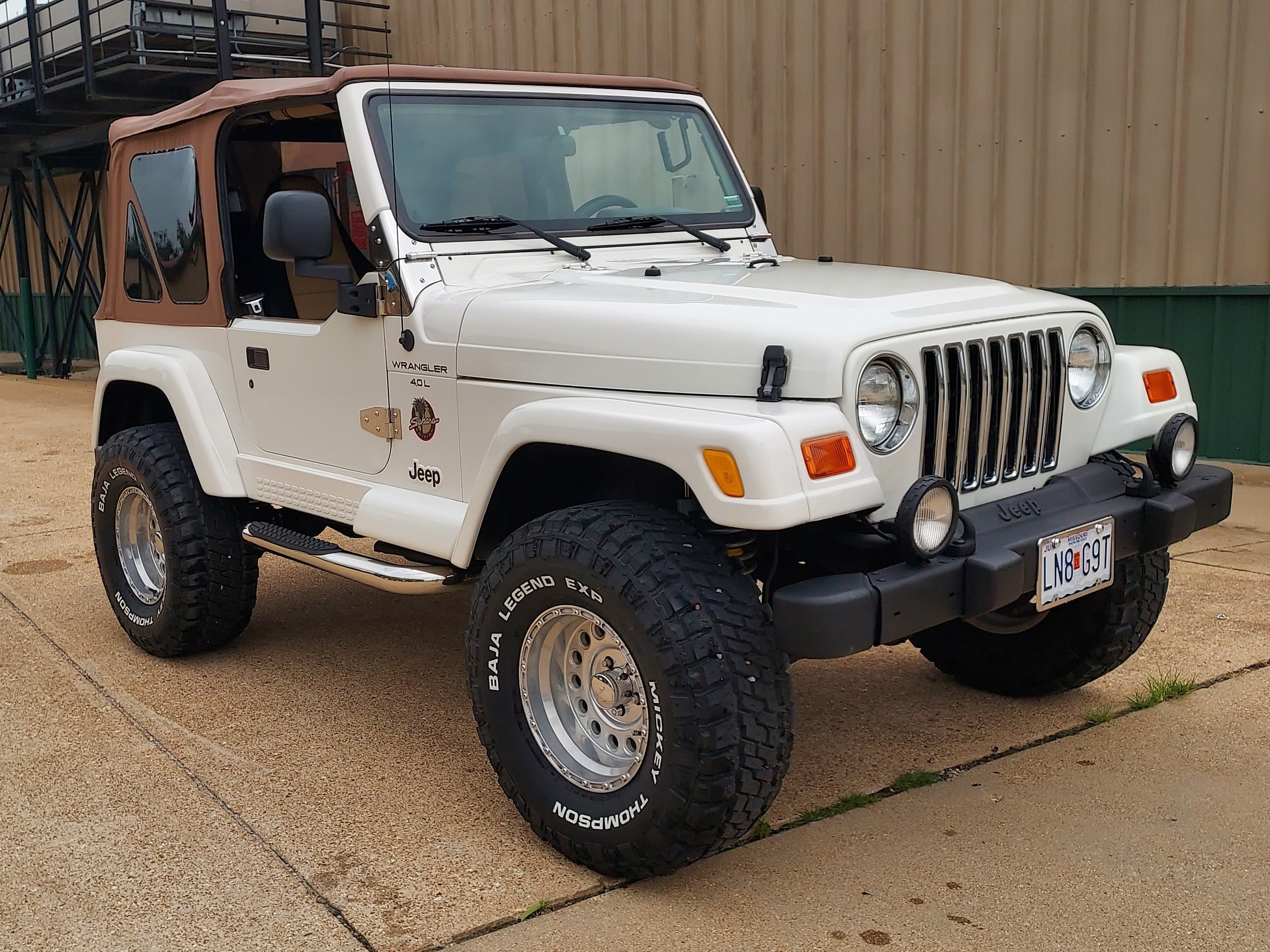
The TJ introduced coil-spring suspension to the Wrangler lineup, which was a major improvement over the YJ's leaf springs. Shock options for the TJ are plentiful — Bilstein, Fox, and Rough Country all offer TJ-specific applications. If you are wheeling a TJ, make sure your shocks match both your lift height and the coil-spring setup. Explore TJ shocks to find the right fit for your build.
YJ Wrangler (1987–1995)
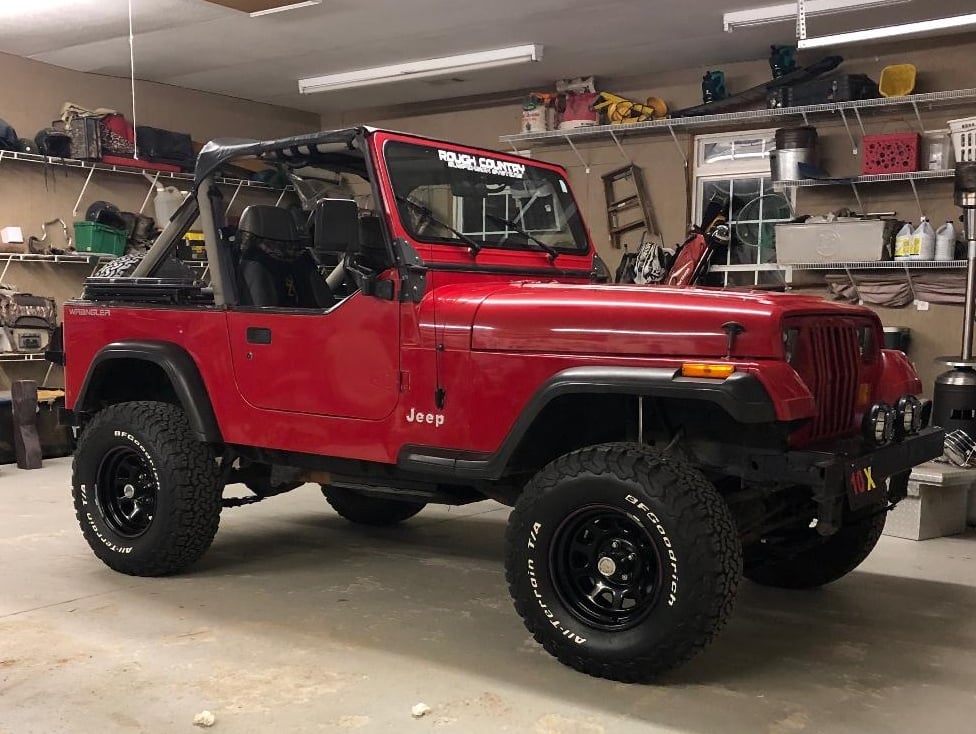
The YJ uses a leaf-spring rear suspension, which affects shock mounting and travel compared to later coil-spring models. Shock options are more limited than the JK or JL, but brands like Bilstein and Rough Country still offer YJ applications. If you are running a YJ on the trail, pairing upgraded shocks with new leaf springs or a spring-over-axle (SOA) conversion is a popular way to improve both ride quality and articulation.
How Long Do Jeep Wrangler Shocks Last?
Most Jeep Wrangler shocks last between 50,000 and 75,000 miles under normal street-driving conditions. If you regularly drive off-road, tow heavy loads, or tackle rough terrain, expect to replace your shocks closer to the 40,000-mile mark. Premium rebuildable shocks from brands like King can be refreshed instead of replaced, extending their usable life significantly.
How and where you drive has the biggest impact on shock lifespan. Here is a general breakdown by driving style:
- Street driving only: 60,000–75,000 miles
- Mixed street and light trail: 45,000–60,000 miles
- Regular off-road use: 30,000–45,000 miles
- Aggressive off-road / competition: 15,000–30,000 miles
- Frequent towing: 40,000–55,000 miles
Signs Your Shocks Need Replacement
Do you know what worn shocks feel like? Here are the warning signs to watch for:
- Excessive bouncing — your Wrangler continues bouncing after hitting a bump instead of settling quickly
- Nose-diving under braking — the front end dips noticeably when you apply the brakes
- Rear-end squat — the rear drops during acceleration
- Increased body roll — you feel the Jeep lean excessively through turns
- Visible oil leaks — fluid on the shock body or pooling at the base
- Uneven tire wear — scalloping or cupping patterns on your tread
- Harsh or unstable ride — the ride feels noticeably rougher than it used to
If you notice any combination of these symptoms, do not wait. Worn shocks affect braking distance, steering control, and tire life. Replacing them is one of the most impactful safety and comfort upgrades you can make. While you are under the Jeep, it is also a good time to inspect your steering stabilizers — worn stabilizers and worn shocks together can make a Wrangler feel dangerously loose at highway speed.
How to Replace Jeep Wrangler Shocks
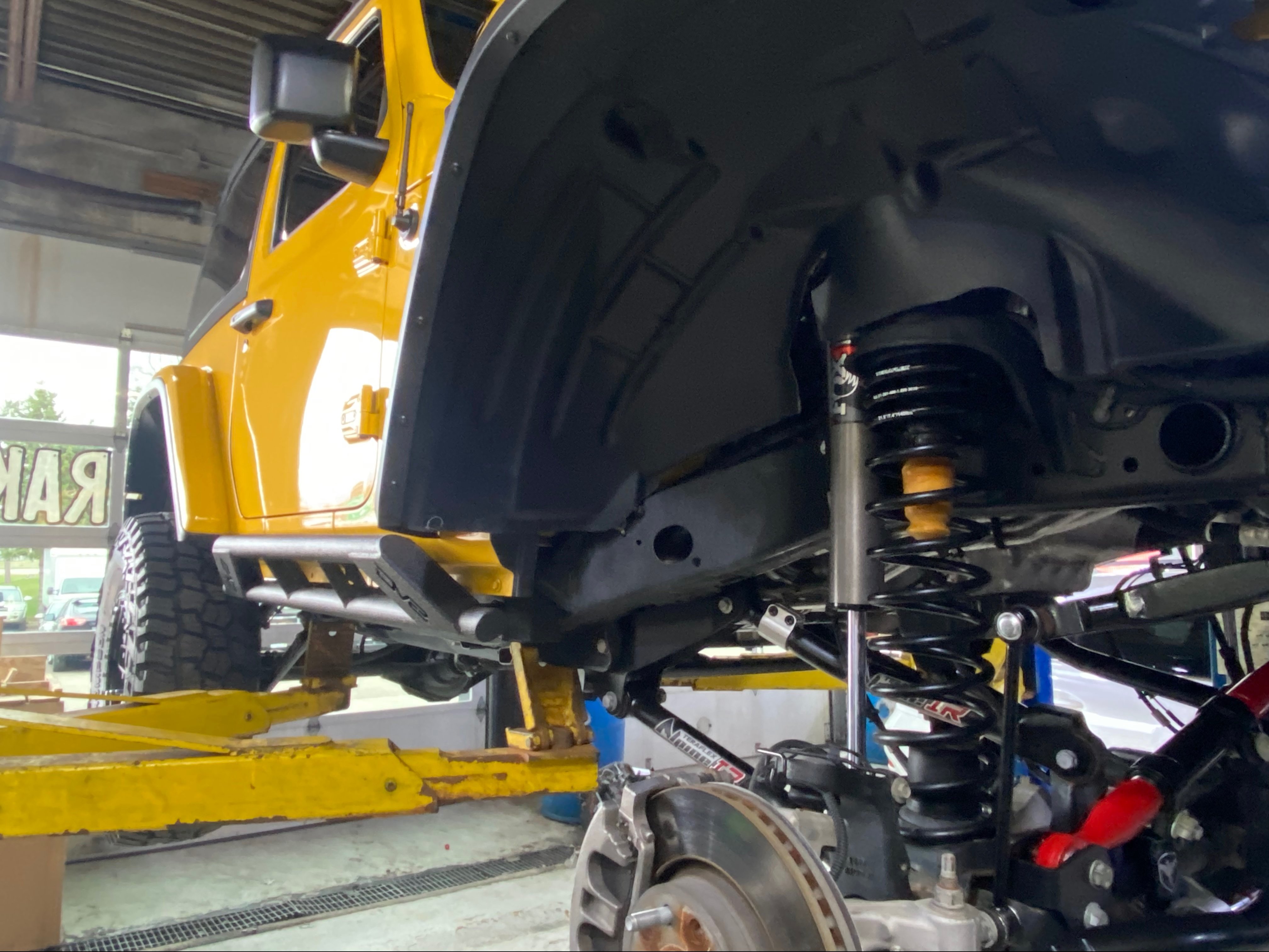
Jeep Wrangler shock replacement is a beginner-to-intermediate DIY job rated about 3 out of 5 in difficulty. Most owners can complete all four shocks in two to four hours with basic hand tools, a floor jack, and jack stands. The process involves removing the upper and lower mounting hardware, swapping the old shock for the new one, and torquing bolts to factory specifications.
Difficulty: 3/5 (Intermediate)
Time: 2–4 hours for all four shocks
Skill level: Comfortable with basic wrench work
Tools You Will Need
- Floor jack and jack stands (minimum 2, ideally 4)
- Socket set (metric and standard, depending on generation)
- Combination wrenches
- Penetrating oil (PB Blaster or equivalent)
- Torque wrench
- Wheel chocks
- Safety glasses
- Utility knife (for cutting compression straps on new shocks)
Step-by-Step Replacement
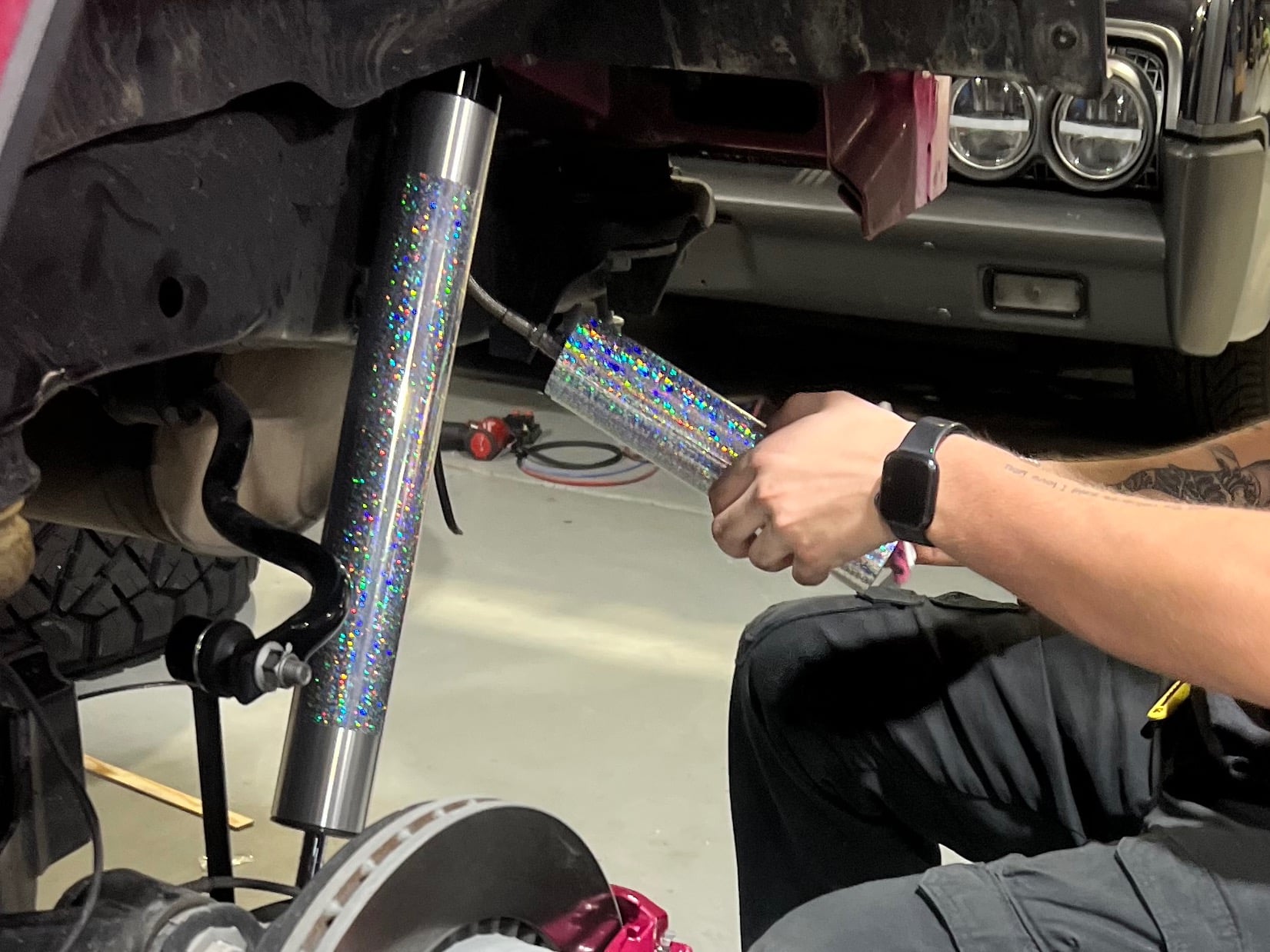
- Park on level ground and engage the parking brake. Place wheel chocks behind the tires that will remain on the ground.
- Raise the vehicle using a floor jack and secure it on jack stands. Never work under a vehicle supported only by a jack.
- Spray penetrating oil on the upper and lower shock mounting hardware. Let it soak for 10–15 minutes — this saves a lot of frustration on older Wranglers with corroded bolts.
- Loosen the lower shock retaining nut but leave the bolt in place for now. This keeps the shock supported while you work on the top.
- Remove the upper mounting hardware. Depending on your generation, this may be a single nut on a stud or a bolt-through-bushing setup.
- Remove the lower bolt and take out the old shock.
- Install the new shock by inserting the lower bolt first and hand-threading the nut. If your new shock has a compression strap, do not cut it until the shock is mounted at both ends.
- Install the upper mounting hardware and hand-tighten.
- Torque all fasteners to your vehicle's factory specifications. Check your owner's manual or a service manual for the correct torque values for your model year.
- Cut the compression strap (if applicable) with a utility knife.
- Repeat for the remaining shocks. Always replace shocks in pairs (both fronts or both rears) at minimum.
Tips and Common Mistakes
- Always replace in pairs. Mismatched shocks (one new, one old) on the same axle will create uneven damping and unpredictable handling.
- Do not skip the penetrating oil step. Rusted mounting bolts are the number one reason shock replacements take longer than expected.
- Check bushing condition. If your shock bushings are cracked or deteriorated, replace them at the same time.
- Do not cut the compression strap early. The strap keeps the shock compressed for easier installation. Cut it only after both mounting points are secured.
When to Hire a Professional
Consider professional installation if you are running a tall lift (3.5 inches or more) that requires additional suspension modifications, if mounting hardware is severely corroded, or if you are not comfortable working under a raised vehicle. Professional installation typically runs $150 to $300 depending on your area and the complexity of the setup.
How Much Do Jeep Wrangler Shocks Cost?
Replacing all four shocks on a Jeep Wrangler typically costs between $200 and $1,600 for parts, depending on the brand and type. Budget twin-tube shocks start around $40–$60 each, mid-range monotube shocks run $70–$150 each, and premium reservoir shocks from Fox or King range from $200 to $500 per shock. Professional installation adds $150 to $300 in labor. Here is what to expect at each price tier:
Budget Tier ($200–$300 for all four)
Nitrogen-charged twin-tube shocks like the Rough Country N3. A noticeable improvement over worn factory shocks at the lowest cost. Best for street-driven Wranglers or builds where the budget is allocated toward other upgrades.
Mid-Range Tier ($300–$600 for all four)
Monotube shocks like the Bilstein 5100 or Fox 2.0. Significantly better heat management, ride quality, and durability than twin-tube designs. This is the sweet spot for most Wrangler owners who want a quality shock without spending into premium territory.
Premium Tier ($800–$2,000+ for all four)
Reservoir and internal bypass shocks from Fox 2.5, King, or Teraflex Falcon. These are built for sustained off-road performance, competition use, and high-mile durability. Many are rebuildable, which adds long-term value despite the higher upfront cost.
Cost Breakdown Summary
| Cost Category |
Budget |
Mid-Range |
Premium |
| Per shock |
$40–$70 |
$70–$150 |
$200–$500+ |
| All four shocks |
$160–$280 |
$280–$600 |
$800–$2,000+ |
| Professional install |
$150–$250 |
$150–$250 |
$200–$300 |
| Total (Parts + Labor) |
$310–$530 |
$430–$850 |
$1,000–$2,300+ |
Keep in mind that ExtremeTerrain offers free shipping on orders over $149 to the continental US, so most shock sets will ship free. Most orders also ship same day, so you can have your new shocks on the doorstep within days.
Frequently Asked Questions About Jeep Wrangler Shocks
See the FAQ section below for answers to the most common questions about Jeep Wrangler shocks, including replacement intervals, brand comparisons, lift-height matching, and installation difficulty.
Find the Right Shocks for Your Wrangler
Whether you are replacing worn factory shocks or building out a full suspension upgrade, matching the right shock type, brand, and travel length to your lift height and driving style makes all the difference. Use ExtremeTerrain's shop-by-vehicle tool to filter shocks for your exact Wrangler year and model, compare options side by side, and get your order shipped fast with free shipping over $149. If you are not sure which shock is right for your build, reach out to an ExtremeTerrain Sales Tech — they are real off-road enthusiasts who can help you dial in the perfect setup for your rig.
Frequently Asked Questions About Jeep Wrangler Shocks
Choosing the right shocks for your Jeep Wrangler means understanding how different types, brands, and lift heights affect ride quality and off-road performance. Here are the most common questions Wrangler owners ask.
How Often Should Shocks Be Replaced on a Jeep Wrangler?
Most Jeep Wrangler shocks last between 50,000 and 75,000 miles under normal driving conditions. Off-road use, towing, and rough terrain accelerate wear significantly, often requiring replacement closer to the 40,000-mile mark. Signs like excessive bouncing, nose-diving during braking, or uneven tire wear indicate your shocks need immediate attention.
What Are the Best Shocks for a Jeep Wrangler?
The best shocks depend on your driving style and lift height. Bilstein 5100 Series monotube shocks offer the best all-around value for daily drivers and moderate off-roading. Fox 2.0 Performance Series shocks deliver superior on-road comfort with excellent bump compliance. King and Fox 2.5 reservoir shocks are the top choices for serious off-road enthusiasts running larger lifts.
How Do I Know If My Jeep Shocks Are Bad?
Common signs of worn Jeep Wrangler shocks include excessive bouncing after hitting bumps, the front end diving when braking, rear-end squatting during acceleration, and increased body roll in turns. Visible oil leaks on the shock body, uneven tire wear patterns, and a generally harsh or unstable ride also confirm your shocks need replacement.
What Is the Difference Between Monotube and Twin-Tube Shocks?
Monotube shocks use a single cylinder with a floating piston that separates oil from nitrogen gas, delivering consistent fade-free performance under hard use. Twin-tube shocks feature two concentric cylinders and cost less but are more prone to heat-related fade during sustained off-road driving. Monotube designs cool faster and perform better on trails.
Do I Need Different Shocks If My Jeep Wrangler Is Lifted?
Yes, lifted Jeep Wranglers require shocks specifically rated for the installed lift height. Stock-length shocks on a lifted Jeep will bottom out or top out prematurely, causing harsh rides and potential damage. Always match your shock length to your exact lift height — most manufacturers specify compatible lift ranges like 0–2 inches, 2–3.5 inches, or 3.5–6 inches.
How Much Does It Cost to Replace Jeep Wrangler Shocks?
Replacing all four shocks on a Jeep Wrangler typically costs between $200 and $1,200 for parts alone, depending on the brand and type. Budget twin-tube shocks like Rough Country N3s run around $50 each, while premium reservoir shocks from Fox or King range from $200 to $400 per shock. Professional installation adds $150 to $300 in labor.
Can I Install Jeep Wrangler Shocks Myself?
Jeep Wrangler shock replacement is a beginner-to-intermediate DIY job that most owners can complete in two to four hours with basic hand tools. You need a floor jack, jack stands, and standard wrenches or sockets. The process involves removing the upper and lower mounting hardware, swapping the old shock for the new one, and torquing bolts to factory specifications.
Are Reservoir Shocks Worth the Extra Cost for a Jeep Wrangler?
Reservoir shocks are worth the investment if you frequently drive off-road or run a lift of 3 inches or more. The external reservoir increases oil capacity, which prevents overheating and performance fade during extended trail use. For primarily street-driven Wranglers, standard monotube shocks like the Bilstein 5100 deliver excellent performance at a lower price point.