

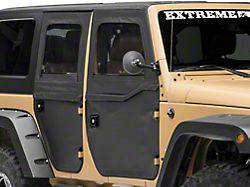



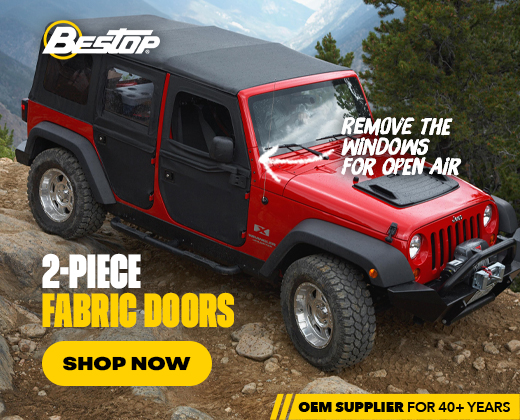







Few automotive features define a vehicle's character as distinctly as removable doors, and the Wrangler's door versatility remains central to its appeal. But factory doors represent just the beginning—aftermarket door options transform how you experience your Jeep across seasons and usage scenarios. Tube doors maximize the open-air experience for summer trail running while maintaining essential side protection and meeting basic safety requirements. Half doors blend weather protection with ventilation for year-round versatility. Full doors with upgraded materials reduce weight and improve durability over aging factory units. Safari doors provide quick-change upper sections that transform your Jeep from highway cruiser to topless fun in minutes. Beyond doors themselves, essential accessories enable safe removal, secure storage, relocated mirror mounting for legal compliance, and enhanced sealing to combat water intrusion. Our Wrangler door collection addresses every generation from TJ through JL/JT platforms, with options spanning practical daily-driver solutions to ultimate open-air configurations. Understanding door types, compatibility with soft versus hard tops, and accessory requirements helps you create the perfect setup for your specific needs.
To streamline your selection process, we've categorized our Jeep doors & door accessories for Wrangler across essential specifications:
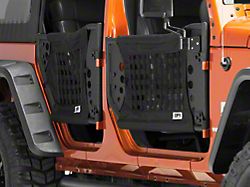
Door Type- Tube Doors - Minimalist and lightweight, tube doors provide necessary safety structure while maximizing the open-air experience that defines Wrangler ownership. Constructed from steel or aluminum tubing, they're easy to remove and store while offering protection from trail hazards and meeting basic safety requirements. Perfect for warm-weather wheeling and those who want maximum ventilation without completely removing doors.
- Trail Doors - Expertly designed to deliver optimal performance and value, our trail doors options represent carefully vetted solutions that meet the exacting demands of enthusiasts and professionals who refuse to compromise on quality or capability.
- Door Storage - Expertly designed to deliver optimal performance and value, our door storage options represent carefully vetted solutions that meet the exacting demands of enthusiasts and professionals who refuse to compromise on quality or capability.
- Foot Pegs - Expertly designed to deliver optimal performance and value, our foot pegs options represent carefully vetted solutions that meet the exacting demands of enthusiasts and professionals who refuse to compromise on quality or capability.
Choosing Wrangler doors involves understanding how different configurations impact daily life, weather protection, security, and the open-air experience that attracts many to Jeep ownership. Full doors provide maximum comfort and security but sacrifice the visceral connection to the environment. Tube doors deliver ultimate open-air experience but offer minimal weather protection and increased wind noise. Half doors and safari options attempt to balance these extremes. Generation-specific mounting differences between TJ, JK, and JL models affect compatibility, while mirror relocation and door storage requirements influence practical usability. The questions below address common considerations that help Wrangler owners select door configurations and accessories that truly enhance their ownership experience rather than becoming unused components stored in the garage.
Frequently Asked Questions
1. What are the pros and cons of tube doors versus half doors for Wranglers?
These door styles represent different philosophies regarding open-air experience versus practicality. Tube doors provide maximum openness—just skeletal tubing frames that meet basic side-impact protection requirements while offering nothing between you and the environment. They're lightweight (typically 20-30 pounds per pair), extremely easy to remove and store, provide zero weather protection, and create the most visceral driving experience. However, tube doors offer no door pockets, no armrests, no window operation, and minimal side-impact protection. They excel for summer trail running, rock crawling where you need to see your line, and situations where wind buffeting doesn't matter. Half doors retain the full lower door section with its storage pockets, armrests, and conventional latching while cutting away the upper half. They provide significantly better side-impact protection than tube doors, prevent rocks and debris from entering the cabin, and offer some convenience features. Half doors still deliver substantial open-air experience while being more practical for daily driving. They typically weigh 40-50 pounds per pair. For Wrangler owners who want open-air driving with some practicality, half doors represent the better compromise. For those prioritizing maximum openness and have full doors for bad weather, tube doors deliver the ultimate experience.
2. Do I need to relocate mirrors when running tube or half doors?
Yes, in most jurisdictions, functional side mirrors are legally required even when running doorless or with tube/half doors. Factory mirrors mount to the full doors and obviously can't be used with tube doors. Several relocation solutions exist: windshield hinge mirrors that clamp to the windshield frame provide the most popular solution—they're adjustable, quick to install, and fold flat when not needed. Body-mounted mirrors attach to the door hinges or body panels using factory mounting points, providing more stable mounting but requiring more involved installation. Quick-release mirror systems allow easy removal when switching between door configurations. Mirror selection should consider: vibration resistance at highway speeds (windshield hinge mirrors can vibrate annoyingly without quality dampening), wind noise generation, ease of adjustment from the driver seat, and compatibility with soft tops or bikini tops that might interfere with certain mounting positions. Most Wrangler owners running tube or half doors keep a set of relocating mirrors permanently installed during summer months rather than constantly switching. Aerodynamic designs minimize wind noise and buffeting. Budget $100-200 for quality mirror systems that provide safe visibility without constant adjustment or annoying vibration.
3. Can I use power windows and locks with aftermarket Wrangler doors?
Power window and lock integration depends entirely on door design and your Wrangler's generation. Full aftermarket doors designed as complete factory replacements often include provisions for power windows and locks, using factory wiring harnesses and switches. These doors cost significantly more but maintain factory convenience. Most tube doors and half doors eliminate power features entirely—their minimalist construction doesn't accommodate the motors, regulators, and locking mechanisms. For JK and JL Wranglers with factory power features, switching to tube or half doors means losing that functionality during the summer months when running minimal doors. Some Wrangler owners keep factory doors for daily driving and winter use (retaining power features) while using tube doors specifically for trail days and summer recreation. A few premium aftermarket full doors incorporate power window capability while reducing weight through advanced materials, though these represent significant investments. If power windows are important for daily driving comfort, plan to maintain full doors for commuting and save tube or half doors for weekend adventures. The open-air experience tube and half doors provide generally outweighs the loss of power features for dedicated recreation, but daily drivers appreciate maintaining full doors with all amenities.
4. How do I properly store Wrangler doors when not in use?
Proper door storage prevents damage and keeps heavy doors accessible yet out of the way. Several storage approaches exist: wall-mounted door hangers represent the most popular solution for garages—they use padded hooks or brackets that support doors vertically against walls, consuming minimal floor space. Install hangers at appropriate height for your door configuration and ensure wall studs provide adequate support for door weight. Door storage carts on wheels allow easy movement and can be rolled into corners or under workbenches when not needed—particularly useful for renters or those with limited wall space. Some Wrangler owners build custom storage racks that hold multiple door sets organized and protected. When storing doors, protect paint and surfaces with foam padding at contact points, avoid leaving doors leaning against concrete floors where moisture promotes corrosion, and ensure doors don't contact each other during storage to prevent scratches. For those who switch doors frequently, quick-access storage near the vehicle makes sense. Less frequent door changes allow storing them deeper in garages or basements. Full doors are heavy (60-80 pounds each for front doors), so storage solutions must provide adequate support. Many aftermarket companies sell complete door storage systems specifically designed for Wrangler doors that include all necessary hardware and padding.
5. Are tube doors safe for highway driving and family use?
Tube door safety involves both legal compliance and practical risk assessment. Tube doors meet minimum federal motor vehicle safety standards for side-impact protection through their tubular structure, making them legal for highway use in most jurisdictions. However, they provide significantly less side-impact protection than full doors with their complete inner structure, impact beams, and side airbags (on newer models). The open design also means no barrier between occupants and road debris, other vehicles, or objects during accidents. For adults making informed decisions about their own risk tolerance, tube doors work acceptably for recreational use, summer cruising, and trail driving. For family use with children, most Wrangler owners prefer the additional protection of half doors or full doors—the extra safety margin matters when others depend on your judgement. Highway use creates additional considerations: wind noise becomes extreme above 55 mph, making conversation difficult without shouting. Rain provides zero protection—you and your interior will get soaked. Flying debris from trucks poses real injury risk without windows blocking it. Most tube door users limit highway driving to short stretches and avoid interstate use, keeping them primarily for slower-speed trails and back roads. For vehicles regularly used for family transportation or significant highway miles, full doors remain the prudent choice.
Fitment Includes:
- 1976, 1977, 1978, 1979, 1980, 1981, 1982, 1983, 1984, 1985, 1986, 1987, 1988, 1989, 1990, 1991, 1992, 1993, 1994, 1995, 1997, 1998, 1999, 2000, 2001, 2002, 2003, 2004, 2005, 2006, 2007, 2008, 2009, 2010, 2011, 2012, 2013, 2014, 2015, 2016, 2017, 2018, 2019, 2020, 2021, 2022, 2023 and 2024 Jeep Wranglers
- Rubicon, Sahara, Sport S, Sport, Unlimited, Islander, Rocky Mountain, Renegade Wranglers
*Please see product pages for any exceptions.