 FREE 1 to 3-Day Delivery on Orders $149+ Details

The Tire Replacement Procrastination Report

Extreme Terrain Staff
/ Nov 5 2026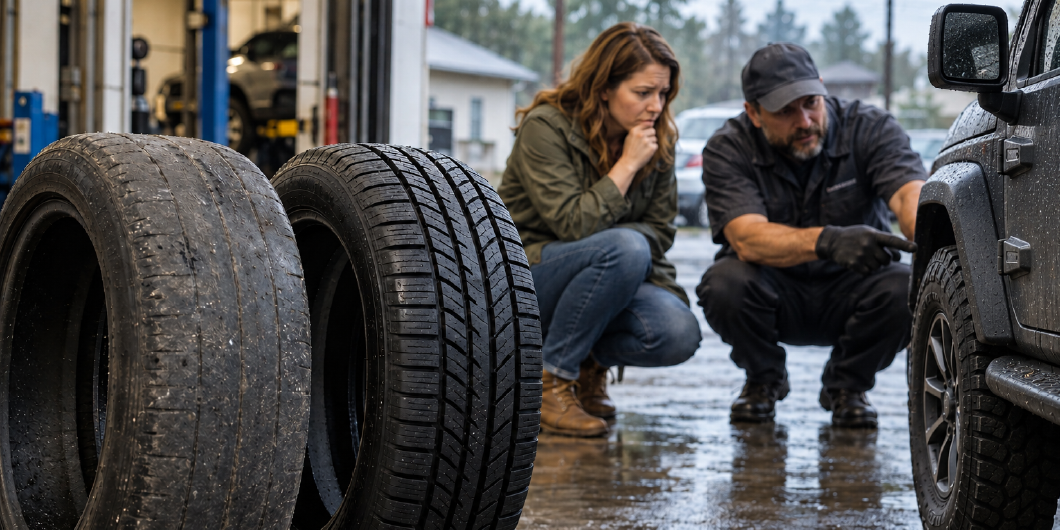
Your tires are your connection to the road, whether you're commuting to work, heading out on a road trip, or taking your Jeep on its next adventure. But how long do drivers keep rolling once they suspect their tires need replacing? We surveyed 1,007 American drivers in October 2026 to find out how long they delayed tire replacements, what risks they experienced, and how financial pressure influenced their decisions. The findings reveal just how far drivers were willing to push their tires before making a change.
Key Takeaways
- Nearly half of drivers (43%) wait 3+ months after first suspecting they need new tires, and 11% wait a year or longer.
- Honda drivers put off new tires the longest: 52% wait 3+ months, followed by Chevrolet (47%) and Subaru (45%) drivers.
- Over half of drivers (53%) who knew their tires were too worn to be safe didn’t avoid driving in the rain or on the highway.
- 72% of drivers have turned to cheaper tire replacement options because of financial pressure. Chevrolet (81%), Ford (75%), and Nissan (73%) drivers are the most likely to do it.
- 3 in 5 American drivers (62%) put off new tires, ranking tires No. 2 among car expenses drivers delay, behind windshields and wipers (66%).
How Long Drivers Push Their Tires Before Replacing Them
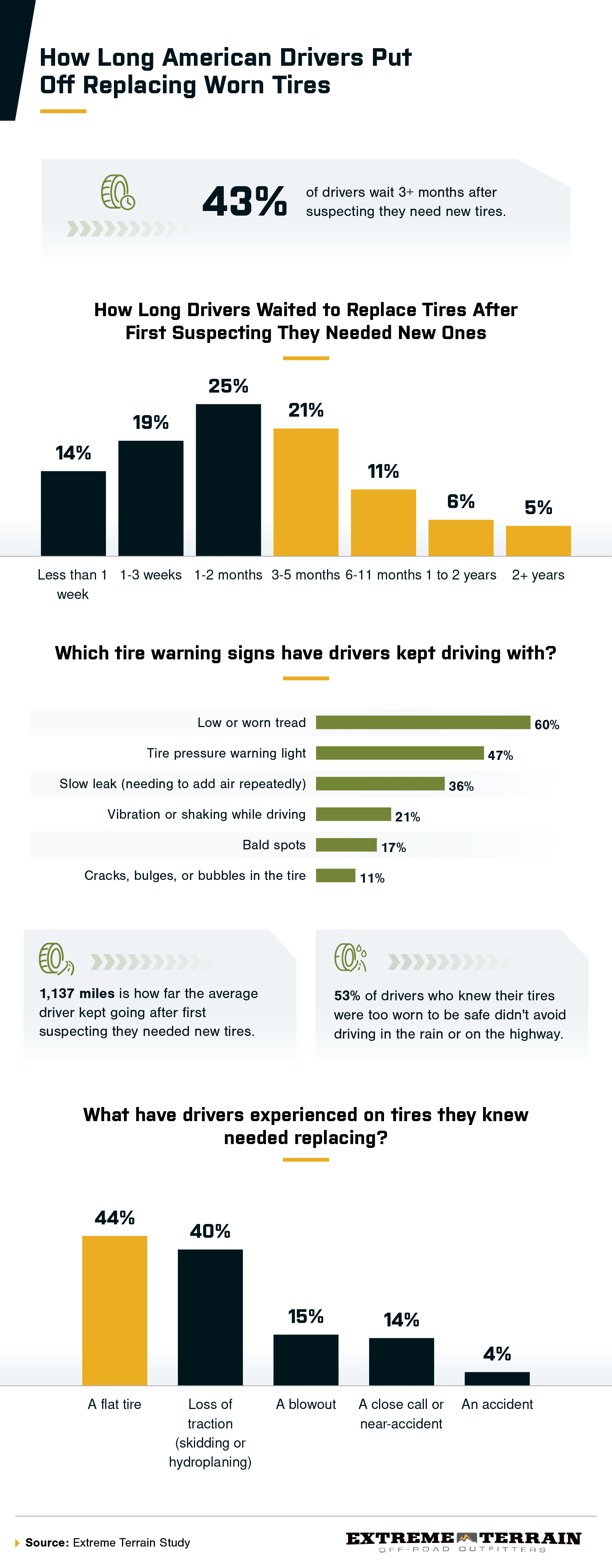
- Nearly half of drivers (43%) waited three months or longer after first suspecting they needed new tires, including 11% who waited at least a year.
- Honda drivers were the most likely to delay tire replacements for three months or longer (52%), followed by Chevrolet (47%) and Subaru (45%) drivers. Nissan and Hyundai drivers were the least likely to wait that long, at 35% each.
- On average, drivers traveled another 1,137 miles after first suspecting their tires needed replacing.
- Baby boomers drove the farthest on potentially worn tires, averaging 1,637 miles, compared with 933 miles among Gen Z drivers.
- Men averaged 1,279 miles before replacing suspected worn tires, compared with 1,011 miles for women.
- Truck drivers were especially likely to push their tires' limits. Three in four (75%) had continued driving on low or worn tread, compared with 59% of all other drivers.
- Among truck drivers who knew their tires were too worn to be safe, 65% didn't avoid driving in the rain or on the highway. Across all drivers who knew their tires were unsafe, 53% didn't avoid those driving conditions.
- 2 in 5 drivers (40%) had experienced skidding or hydroplaning on tires they knew needed replacing.
- Nearly half of drivers (44%) had experienced a flat tire on tires they knew needed replacing.
- Ford drivers reported the highest rate of flats (51%), followed by Toyota (47%), Chevrolet (46%), Honda (41%), and Nissan (35%) drivers.
How Financial Pressure Influences Tire Replacement Decisions
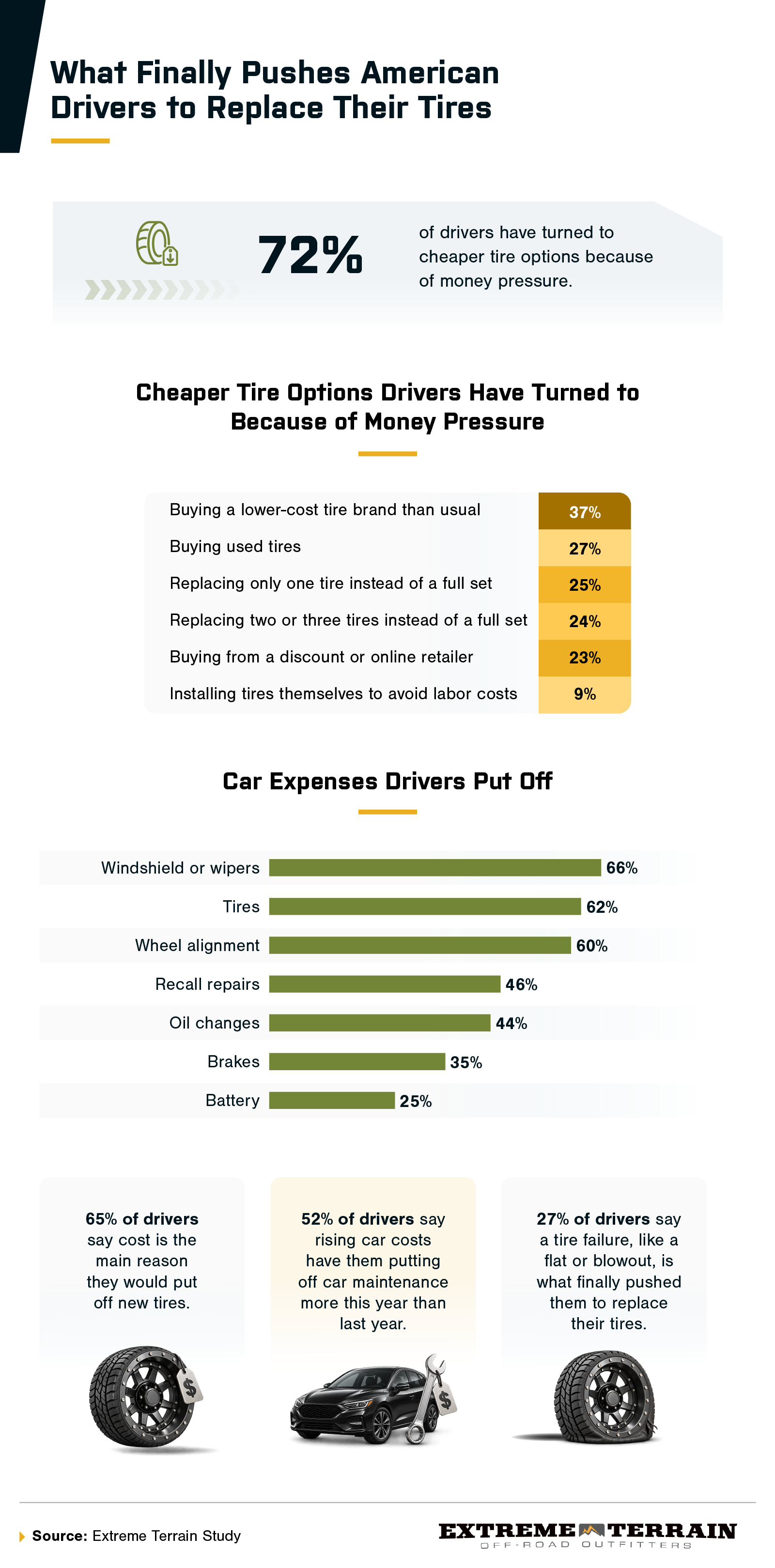
- Nearly 3 in 4 drivers (72%) had turned to cheaper tire replacement options because of financial pressure.
- Chevrolet drivers were the most likely to choose lower-cost options (81%), followed by Ford (75%) and Nissan (73%) drivers.
- Gen Z and millennial drivers were equally likely to choose cheaper tire options (75% each), compared with 69% of Gen X and 54% of baby boomers.
- Nearly two-thirds of American drivers (62%) had postponed buying new tires, making tires the second-most-delayed vehicle expense behind windshields and wipers (66%).
- Gen Z drivers were more than three times as likely as baby boomers to say they often or always delayed tire replacements (30% vs. 9%).
- For more than 1 in 4 drivers (27%), a tire failure finally prompted them to replace their tires.
- Ford drivers were the most likely to replace their tires after a failure (35%), followed by Kia and Chevrolet drivers (30% each).
- Women were more likely than men to report that tire failure finally prompted a replacement (30% vs. 23%).
- Only 15% of drivers replaced their tires ahead of a holiday road trip or winter storm.
- Just 14% replaced their tires because bad weather was in the forecast, including winter storms or conditions such as heavy rain.
- Fewer than 1 in 10 drivers (9%) replaced their tires specifically because a winter storm was forecast.
- More than 1 in 4 drivers (27%) had purchased used tires because of financial pressure. Ford drivers were the most likely to do so (33%), followed by Toyota drivers (29%).
Methodology
Our survey results are based on 1,007 American drivers. Respondents were distributed across generations, genders, vehicle types, and vehicle brands. The generational breakdown included the following: millennials (47%), Gen X (28%), Gen Z (15%), and baby boomers (8%). Another 1% did not provide a valid birth year. By gender, 56% identified as women, 42% as men, 1% as nonbinary, and 1% preferred not to answer. By vehicle type, 43% drive an SUV, 38% a sedan, 8% a truck, 3% an EV, 2% an off-road vehicle, and 6% another type of vehicle. The survey was conducted in October 2026. All percentages are rounded to the nearest whole number.
About ExtremeTerrain
Extreme Terrain is a premier retailer specializing in Jeep parts and accessories for trail-ready builds. From daily drivers to weekend rigs, Extreme Terrain offers wheels and tires for 4x4 vehicles built to handle rough terrain, mud, rocks, and everything in between.
Fair Use Statement
The findings in this report may be shared for noncommercial purposes only. Any use or redistribution must include proper attribution to Extreme Terrain and a link to the original article.