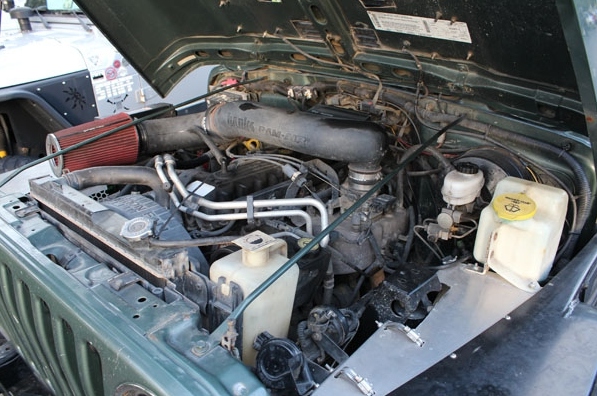
What Is the Jeep 4.0L PowerTech Engine?
![]() The Jeep 4.0L PowerTech is a 3,962 cc (242 cubic inch) cast-iron inline-six engine that powered Jeep vehicles from 1987 through 2006, producing between 173 and 190 horsepower depending on the model year and application. It remains one of the most respected powerplants in the off-road community for its combination of low-end torque, mechanical simplicity, and proven durability.
The Jeep 4.0L PowerTech is a 3,962 cc (242 cubic inch) cast-iron inline-six engine that powered Jeep vehicles from 1987 through 2006, producing between 173 and 190 horsepower depending on the model year and application. It remains one of the most respected powerplants in the off-road community for its combination of low-end torque, mechanical simplicity, and proven durability.
If you own a Wrangler TJ, Cherokee XJ, or Grand Cherokee from this era, you already know the 4.0L's reputation. What you might not know is exactly why it earned that reputation, how it evolved over nearly two decades of production, and what you can do to get even more out of it. This guide breaks down everything from factory specs and model-year differences to common problems, bolt-on upgrades, and full stroker builds. If you have questions along the way, our Sales Techs are Jeep owners themselves and can help you match parts to your specific build.
Here are the core specifications that define the 4.0L PowerTech:
|
Specification
|
Value
|
|
Displacement
|
3,962 cc / 242 ci
|
|
Configuration
|
Inline-six, OHV, 12-valve
|
|
Bore x Stroke
|
3.88" x 3.41"
|
|
Compression Ratio
|
9.2:1 (early) / 8.8:1 (late)
|
|
Horsepower
|
173-190 HP
|
|
Torque
|
215-235 lb-ft
|
|
Block Material
|
Cast iron
|
|
Head Material
|
Cast iron
|
|
Fuel System
|
Multi-point fuel injection (Renix 1987-90 / Chrysler SBEC 1991+)
|
For engine performance parts matched to your specific year and model, the catalog is organized by vehicle so you only see what actually fits your rig.
History of the Jeep 4.0L Engine: From AMC to DaimlerChrysler
The Jeep 4.0L traces its lineage directly to American Motors Corporation's inline-six family, which dates back to the 1960s. Understanding that history explains why the engine is so overbuilt -- and why so many parts interchange across decades of Jeep models.
AMC introduced its modern inline-six platform with the 199 cubic inch engine in 1964, then scaled it up to 232 ci and eventually 258 ci (4.2L) through the 1970s and 1980s. When AMC engineers needed more power and efficiency for the 1987 Cherokee XJ, they did not start from scratch. They redesigned the 258's cylinder head with improved combustion chambers and larger valves, added multi-point fuel injection, increased bore from 3.75" to 3.88", and shortened stroke from 3.90" to 3.41". The result was the 4.0L: a higher-revving, more powerful engine that still shared the same basic block architecture as the old 258.
From 1987 through 1990, the 4.0L ran Renault/Renix fuel injection -- a capable but sometimes finicky system that used a separate ECU and ignition module. When Chrysler fully absorbed AMC in 1991, they replaced Renix with their own Single Board Engine Controller (SBEC), improving cold starts, idle quality, and emissions compliance. This 1991 changeover also brought a noticeable bump in horsepower, jumping from 177 HP to 190 HP in the Cherokee.
Production continued at the Kenosha, Wisconsin plant with a capacity of roughly 405,000 engines per year. In 1996, Chrysler transitioned the block casting to a new Ingersol line and made NVH (noise, vibration, harshness) improvements through 1998. Despite these updates, the fundamental engine design remained the same.
Chrysler eventually retired the 4.0L after 2006, replacing it with the 3.8L V6 in the Wrangler JK. The reasons were primarily regulatory: the aging cast-iron design struggled to meet tightening NOx emissions standards, the tooling was worn, and DaimlerChrysler's engineering culture leaned toward engines designed under their own roof. For anyone hunting Cherokee XJ engine parts, the good news is that the AMC inline-six family's long production run means parts availability remains excellent.
4.0L PowerTech Engine Specs by Year
![]() The Jeep 4.0L produced between 173 and 190 horsepower and 215 to 235 lb-ft of torque over its two-decade production run, with the most significant jump coming when Chrysler replaced the Renix fuel injection system in 1991. Here is how the factory ratings evolved by year and application:
The Jeep 4.0L produced between 173 and 190 horsepower and 215 to 235 lb-ft of torque over its two-decade production run, with the most significant jump coming when Chrysler replaced the Renix fuel injection system in 1991. Here is how the factory ratings evolved by year and application:
|
Year
|
Horsepower
|
Torque (lb-ft)
|
Notes
|
|
1987
|
173 @ 4,500 RPM
|
215 @ 3,000 RPM
|
Cherokee/Comanche debut with Renix injection
|
|
1988
|
177 @ 4,500 RPM
|
224 @ 2,500 RPM
|
Revised intake manifold
|
|
1991 (Cherokee)
|
190 @ 4,750 RPM
|
225 @ 4,000 RPM
|
Chrysler SBEC fuel injection replaces Renix
|
|
1991 (Wrangler YJ)
|
181 HP
|
220 lb-ft
|
More restrictive exhaust system than Cherokee
|
|
2003-2006
|
190 @ 4,600 RPM
|
235 @ 3,200 RPM
|
Final specification; compression ratio 8.8:1
|
For real-world context, a 2003 Wrangler TJ with the 4.0L and a manual transmission ran 0-60 mph in approximately 9.9 seconds. The automatic was slightly slower at 10.6 seconds. Neither number sounds fast on paper, but those torque numbers -- 235 lb-ft peaking at just 3,200 RPM -- are what make the 4.0L so capable off-road. You have strong, usable power right off idle, exactly where you need it when you are crawling over obstacles in low range.
Fuel economy from the factory was rated at 15 mpg city and 18 mpg highway for the 2003 automatic Wrangler. If you are running larger tires and a lift, expect those numbers to drop a bit, but the inline-six remains more efficient than many V8 swaps at comparable power levels.
Which Jeep Models Used the 4.0L Engine?
![]() The Jeep 4.0L PowerTech served as the standard six-cylinder option across five distinct Jeep platforms over nearly 20 years, making it one of the most widely used engines in Jeep history. If your rig has one, you are in good company.
The Jeep 4.0L PowerTech served as the standard six-cylinder option across five distinct Jeep platforms over nearly 20 years, making it one of the most widely used engines in Jeep history. If your rig has one, you are in good company.
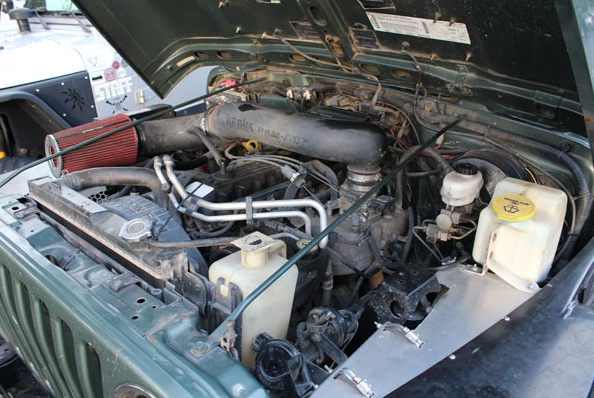
Cherokee XJ (1987-2001)
The Cherokee XJ was the 4.0L's original home and the platform where the engine made its name. The XJ's relatively light unibody construction paired with the torquey inline-six created one of the most capable off-road vehicles ever sold to the general public. The 4.0L was the top engine option throughout the XJ's production, with the smaller 2.5L four-cylinder available as the base engine.
Comanche MJ (1987-1992)
The Comanche pickup shared the Cherokee's platform and drivetrain. The 4.0L was optional, making these trucks surprisingly quick and capable for their era. Comanches have become increasingly collectible, and the 4.0L-equipped models command a premium.
Wrangler YJ (1991-1995)
The YJ started life with the older 4.2L (258 ci) inline-six and the 2.5L four-cylinder. The 4.0L arrived for 1991, bringing fuel injection and significantly more power to the Wrangler line. Note that the YJ version made slightly less power than the Cherokee due to a more restrictive exhaust system. You can browse 1995 Wrangler YJ parts to see what is available for these rigs.
Wrangler TJ (1997-2006)
The TJ carried the 4.0L through its entire production run, making it the last Wrangler to use the beloved inline-six. The TJ benefited from the later-production engine refinements, including reduced vibration and improved emissions tuning. The combination of the TJ's coil-spring suspension and the 4.0L's low-end torque remains a benchmark for trail capability. Check out 1997 Wrangler TJ parts for model-specific fitments.
Grand Cherokee ZJ and WJ (1993-2004)
Both generations of Grand Cherokee offered the 4.0L as their standard six-cylinder engine, with V8 options available for buyers who wanted more power on-road. The 4.0L served the Grand Cherokee well as a daily driver engine that could still handle moderate trail use.
Why the Jeep 4.0L Inline-Six Is So Reliable
The Jeep 4.0L regularly runs past 200,000 miles on original internals with nothing more than routine oil changes, coolant flushes, and basic tune-ups. That is not marketing -- it is a direct result of the engine's conservative, overbuilt design.
The foundation is a cast-iron block and cast-iron cylinder head. These materials are heavier than aluminum, but they handle heat cycling and sustained loads far better, which matters when you are running all day on a desert trail at low speed in high ambient temperatures. The crankshaft rides on seven main bearings, compared to four or five in most V6 and V8 designs. More bearing surface area means lower loading on each bearing, which translates directly to longer life.
The inline-six configuration also has an inherent engineering advantage: it is naturally balanced. The firing order and piston movement produce no secondary vibrations, unlike V6 engines that require balance shafts to compensate. Less vibration means less stress on every bolt, bearing, gasket, and accessory in the engine bay. It is one of the reasons the 4.0L can be run hard and put away wet, year after year.
From an off-road perspective, the 4.0L's torque curve is ideally suited to trail work. Peak torque arrives low in the rev range -- as low as 2,500 RPM in some model years -- which gives you strong, controllable power when you are crawling over rocks in first gear. You do not need to rev the engine to make it work, and that matters when traction is limited and throttle control is everything.
Finally, the parts interchangeability across the AMC inline-six family (232, 258, and 4.0L) means that core components have been manufactured in massive quantities for decades. Finding pistons, bearings, gaskets, and rebuild kits is easy and affordable. This is not an engine that will leave you stranded because a critical part is discontinued.
Common 4.0L Engine Problems and How to Fix Them
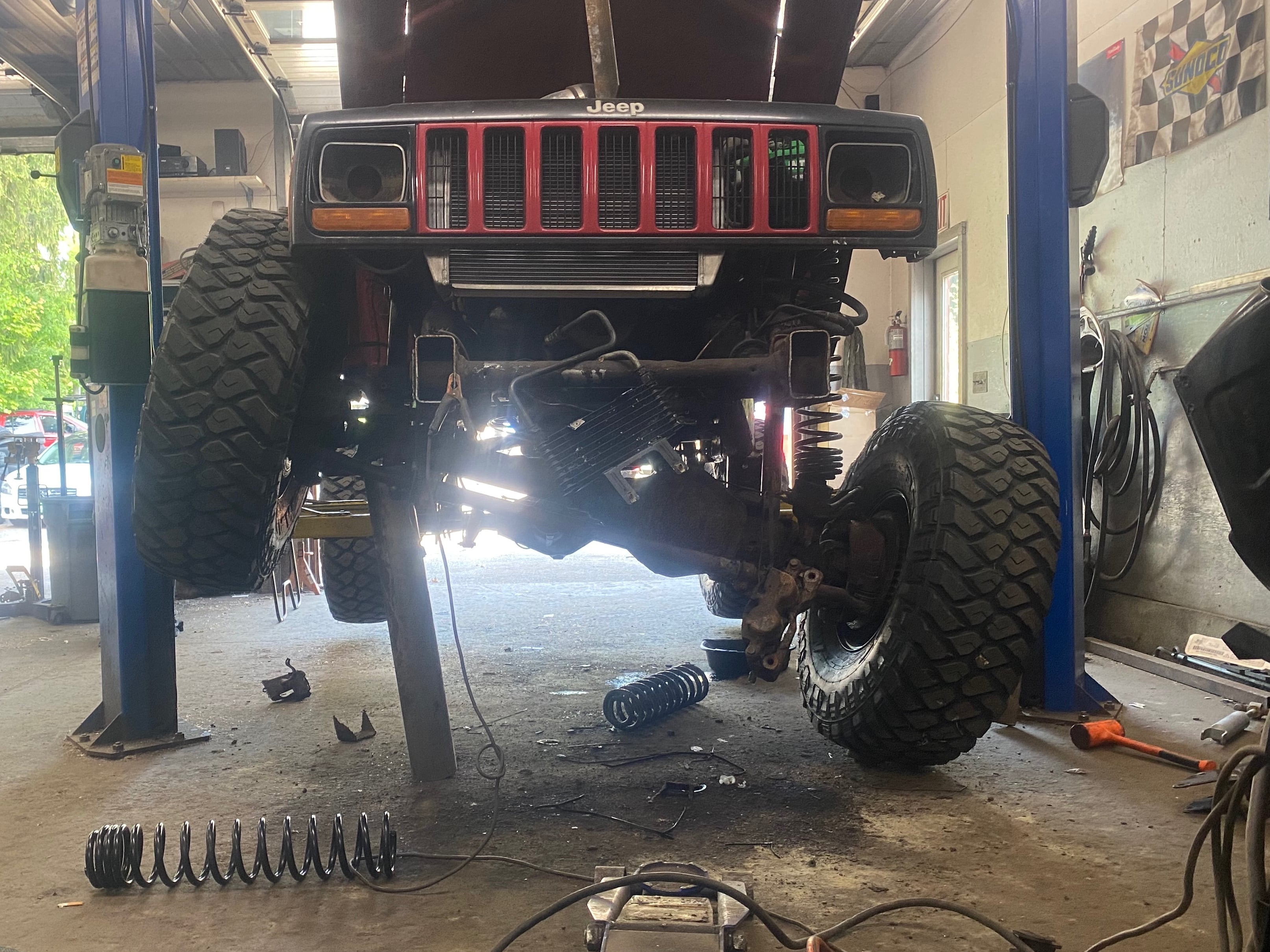
The 4.0L is remarkably reliable, but it is not immune to wear. After 150,000 or more miles, certain components develop predictable failure patterns. Knowing what to watch for lets you address issues proactively before they leave you on the side of the trail.
Cracked Exhaust Manifold
This is the single most common issue across all model years. The cast-iron exhaust manifold is prone to cracking between the #3 and #4 cylinders due to repeated heat cycling. Symptoms include a ticking noise at cold start that quiets as the manifold expands and seals the crack. A cracked manifold is not immediately dangerous, but it will worsen over time and can cause a minor exhaust leak that affects oxygen sensor readings. The fix is a replacement manifold -- an upgraded header makes this a good opportunity to pick up a few horsepower at the same time.
Oil Filter Adapter O-Ring Seepage
The 4.0L uses an oil filter adapter that bolts to the block, and the O-ring seal between the adapter and block hardens with age. The result is a slow oil seep that often gets blamed on a rear main seal or oil pan gasket. Replacing the O-ring with a Viton-material upgrade typically solves it for good and costs very little.
Oil Pump Wear
Around 145,000 to 155,000 miles, the oil pump drive gear can wear enough to reduce oil pressure, particularly at hot idle. If you notice your oil pressure gauge dropping at stoplights in warm weather, this is the first thing to check. A new oil pump and pickup is straightforward preventive maintenance.
Coolant Surge Tank Leaks
The pressurized coolant surge tank (sometimes called the overflow or expansion tank) is made of plastic that becomes brittle with heat exposure. Pinhole leaks develop along the seams, causing slow coolant loss that can be tough to spot. Replacing the tank is a 20-minute job and cheap insurance against overheating. If your 4.0L runs warmer than you would like on the trail, a cooling system upgrade -- better radiator, auxiliary oil cooler, or coolant filtration kit -- is worth considering alongside the tank replacement.
Renix Fuel Injection Issues (1987-1990 Only)
Pre-1991 engines with the Renix fuel injection system can develop hard-start and rough-idle issues related to the crankshaft position sensor, coolant temperature sensor, or failing solder joints in the ECU. If you own a Renix-era 4.0L, the aftermarket offers upgraded sensor kits and ECU repair services that resolve most driveability complaints.
Throttle Position Sensor Failures (1989-1990)
The TPS on 1989 and 1990 models is particularly failure-prone, causing erratic idle and hesitation on acceleration. Replacement sensors are inexpensive and easy to swap. If you are troubleshooting a driveability problem on a late-Renix 4.0L, start here.
How to Get More Horsepower From a Jeep 4.0L
A stock 4.0L makes 190 horsepower, which is adequate but leaves room for improvement -- especially if you are running 33" or larger tires that sap acceleration. The good news is that the 4.0L responds well to modifications, and you can build a logical upgrade path that matches your budget and goals.
Our Sales Techs talk to Jeep owners every day who are planning 4.0L builds. The most common advice they give: start with the bolt-ons before tearing into internals, and make sure your cooling system can handle the extra heat.
Bolt-On Modifications (10-25 HP Gain)
These modifications do not require opening the engine and can typically be installed in a weekend with basic hand tools:
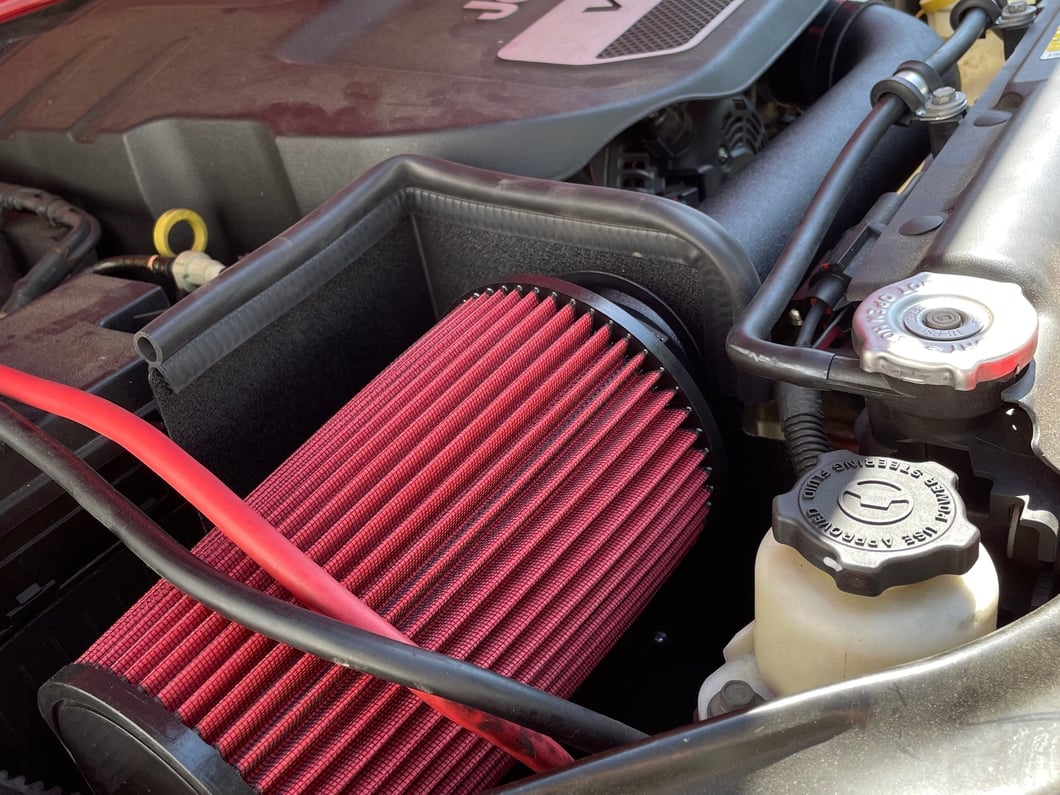
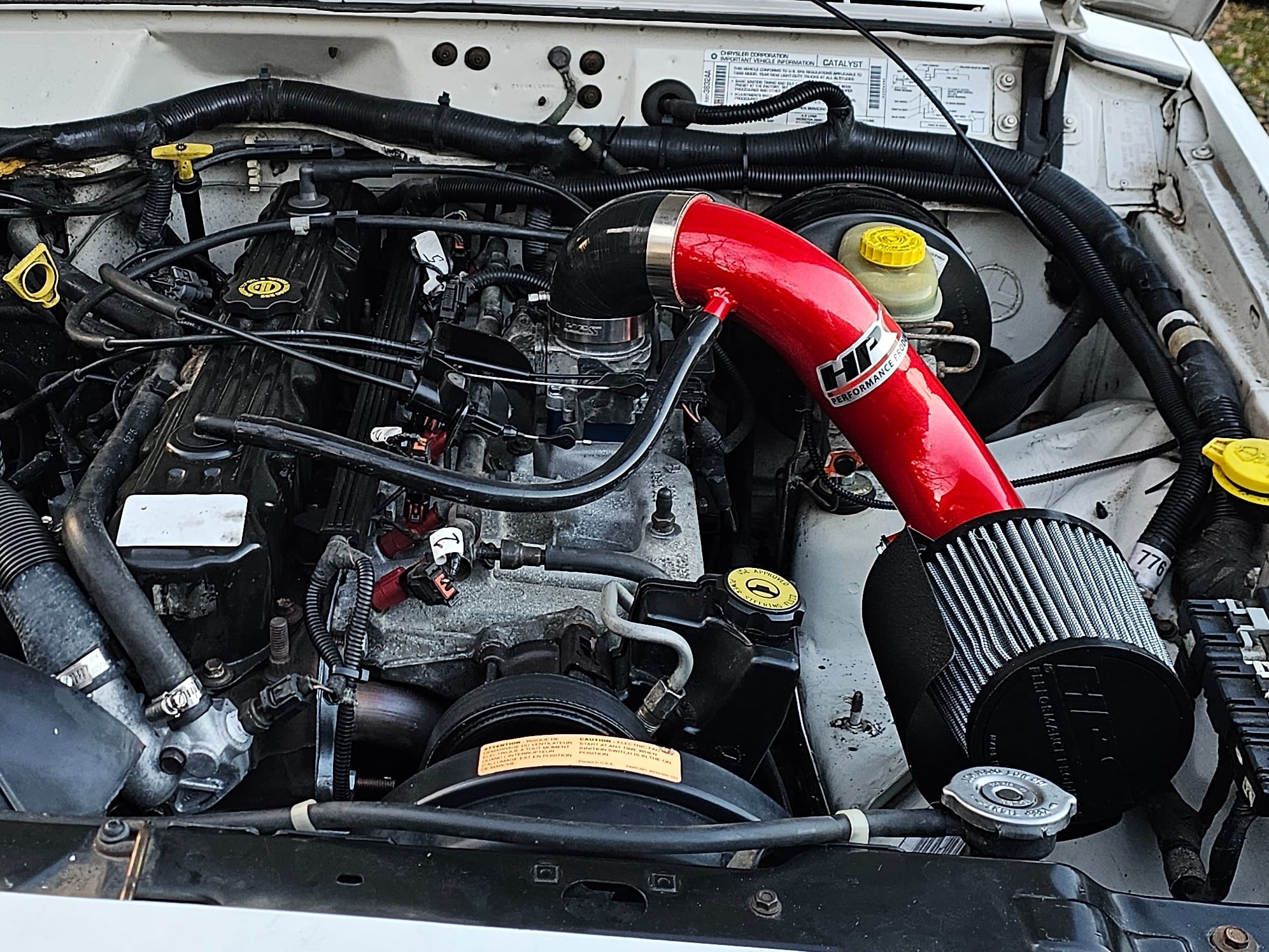
- Cold air intakes -- Replacing the restrictive factory airbox with a cold air intake adds roughly 5-8 HP by improving airflow and reducing intake temperatures. This is the easiest first modification and improves throttle response noticeably.
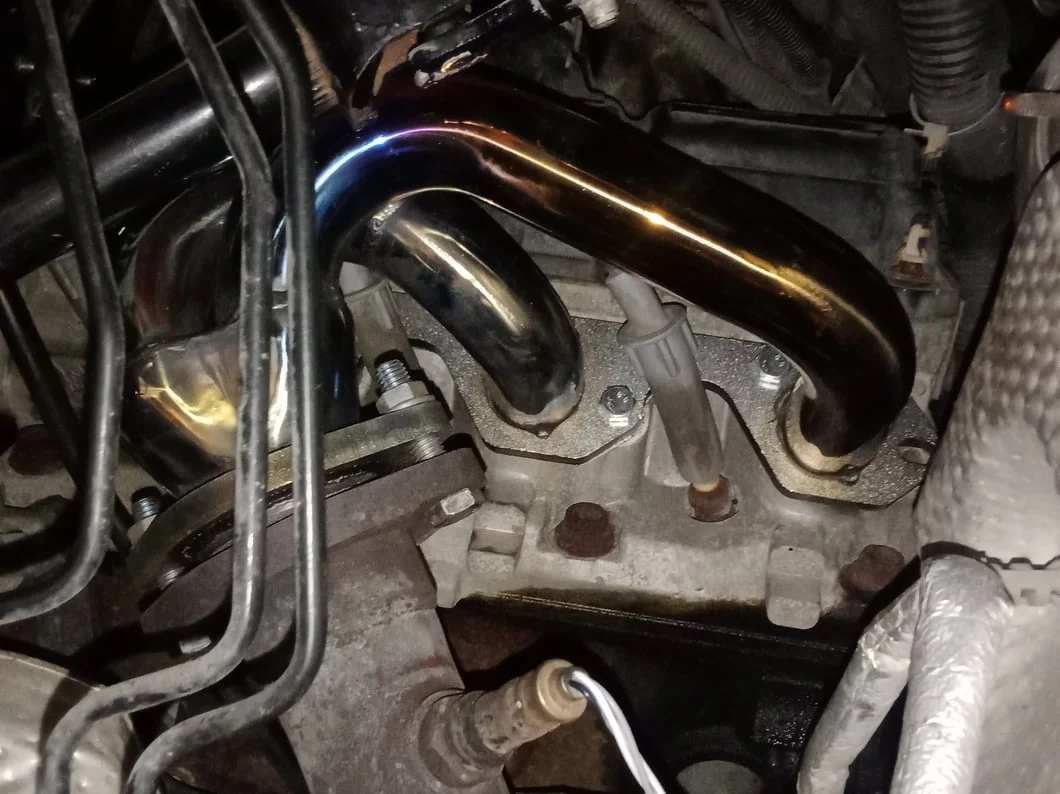
- Performance headers -- Aftermarket headers replace the crack-prone factory exhaust manifold and improve exhaust flow, adding approximately 8-12 HP. This is also a durability upgrade since you are eliminating the cracked-manifold problem entirely. Fitment varies between TJ and YJ platforms, so make sure you are looking at the correct application -- TJ headers and YJ headers are not interchangeable.
- Cat-back exhaust -- A less restrictive exhaust from the catalytic converter back adds 5-8 HP and gives the inline-six a deeper, more aggressive tone. Pair this with headers for the best result.
- Tuners and programmers -- A tuner lets you optimize fuel trim and ignition timing for your specific combination of modifications, altitude, and fuel grade. Expect 5-10 HP from tuning alone, with additional gains if you are correcting for oversized tires or non-stock gearing.
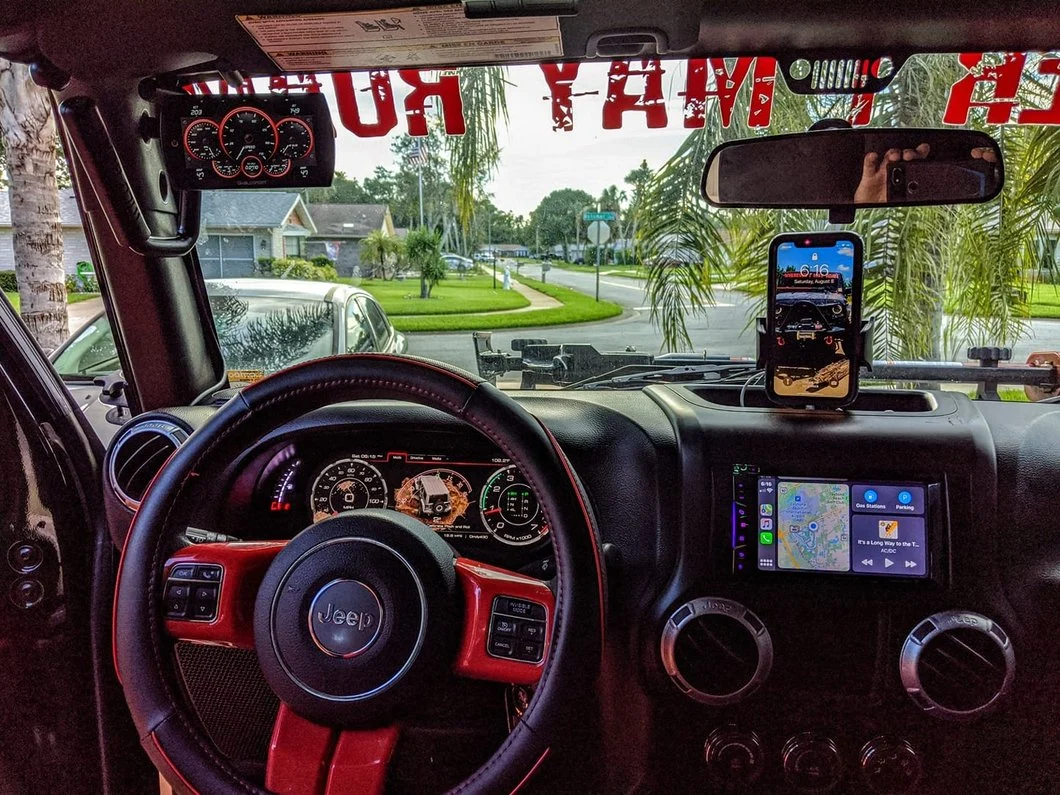
Combined, a full bolt-on package (intake, headers, exhaust, and tuner) can add 20-25 HP over stock, bringing your 4.0L into the 210-215 HP range. Just as important, the torque curve fills out and the engine feels more responsive across the entire RPM range.
Internal Upgrades (25-75+ HP Gain)
When bolt-ons are not enough, internal modifications push the 4.0L significantly further -- but they require engine disassembly and more investment:
- Performance camshaft -- A cam with more lift and duration improves airflow through the head, adding mid-range and top-end power. This changes the engine's personality and works best when paired with head work.
- Ported and polished head or high-flow replacement head -- The stock 4.0L head is the biggest restriction on airflow. Professional porting or an aftermarket high-flow head unlocks substantial power, particularly above 3,500 RPM.
- Fuel injector upgrade -- Larger injectors are required to support the increased airflow from cam and head work. Without them, the engine runs lean under load.
- Stroker kit -- The ultimate 4.0L upgrade. Stroker kits increase displacement to 4.6L or 4.7L and can produce roughly 265 HP and 290 lb-ft of torque. More on this below.
4.0L vs. 2.5L Jeep Engine: Which Is Better?
The Jeep 2.5L four-cylinder and the 4.0L inline-six share the same basic block architecture -- the 2.5L is essentially a shortened version of the 4.0L with two fewer cylinders. Despite that shared DNA, the performance gap between them is significant, especially off-road. The numbers tell the story. The 4.0L makes up to 235 lb-ft of torque, while the 2.5L tops out around 150 lb-ft. That 85 lb-ft difference is massive when you are turning 31" or 33" tires through mud, over rocks, or up steep grades. The 2.5L has to work considerably harder to move the same vehicle, which means more time at higher RPMs and more strain on the drivetrain.
If you already own a 2.5L Wrangler and plan to run larger tires, budget for a re-gear at the same time. The 2.5L does not have the torque to compensate for the taller effective gearing that bigger tires create, so going from stock 225/75R15s to 31x10.50R15s without changing your axle ratios turns a slow vehicle into a painfully slow one. The 4.0L handles upsized tires much more gracefully thanks to its broader torque band.
The 2.5L does have one genuine advantage: fuel economy. Expect 2-4 mpg better than the 4.0L in mixed driving. Whether that trade-off is worth it depends entirely on how you use your Jeep. For a highway commuter that sees occasional dirt roads, the 2.5L is fine. For anything involving serious off-road use, larger tires, or towing, the 4.0L is the clear choice.
One more thing worth knowing: because the 2.5L and 4.0L share the same bellhousing pattern, a 4.0L swap into a 2.5L Wrangler is one of the more straightforward engine swaps in the Jeep world. You will need the 4.0L engine harness, ECU, and a few supporting components, but the transmission and transfer case bolt right up.
Jeep 4.0L Stroker Kits Explained
![]() A Jeep 4.0L stroker kit increases engine displacement by installing a crankshaft and connecting rods from the older AMC 258 (4.2L) into the 4.0L block, then pairing them with custom pistons sized to maintain correct compression. The result is an engine that displaces 4.6 to 4.7 liters and produces substantially more torque than the stock 4.0L.
A Jeep 4.0L stroker kit increases engine displacement by installing a crankshaft and connecting rods from the older AMC 258 (4.2L) into the 4.0L block, then pairing them with custom pistons sized to maintain correct compression. The result is an engine that displaces 4.6 to 4.7 liters and produces substantially more torque than the stock 4.0L.
The concept works because the 4.0L and 258 share the same block family. The 258's crankshaft has a longer stroke (3.90" vs. the 4.0L's 3.41"), so dropping it into the 4.0L block with its larger 3.88" bore creates an engine with more total displacement. The longer stroke means the pistons travel farther on each power stroke, which directly increases torque output.
Common Stroker Configurations
- 4.6L stroker -- Uses the 258 crankshaft with custom pistons designed to work with the stock 4.0L connecting rods. This is the more affordable build since you can reuse the stock rods.
- 4.7L stroker -- Uses the 258 crankshaft with longer 258 connecting rods and custom pistons. This configuration produces slightly more displacement and can run higher compression, but costs more due to the additional machining.
A well-built 4.7L stroker produces approximately 265 HP and 290 lb-ft of torque -- roughly a 40% increase in torque over stock. That is enough to comfortably turn 35" tires without feeling gutless, and the power delivery remains the same smooth, low-RPM character that makes the inline-six so pleasant to drive off-road.
Stock Parts Build vs. Custom Piston Build
Some builders assemble stroker kits from junkyard 258 parts combined with off-the-shelf pistons. This approach saves money but requires careful measurement and machining to ensure piston-to-valve clearance and correct compression. Purpose-built stroker kits from aftermarket manufacturers include matched components that are designed to work together, eliminating much of the guesswork.
Mopar also offered a factory 4.7L stroker long block at one point, giving builders a turnkey option. Availability varies, but it is worth checking if you prefer a factory-backed solution.
Supporting Modifications for a Stroker Build
A stroker makes more power, which means more heat. Plan on upgrading your cooling system -- a larger radiator, oil cooler, and improved coolant routing are not optional on a stroker build that will see sustained trail use. You will also want to upgrade fuel injectors to support the increased displacement and verify that your ignition system can keep up.
If you are considering a stroker build and want to talk through parts selection, our Sales Techs have walked plenty of Jeep owners through these projects and can help you put together a complete parts list based on your goals and budget.
Whether you are maintaining a stock 4.0L, planning your first bolt-on upgrades, or building a full stroker, the inline-six rewards owners who take the time to understand it. The parts availability is excellent, the community knowledge runs deep, and the engine itself was designed to take abuse and keep running.
Ready to start your next 4.0L project? Browse engine performance parts and 4x4 engine parts matched to your specific Jeep. Every listing is filtered by year, make, and model so you only see parts that fit your rig.
Frequently Asked Questions About the 4.0L Jeep PowerTech Engine
These are the most common questions Jeep owners ask about the 4.0L inline-six, drawn from search data and community discussions.
What Are the Specs of the Jeep 4.0L Engine?
The Jeep 4.0L PowerTech is a 3,962 cc (242 cubic inch) cast-iron inline-six with a 3.88-inch bore, 3.41-inch stroke, and overhead-valve configuration with two valves per cylinder. It produces 173 to 190 horsepower and 215 to 235 lb-ft of torque depending on the model year, with peak torque arriving as low as 2,500 RPM.
What Is the Best Year for the Jeep 4.0L Engine?
The 1995 through 1999 model year engines are widely considered the best 4.0L production years. They use the more reliable Chrysler fuel injection system introduced in 1991, benefit from the 1996 block casting improvements, and avoid the coil-on-plug ignition change that came in 2000, which some owners find less reliable than the earlier distributor-based setup.
How Much Horsepower Does a Jeep 4.0L Make?
The factory-rated output ranges from 173 horsepower in the original 1987 Cherokee application to 190 horsepower in late-model TJ Wranglers and Cherokees. Torque ranges from 215 to 235 lb-ft. With bolt-on modifications like a cold air intake, headers, and a tuner, you can add 20 to 25 horsepower over stock. A stroker kit can push output to approximately 265 horsepower.
Is the Jeep 4.0L a Good Engine?
The Jeep 4.0L is widely regarded as one of the most reliable engines Jeep ever produced. Its cast-iron construction, seven-main-bearing crankshaft, and naturally balanced inline-six layout contribute to a design that routinely exceeds 200,000 miles with basic maintenance. Parts are affordable, widely available, and interchangeable across decades of Jeep models.
Why Is the AMC 4.0L So Good?
The AMC-designed 4.0L benefits from an overbuilt architecture inherited from AMC's inline-six family dating back to the 1960s. The inline-six configuration is inherently balanced, producing no secondary vibrations, which reduces stress on internal components. The engine was also built conservatively, with thick cylinder walls and heavy-duty bearings that prioritize longevity over lightweight design.
What Is a Jeep 4.0L Stroker Kit?
A stroker kit increases the 4.0L's displacement to 4.6 or 4.7 liters by installing a longer-stroke crankshaft from the AMC 258 (4.2L) engine along with compatible connecting rods and custom pistons. The resulting engine produces approximately 265 horsepower and 290 lb-ft of torque, a roughly 40 percent increase in torque over stock.
What Are Common Jeep 4.0L Engine Problems?
The most common issues include cracked exhaust manifolds, oil filter adapter O-ring seepage, oil pump wear around 145,000 to 155,000 miles, and coolant surge tank leaks from brittle plastic. Pre-1991 engines with the Renix fuel injection system may also experience hard starts and rough idle from aging sensors. All of these are well-documented, affordable fixes.
How Can You Get More Horsepower From a Jeep 4.0L?
Start with bolt-on modifications: a cold air intake, performance headers, cat-back exhaust, and a tuner can add 20 to 25 horsepower combined. For larger gains, internal modifications like a performance camshaft, ported head, upgraded fuel injectors, and a stroker kit can push output past 250 horsepower while maintaining the inline-six's signature low-end torque.
Which Jeep Engine Should You Stay Away From?
Among Jeep inline engines, the 2.5L four-cylinder is the weakest option for off-road use due to its limited torque. The early 2007-2011 Wrangler JK's 3.8L V6 is also considered underpowered relative to the vehicle's weight. The 4.0L inline-six, by contrast, is consistently recommended by the Jeep community for its balance of power, reliability, and parts availability.