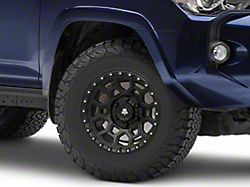

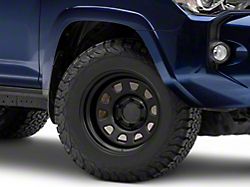

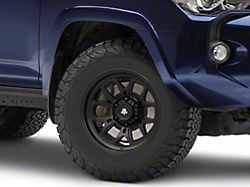

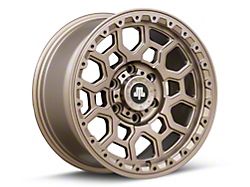
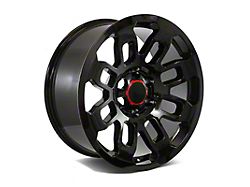
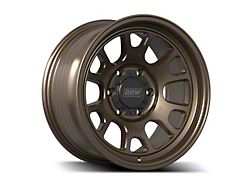
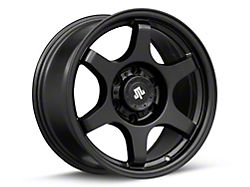
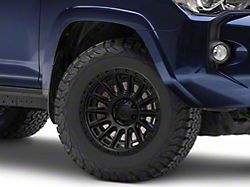
Wrangler wheels face unique demands that set them apart from other vehicle categories. They must accommodate aggressive tire sizes, provide adequate clearance for articulation, offer appropriate backspacing for various lift configurations, and deliver the strength needed for serious trail use. Our collection addresses these requirements while offering the style variety that Wrangler enthusiasts demand. From beadlock-ready designs for extreme off-roading to sophisticated finishes for urban environments, every wheel represents a proven solution for enhancing your Jeep's capability and character.
Our Jeep wheels & rims for Wrangler collection features options across multiple categories to help you find exactly what you need:
Wheel Diameter- 20 Inch - Perfect for those seeking an aggressive stance with enhanced brake clearance, 20-inch wheels deliver commanding road presence while accommodating larger brake systems and providing reduced sidewall flex for improved handling response.
- 17 Inch - The sweet spot for off-road enthusiasts and those prioritizing ride comfort, 17-inch wheels allow for taller sidewalls that absorb impacts effectively while providing excellent traction and durability in rugged conditions.
- Black - Bold and sophisticated, black finishes create a striking contrast that emphasizes your vehicle's lines while offering practical benefits like excellent brake dust concealment and low-maintenance appeal for both street and trail use.
- Silver - Clean and classic, silver finishes provide timeless appeal with a bright, reflective surface that enhances your vehicle's presence while offering excellent compatibility with chrome accents and traditional styling elements.
- Custom - Unique designs that break away from factory limitations, offering distinctive spoke patterns, intricate details, and personalized aesthetics that transform your vehicle into a true expression of individual style.
- Simulated Beadlock - Engineered for serious off-road performance, simulated beadlock designs deliver the aggressive, purpose-built appearance of competition wheels while maintaining street legality and everyday practicality.
Choosing the right jeep wheels & rims for wrangler involves understanding how different specifications and features align with your specific needs and driving conditions. Beyond aesthetic considerations, factors like construction quality, material composition, and technical specifications directly impact performance, durability, and long-term satisfaction. The questions below address common considerations that help buyers make informed decisions based on their unique requirements and usage patterns.
Frequently Asked Questions
1. How do I choose the right backspacing for my Wrangler's specific generation?
Backspacing requirements vary significantly across Wrangler generations due to differences in suspension design, track width, and body width. TJ Wranglers (1997-2006) typically use 4.5-5.5 inches of backspacing, JK models (2007-2018) work well with 3.5-4.5 inches, and JL/JT platforms (2018+) accommodate 4.5-5.5 inches for stock setups. These are starting points—lift height, tire size, and fender modifications dramatically affect ideal backspacing. Less backspacing pushes wheels outward, increasing track width for stability but potentially causing rubbing at full steering lock or suspension compression. More backspacing tucks wheels inward, improving tire clearance but risking interference with brake calipers or suspension components. For comprehensive information, see Jeep Wheel Specifications & Size Guide - Jeep Bolt Patterns, Lug Patterns, & Sizes by Model.
2. What's the real-world difference between beadlock-capable and standard wheels for rock crawling?
True beadlock wheels fundamentally change off-road capability by mechanically clamping the tire bead, allowing you to safely run 5-8 PSI or even lower without risking tire separation from the rim. This extreme pressure reduction maximizes the tire's contact patch, dramatically improving traction on rock faces, in deep sand, and through thick mud. However, beadlocks require DOT-approved versions for street use (internal beadlocks) or must be trailered to and from trails. They also demand regular maintenance—ring bolts must be properly torqued and checked periodically. For weekend warriors who stay above 10-12 PSI, standard wheels work fine. Serious rock crawlers tackling challenging terrain benefit enormously from true beadlock capability, while simulated beadlock wheels offer the aesthetic without functional benefits or legal concerns.
3. Should I match my new wheels to my Jeep's bolt pattern or use adapters?
Wheel adapters allow fitting wheels with different bolt patterns but introduce compromises. They add width that changes suspension geometry and track width, increase unsprung weight, create additional failure points, and require meticulous installation and maintenance. Quality adapters from reputable manufacturers work reliably when properly installed, but they represent a workaround rather than an ideal solution. Whenever possible, select wheels that match your Wrangler's bolt pattern—5x5 for JK and newer, 5x4.5 for TJ and older. This ensures proper hub-centric fit, eliminates adapter-related vibration issues, and maintains factory-intended suspension geometry. Adapters make sense only when you're committed to a specific wheel design unavailable in your bolt pattern. Also check out Do JK Wheels fit Jeep JL, TJ or CJs? for additional guidance.
4. How does wheel weight impact my Wrangler's performance on trails?
Wheel weight directly affects unsprung mass—weight not supported by the suspension. Heavier wheels reduce suspension responsiveness, making it harder for your shocks to control wheel movement over obstacles. This translates to reduced traction, harsher ride quality, and slower articulation. On technical trails where keeping tires planted matters most, lighter wheels provide measurable advantages. They also reduce rotational inertia, improving acceleration and braking. The difference between 25-pound cast wheels and 18-pound forged wheels equals 28 pounds of unsprung weight—equivalent to adding a passenger in terms of performance impact. For serious trail use, prioritize wheel strength first, but among similarly strong options, choose the lightest design your budget allows.
5. What finish holds up best to the punishment of regular trail use?
Trail riding tests wheel finishes like nothing else—rock strikes, mud abrasion, water crossings, and UV exposure quickly reveal finish quality. Powder-coated wheels in matte or satin finishes prove most durable, resisting chips and hiding the inevitable scratches. Matte black remains popular because damage becomes virtually invisible, though it can look flat without proper lighting. Satin finishes offer slight sheen that highlights wheel details while maintaining excellent durability. Machined faces look stunning when new but oxidize over time and show every trail scrape. Chrome and polished finishes work for mall crawlers but quickly deteriorate under real off-road use. For wheels you plan to use hard, prioritize fully powder-coated options in dark colors that mask wear patterns.
Fitment Includes:
- 1976, 1977, 1978, 1979, 1980, 1981, 1982, 1983, 1984, 1985, 1986, 1987, 1988, 1989, 1990, 1991, 1992, 1993, 1994, 1995, 1997, 1998, 1999, 2000, 2001, 2002, 2003, 2004, 2005, 2006, 2007, 2008, 2009, 2010, 2011, 2012, 2013, 2014, 2015, 2016, 2017, 2018, 2019, 2020, 2021, 2022, 2023 and 2024 Jeep Wranglers
- Rubicon, Sahara, Sport S, Sport, Unlimited, Islander, Rocky Mountain, Renegade Wranglers
*Please see product pages for any exceptions.