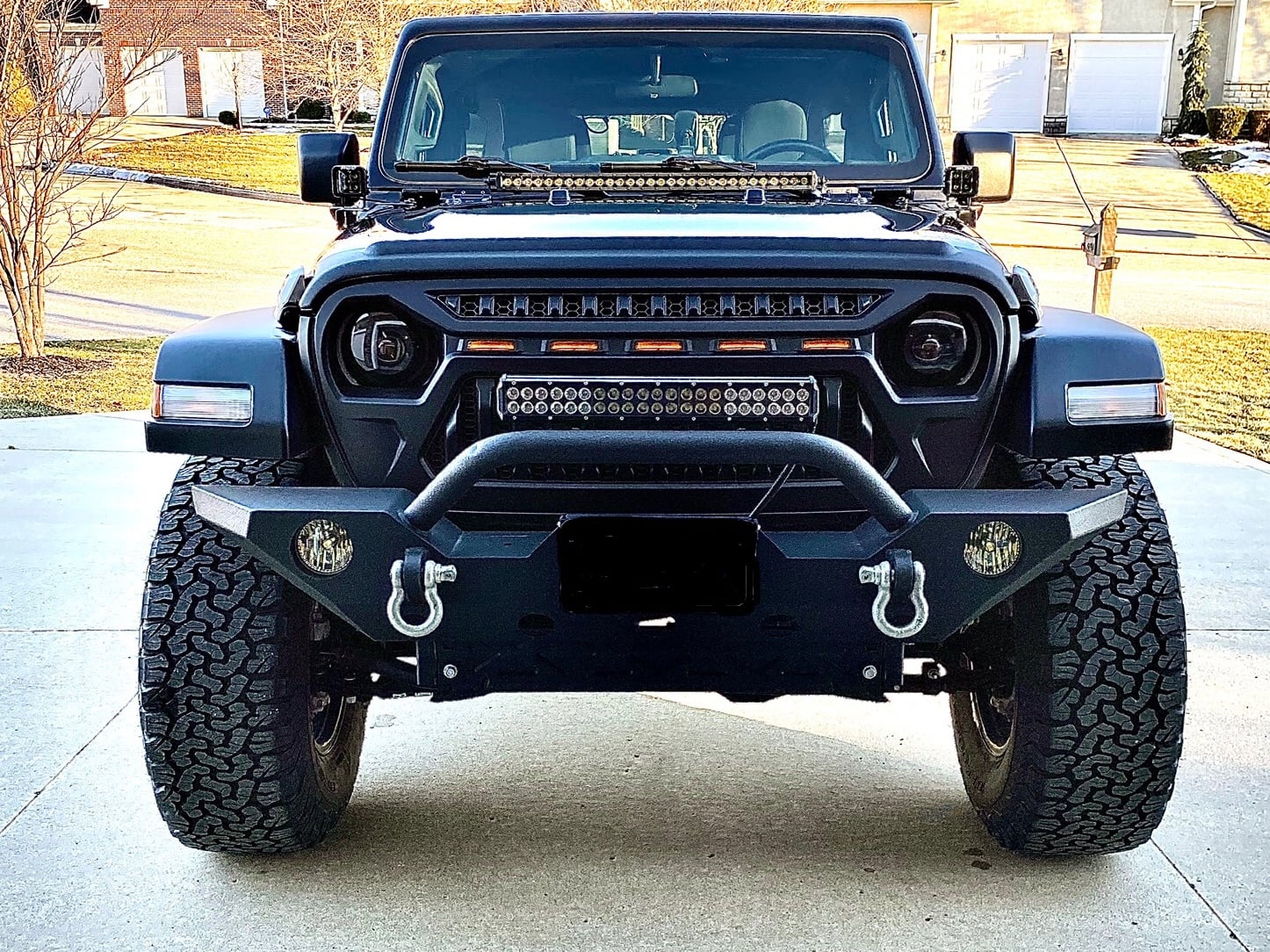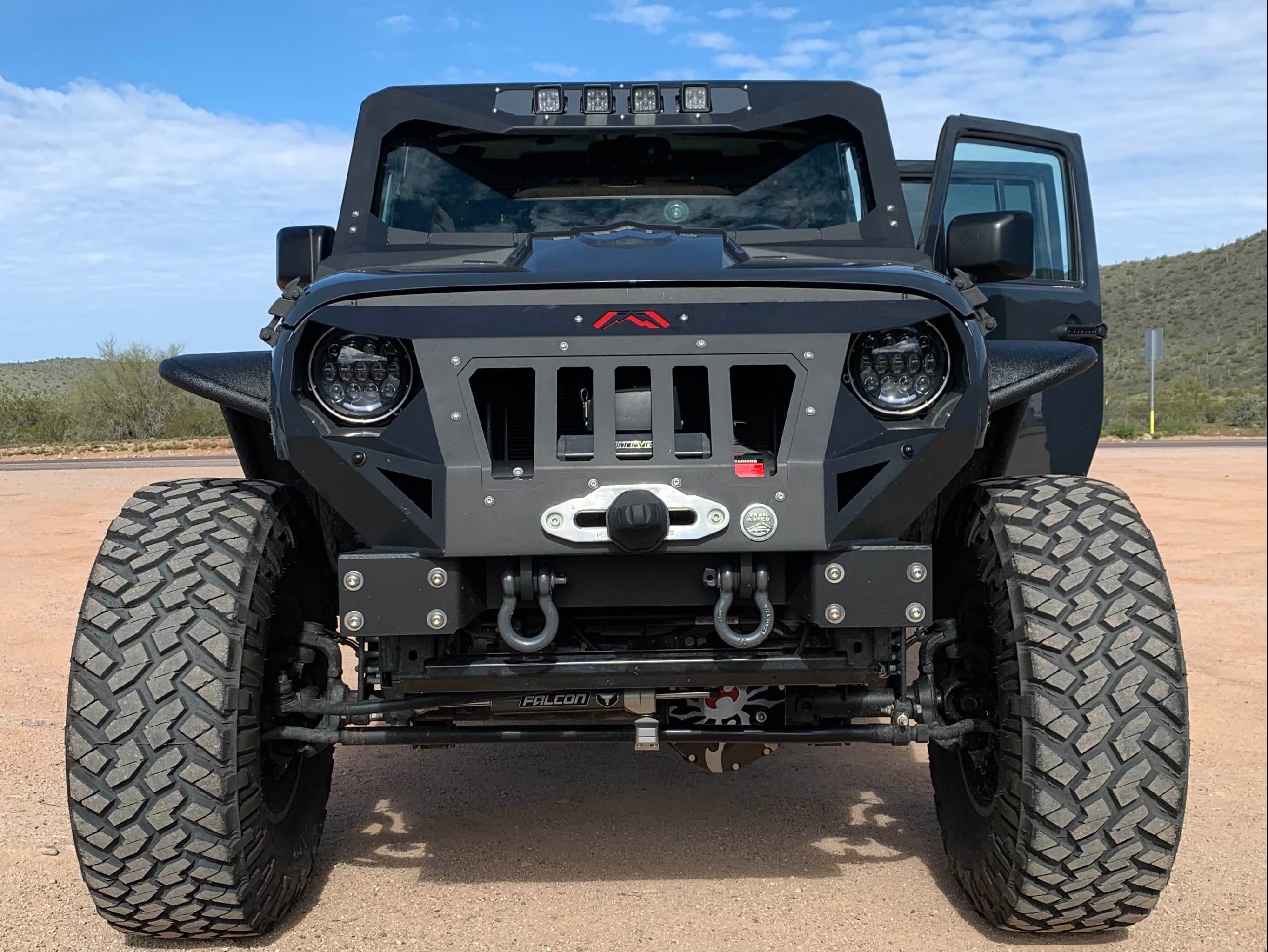
Your stock Jeep Wrangler bumper was designed to meet federal crash standards and look presentable in a dealership lot. It was not designed to survive a rock garden, mount a 12,000-lb winch, or give you the approach angle you need to clear a ledge without dragging plastic. If you have been thinking about upgrading, you are in the right place.
This guide breaks down every decision you need to make when shopping for an aftermarket bumper: style, material, features, brand, and fitment. Whether you are building a weekend trail rig, a dedicated crawler, or an overlanding machine, you will walk away knowing exactly which bumper fits your Wrangler and your goals.
Full-Width vs. Mid-Width vs. Stubby: Which Bumper Style Is Right for You?
The three main aftermarket bumper styles — full-width, mid-width, and stubby — differ primarily in how much of the front end they cover, which directly affects protection, approach angle, and the accessories you can mount. Your choice comes down to how you use your Wrangler.
Full-Width Bumpers
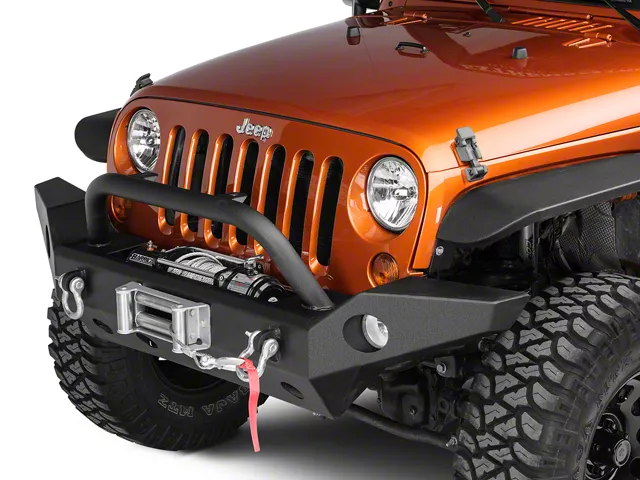
A full-width bumper spans the entire front of your Jeep, wrapping around the fender flares to provide maximum corner protection. This is the go-to choice if you want comprehensive coverage: it shields your grille, headlights, fenders, and turn signals from trail debris, brush, and impacts.
Full-width designs typically offer the most mounting real estate. You will find integrated winch mounts, multiple light tabs, D-ring mounts, and sometimes built-in grille guards or stingers. If your rig sees a mix of highway driving and moderate trail work, or if you want maximum accessory integration, full-width is the most versatile option.
The trade-off? A full-width bumper adds the most weight — usually 80 to 120 pounds for a steel unit — and provides the least improvement to your approach angle compared to the other two styles. But for most builds, the protection and functionality outweigh those concerns.
Mid-Width Bumpers
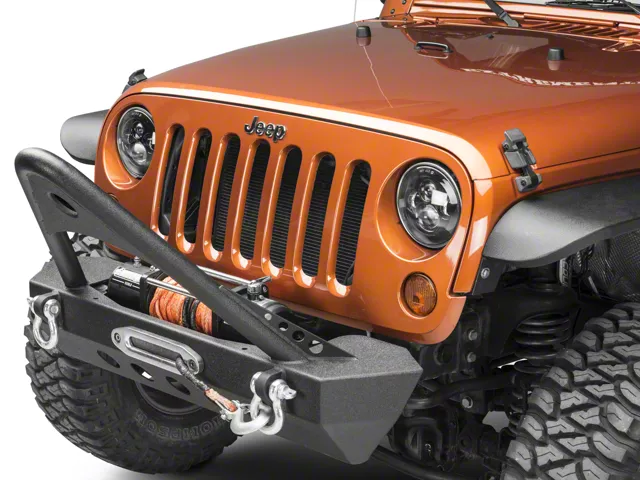
Mid-width bumpers split the difference. They extend past the frame rails to cover part of the grille area but stop short of the fenders, leaving the corners exposed. This gives you a noticeable improvement in approach angle over full-width while still accommodating a winch, light tabs, and D-ring mounts.
If you are doing moderate to serious trail work and want a bumper that performs well on rocks without giving up all of the front-end coverage a full-width provides, mid-width is a smart middle ground. Many mid-width bumpers also accept optional end caps or bull-bar additions, letting you add coverage later if you change your mind.
Stubby Bumpers
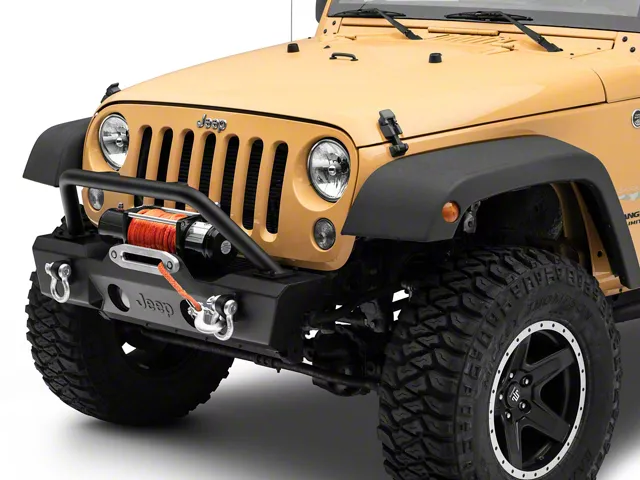
A stubby bumper covers only the center section of the front end, roughly spanning the space between the frame rails. Everything beyond that — grille corners, fenders, turn signals — is left exposed. That is the point: you get maximum approach angle and the tightest turning clearance for aggressive off-road driving.
Stubby bumpers are lighter than full-width or mid-width options, often by 30 to 50 pounds. Most still support a winch and at least one pair of auxiliary light mounts. If your Wrangler is primarily a trail machine and you are running tube fenders or high-clearance fender flares anyway, a stubby bumper is the natural choice.
The downside is obvious: less protection. A stubby bumper will not stop a tree branch from finding your headlight or save your fender from a parking-lot bump. Know the trade-off before you commit.
- Full-Width: Maximum protection and accessory mounting; best for daily drivers and moderate trail use
- Mid-Width: Improved approach angle with good accessory support; ideal for mixed-use builds
- Stubby: Best approach angle and lowest weight; built for dedicated off-road rigs
Browse the full lineup of Jeep Wrangler front bumpers to compare all three styles side by side.
Key Features to Look for in a Jeep Wrangler Bumper
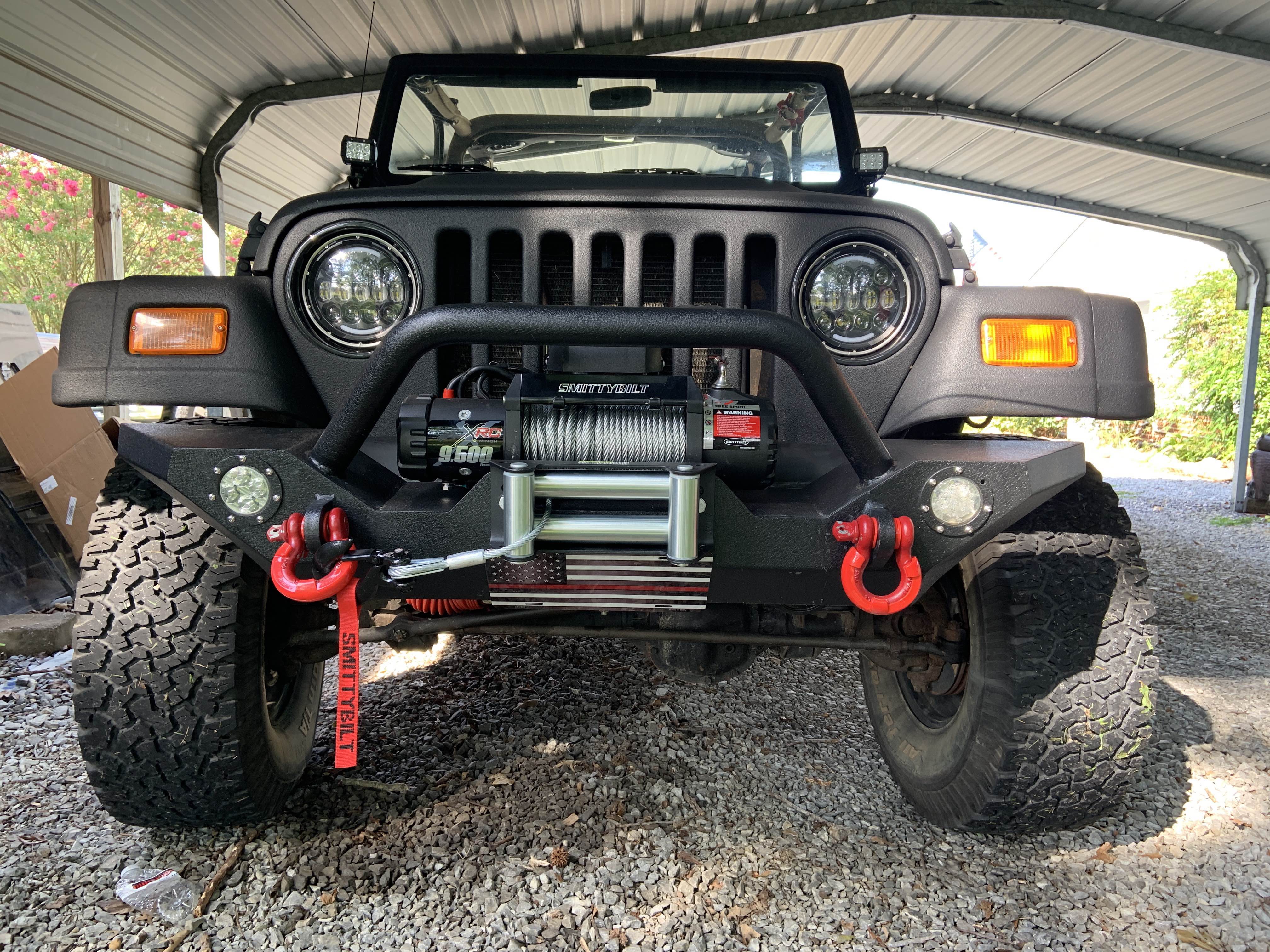
Beyond style, the best Jeep Wrangler bumpers are defined by the features built into them — winch compatibility, recovery points, lighting integration, and material construction all determine how well a bumper performs on the trail and how long it lasts.
Winch Mount and Fairlead Compatibility
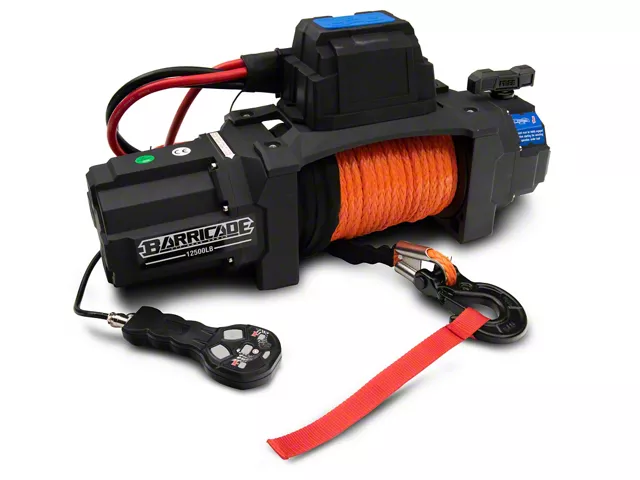
If there is one feature that separates a trail-ready bumper from a cosmetic upgrade, it is a winch mount. A winch-ready bumper has an integrated mounting plate designed to bolt a winch directly to the bumper, along with a fairlead opening for your winch line to feed through cleanly.
Not every bumper accepts every winch. Most aftermarket bumpers accommodate winches with standard mounting bolt patterns up to 12,000 or 12,500 pounds of rated line pull. Before you buy, confirm that the bumper fits your winch (or the winch you plan to add) and that the fairlead opening is compatible with either a hawse fairlead or a roller fairlead.
If you do not have a winch yet but want the option down the road, buy a winch-ready bumper now. Adding a winch later is easy. Adding a winch mount to a bumper that was not designed for one is not. Check out our selection of winches and winch accessories to pair with your bumper.
Recovery Points and D-Ring Mounts
D-ring shackle mounts are non-negotiable for any Wrangler that leaves pavement. These welded-in mounting tabs let you bolt on heavy-duty D-ring shackles, giving you solid attachment points for tow straps, kinetic ropes, or winch lines during a recovery.
Look for bumpers with at least two front-mounted D-ring tabs. Placement matters: tabs should be positioned close to the frame rails for maximum strength. Avoid any bumper where the D-ring mounts are welded to thin outer panels rather than to the structural backbone of the bumper. When you get stuck on the trail, the force on those tabs is massive — you want them integrated into the bumper's core structure.
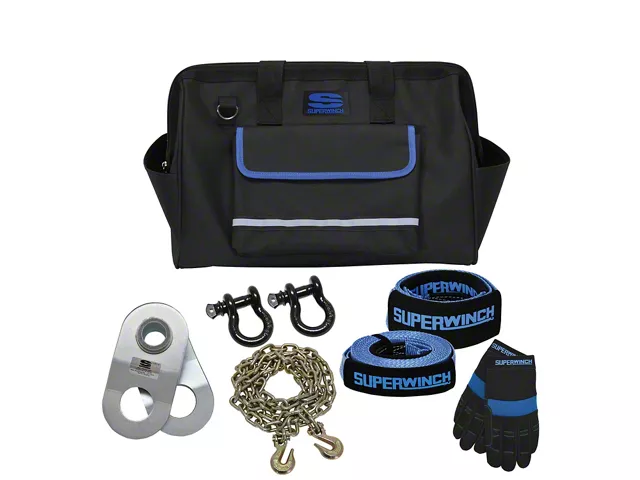
Pair your new bumper with proper recovery gear so you are ready for anything.
Light Tabs and Auxiliary Lighting Integration
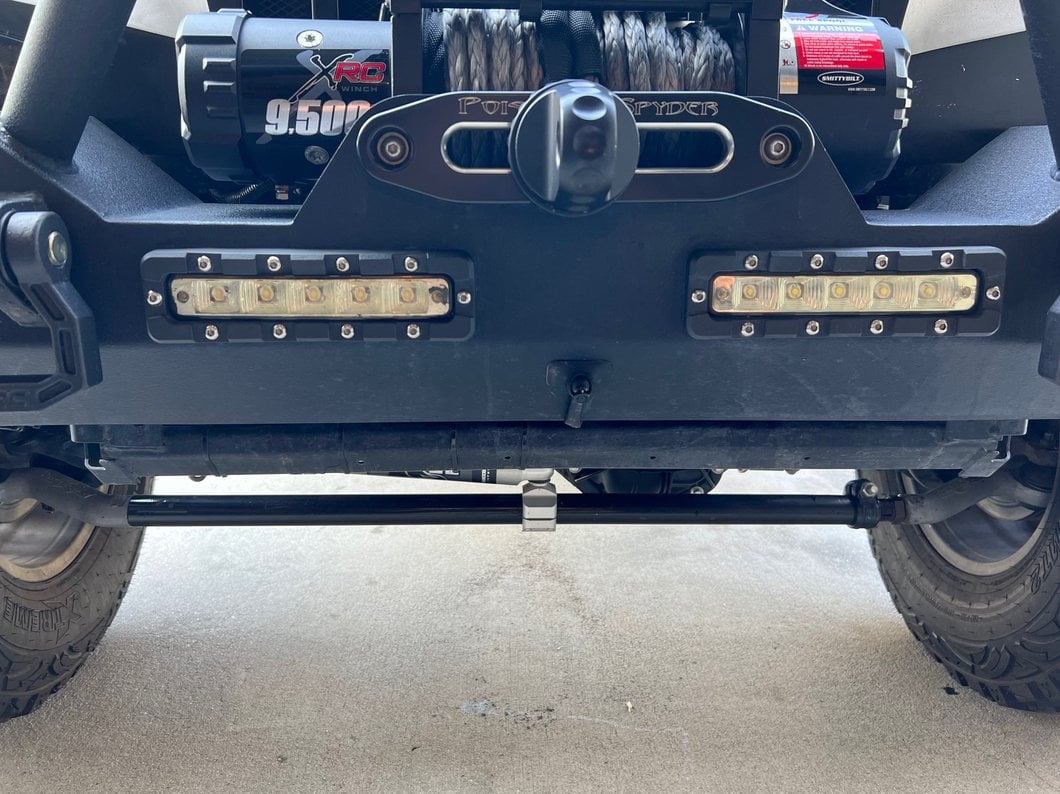
Aftermarket bumpers open up lighting options your factory setup simply cannot support. Most quality bumpers include pre-cut mounting tabs for auxiliary LED lights — fog lights, driving lights, or light cubes — and some include provisions for a light bar across the top of the bumper or along a built-in hoop or stinger.
Think about what kind of lighting you actually need. If you drive trails at dawn and dusk, a pair of flood-pattern LED cubes on the bumper will transform your visibility. If you do a lot of night wheeling or high-speed desert runs, a forward-facing light bar combined with driving-pattern pods gives you distance and spread. Either way, built-in light tabs save you from drilling into a brand-new bumper. Browse LED lights and light bars to plan your setup.
Steel vs. Aluminum: Which Material Is Better?
This is one of the most common questions, and the answer depends on your priorities.
Steel bumpers are the industry standard for off-road use. They are stronger, more rigid, and better at absorbing heavy impacts. Most steel bumpers are built from 3/16-inch or 1/4-inch plate steel and finished with a textured black powder coat or bedliner-style coating. Steel is also less expensive to manufacture, which usually means a lower price tag at the same feature level. The downside: weight. A steel front bumper typically adds 80 to 130 pounds to your front axle.
Aluminum bumpers can cut that weight by 30 to 50 percent while still providing meaningful protection. High-quality aluminum bumpers use 3/16-inch to 1/4-inch aluminum plate and are engineered to flex slightly on impact rather than dent. The trade-off is cost — aluminum bumpers tend to run 20 to 40 percent more than comparable steel options — and they are generally not as strong under extreme loads. If your rig sees daily street duty with occasional trail weekends, the weight savings of aluminum can make a real difference in handling, braking, and fuel economy.
- Steel: Stronger, heavier, more affordable; best for dedicated off-road and heavy winch use
- Aluminum: Lighter, more expensive, corrosion-resistant; ideal for daily drivers and weight-conscious builds
Best Jeep Wrangler Bumper Brands Compared
The best bumper brand for your Wrangler depends on your budget and how hard you plan to use it — budget-friendly brands deliver proven performance on moderate trails, mid-range brands add refinement and engineering, and premium brands push the limits of materials, design, and accessory integration.
Budget-Friendly (Under $600)
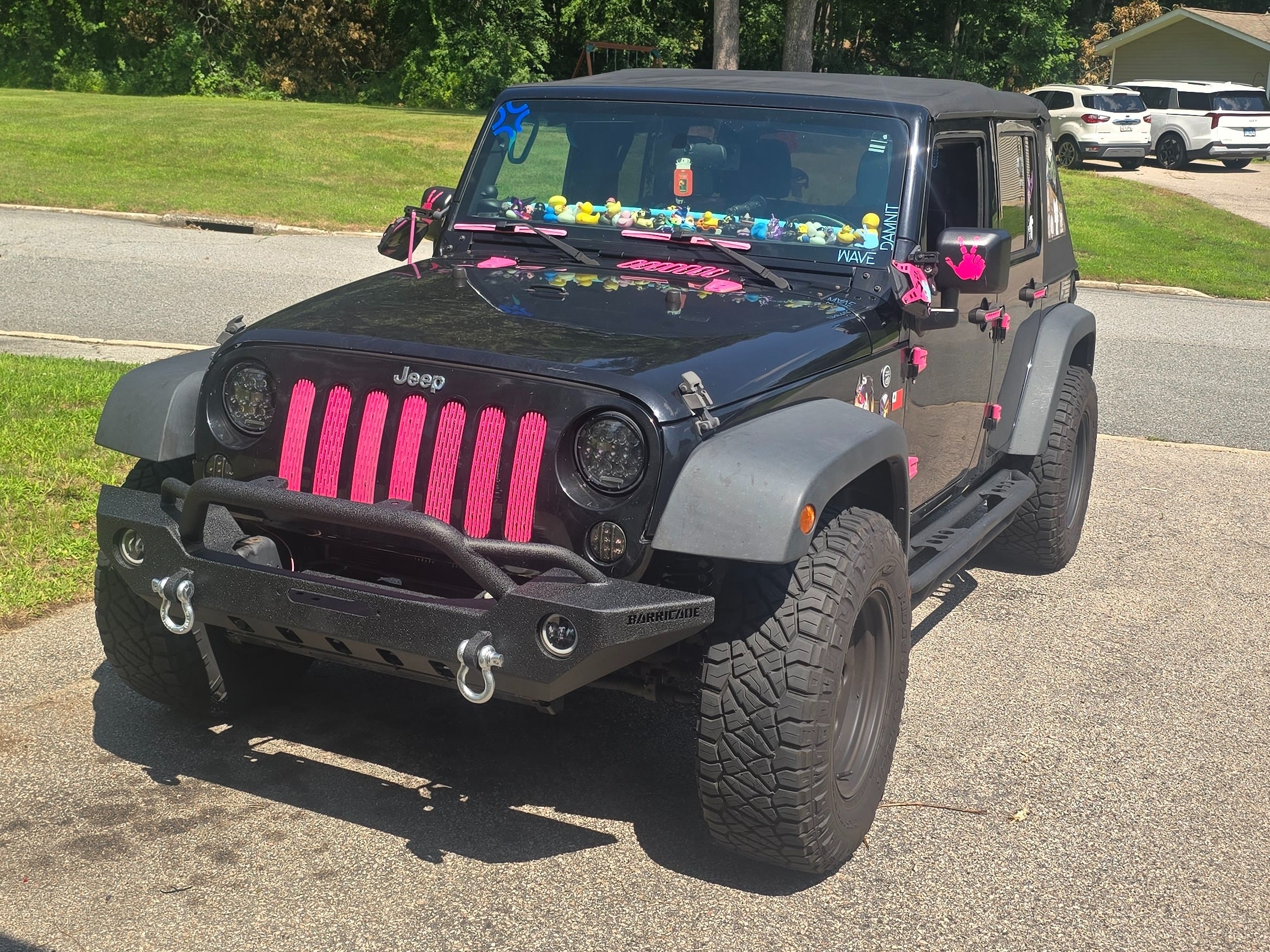
If you want a significant upgrade from stock without spending four figures, these brands deliver:
- Barricade: One of the most popular entry points for Wrangler bumpers. Barricade offers full-width, mid-width, and stubby options with winch mounts, D-ring tabs, and clean styling. Heavy-gauge steel construction and textured black powder coat finish. Pricing typically starts in the $300 to $500 range, making Barricade a go-to for budget builds that still need real trail capability.
- Rough Country: Known across the Jeep world for affordable off-road parts. Their bumpers feature heavy-duty steel construction, integrated winch plates, and auxiliary light provisions. Straightforward designs that get the job done without unnecessary complexity.
- Smittybilt: A long-standing name in the Jeep aftermarket. Smittybilt bumpers range from basic to feature-rich, with options like the XRC series providing winch capability, D-ring mounts, and optional light bars at competitive price points.
Mid-Range ($600 to $1,200)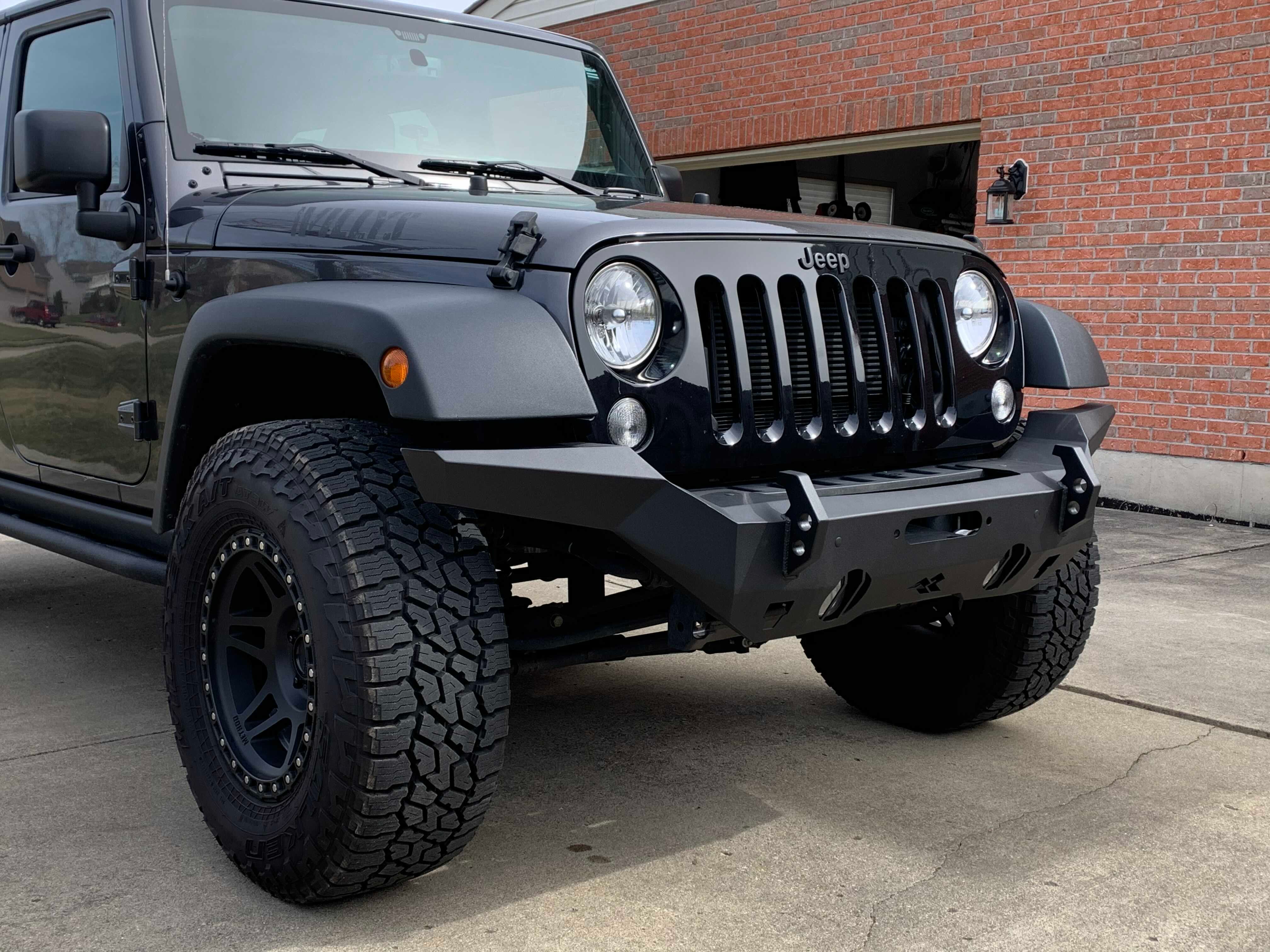
Stepping into the mid-range gets you better fit and finish, more refined engineering, and often more accessory options:
- Rugged Ridge: Part of the Omix-ADA family with decades of Jeep-specific experience. Their bumpers emphasize precise fitment and OE-quality finish. Options like the Spartan series offer modular designs where you can add or remove end caps, bull bars, and over-rider hoops.
- DV8 Offroad: A newer player that has earned a strong following with aggressive styling and solid engineering. DV8 bumpers use heavy-gauge steel, integrated winch mounts, and pre-cut light tabs. Their fit and finish often rivals brands at higher price points.
- Poison Spyder: Focused on hardcore off-road functionality. Poison Spyder bumpers are designed for serious trail use with options like internal winch mounts, frame-tie-in plates, and minimalist profiles for maximum clearance.
Premium ($1,200 and Up)
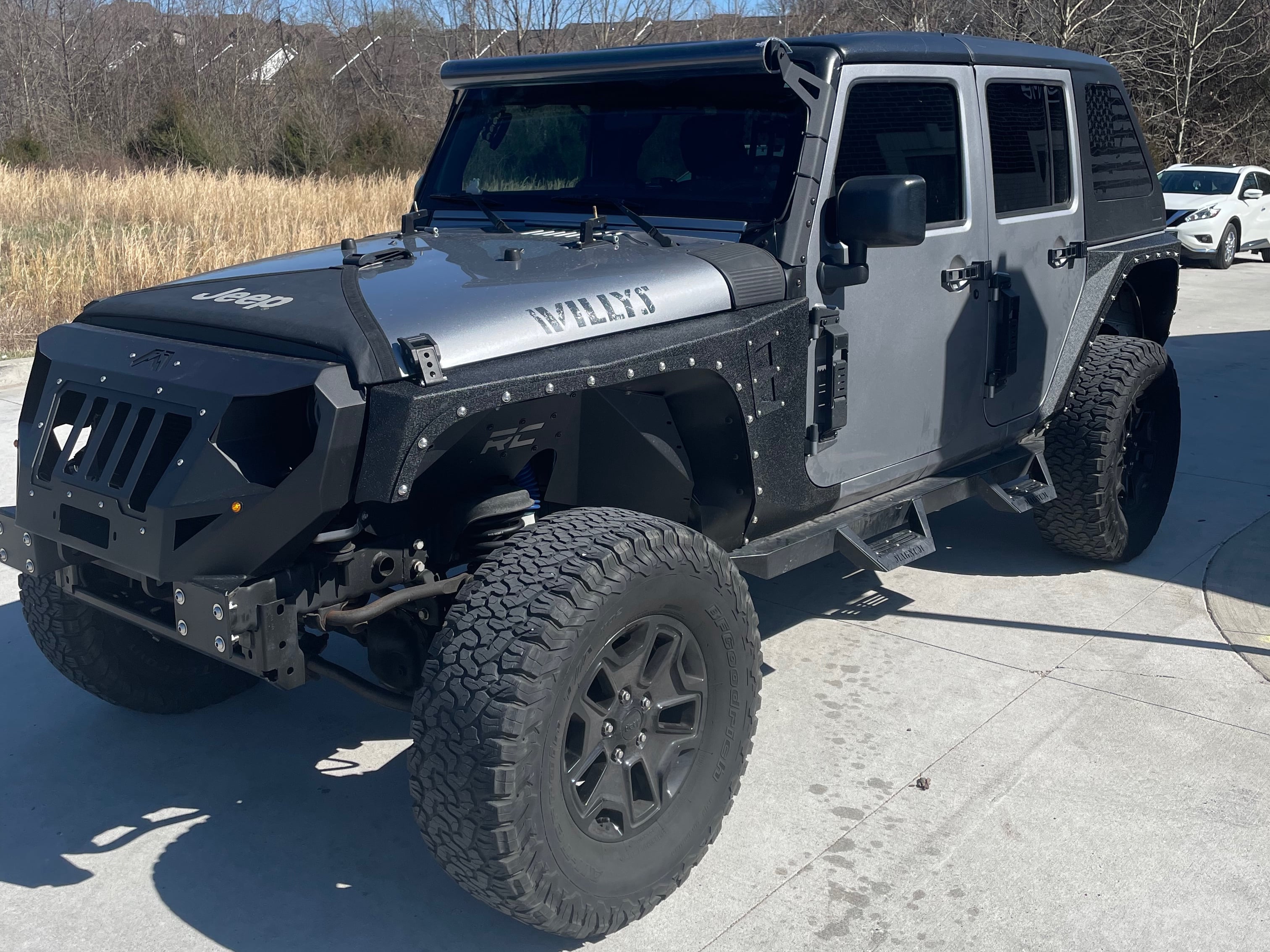
Premium bumpers push engineering, materials, and design to the highest level:
- AEV (American Expedition Vehicles): AEV bumpers are engineered to integrate seamlessly with factory systems — crash sensors, fog lights, and frame mounting points all work as if the bumper came from the factory. AEV bumpers deliver a factory-quality fit with a premium powder-coat finish and clean, purpose-built design.
- Fab Fours: Known for bold, distinctive styling combined with serious structural engineering. Options like the Grumper (grille-bumper hybrid) and the Vengeance series offer unique aesthetics without sacrificing functionality. Heavy-gauge steel, integrated winch mounts, and multiple light provisions are standard.
- ARB: An Australian brand with a global reputation for expedition-grade equipment. ARB bumpers are built for the long haul with heavy-duty steel, integrated fog lights, winch compatibility, and provisions for ARB's own driving light systems. Designed for overlanding and expedition rigs that need absolute reliability.
Brand Comparison at a Glance
| Brand |
Price Tier |
Typical Price Range |
Best For |
Winch-Ready |
| Barricade |
Budget |
$300 – $500 |
First bumper upgrade, budget trail builds |
Yes |
| Rough Country |
Budget |
$350 – $550 |
Affordable, straightforward off-road use |
Yes |
| Smittybilt |
Budget |
$300 – $600 |
Wide selection, proven reliability |
Most models |
| Rugged Ridge |
Mid-Range |
$600 – $1,000 |
Precise fitment, modular designs |
Yes |
| DV8 Offroad |
Mid-Range |
$600 – $1,100 |
Aggressive styling, strong value |
Yes |
| Poison Spyder |
Mid-Range |
$700 – $1,200 |
Hardcore trail, maximum clearance |
Yes |
| AEV |
Premium |
$1,200 – $1,800 |
OE-quality integration, clean design |
Yes |
| Fab Fours |
Premium |
$1,300 – $2,000+ |
Bold styling, structural engineering |
Yes |
| ARB |
Premium |
$1,400 – $2,000+ |
Expedition, overlanding, global reliability |
Yes |
Want a deeper dive into the top shelf? Read our guide to premium bumper brands.
Front Bumpers vs. Rear Bumpers: What to Upgrade First
If you can only upgrade one bumper at a time, start with the front — a front bumper upgrade gives you the biggest improvement in off-road capability, approach angle, winch mounting, and front-end protection.
Your front bumper is the first thing to make contact with obstacles on the trail. It sets your approach angle, determines whether you can mount a winch, and protects your radiator, grille, and headlights. A good aftermarket front bumper immediately changes how your Wrangler handles rocks, steep inclines, and trail debris.
That said, do not sleep on the rear bumper. Your stock rear bumper is often just as flimsy as the front, and it does nothing to support a full-size spare tire, rear-mounted lighting, or a receiver hitch for recovery. Aftermarket Wrangler rear bumpers with integrated tire carriers solve the spare-tire problem and give you a clean mounting solution for auxiliary lights and D-ring shackles.
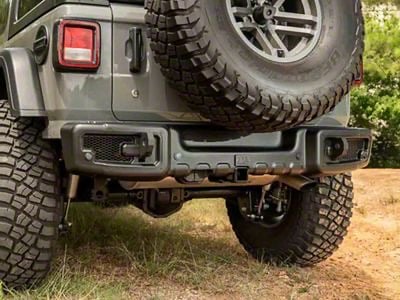
The ideal upgrade path for most builds:
- Front bumper first: Gain approach angle, winch capability, and front-end protection
- Rear bumper second: Add departure angle, tire carrier support, and rear recovery points
- Pair with body armor: Once both bumpers are upgraded, consider body armor and rock sliders for full-perimeter protection
Bumper Fitment by Wrangler Generation
Jeep Wrangler bumpers are not universal — each generation uses different frame mounting points, wiring harnesses, and sensor locations, so you need a bumper designed specifically for your model year to ensure a proper bolt-on fit.
JL Wrangler (2018–Present)
The JL introduced significant changes that affect bumper fitment. Factory forward-facing camera, parking sensors, and adaptive cruise control sensors are all integrated into the stock bumper on many trims. If your JL has these features, you need a bumper that either relocates the sensors or provides cutouts for them.
The JL also uses a different frame-rail mounting setup than the JK, so JK bumpers will not bolt onto a JL without modification. Always look for bumpers specifically designed for the JL platform. The good news: the JL aftermarket has matured significantly, and every major brand now offers JL-specific options. Browse JL front bumpers to see what fits your year.
JK Wrangler (2007–2018)
The JK is the most popular Wrangler generation in the aftermarket, which means you have the widest selection of bumper options at every price point. Fitment is straightforward: JK bumpers bolt directly to the factory frame mounting points, and most come with provisions for factory fog lights.
One thing to watch for: the 2007–2009 JK models use a slightly different wiring harness for fog lights than the 2010–2018 models. Most bumper manufacturers include adapters or specify compatibility across the full JK range, but it is worth confirming before you buy. Explore JK front bumpers for the full selection.
TJ Wrangler (1997–2006)
The TJ shares its basic frame design with the LJ (Unlimited) and uses a simpler mounting system than the JK or JL. Aftermarket TJ bumpers bolt to the factory frame horns, and sensor compatibility is not a concern since TJs do not have parking sensors or cameras.
The TJ aftermarket is well established, with plenty of budget and mid-range options still available. If you are building a TJ for trail duty, you will find competitive pricing on quality bumpers since the platform has been around long enough for manufacturers to refine their designs. See the lineup of TJ front bumpers.
YJ Wrangler (1987–1995) and CJ (1976–1986)
YJ and CJ Wranglers use older frame designs with different mounting points than modern Jeeps. The aftermarket for these generations is smaller but still active, especially from brands like Smittybilt and Rugged Ridge that have been making Jeep parts since these rigs were new.
Fitment is generally simpler on these older platforms — no sensors, no electronics, no adaptive systems to worry about. The challenge is finding a bumper with modern features (winch mount, D-ring tabs, light provisions) designed for these older frame dimensions. If you are wrenching on a YJ or CJ, make sure the bumper you choose specifies your exact generation. Some manufacturers list "YJ/CJ" as a combined fitment, while others separate them due to minor frame differences.
Pro tip: if your YJ or CJ is running a lift kit, confirm that the bumper you choose has enough clearance for your tire size and suspension setup. Older-generation bumpers are not always designed with 35-inch-plus tires in mind.
How to Choose the Best Bumper for Your Build
The right bumper depends entirely on what you do with your Wrangler — a daily driver, a weekend trail rig, a dedicated crawler, and an overlanding build each have different priorities when it comes to weight, protection, and accessory integration.
Daily Driver Builds
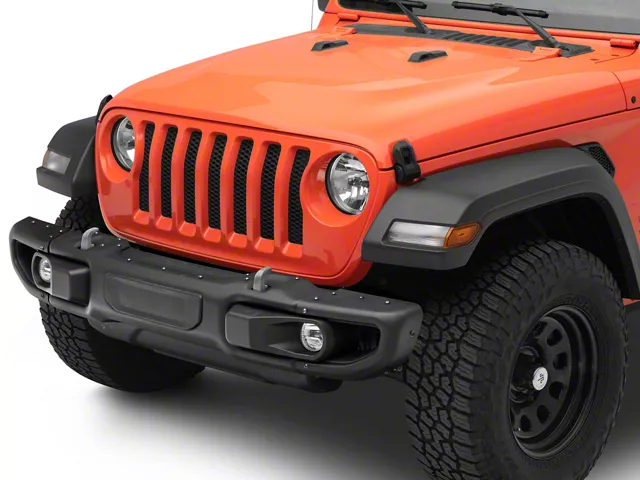
If your Wrangler is your everyday vehicle that occasionally sees a dirt road, you want a bumper that looks good, does not destroy your fuel economy, and still provides meaningful front-end protection. A full-width steel or aluminum bumper from a brand like Barricade or Rugged Ridge gives you a clean appearance upgrade with D-ring mounts and light tabs for future use.
Weight matters for daily driving. Consider an aluminum bumper if you want to keep the front end light and preserve factory handling characteristics. You probably do not need a winch mount right away, but choosing a winch-ready bumper now gives you the option later without having to swap bumpers.
Weekend Trail Rigs
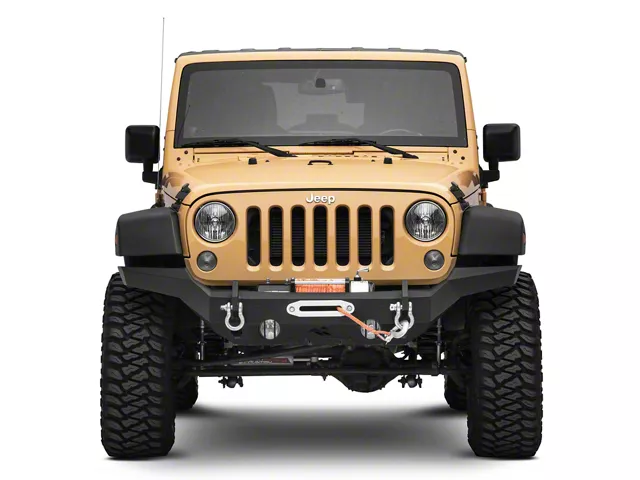
This is the most common build type, and it is where the mid-width bumper really shines. You want enough approach angle to handle moderate rock trails and obstacles, but you also want reasonable protection for the highway drive to the trailhead.
A mid-range steel bumper with an integrated winch mount, D-ring tabs, and auxiliary light provisions covers all of your bases. Brands like DV8 Offroad, Poison Spyder, and Rugged Ridge offer strong options in this category. Add a winch and a pair of LED cubes, and your rig is ready for any weekend adventure.
Dedicated Off-Road / Rock Crawler Builds
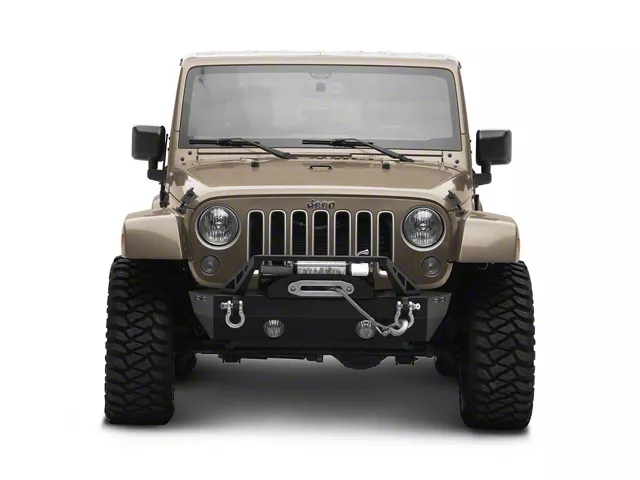
When your Wrangler rarely sees pavement, approach angle and weight savings are everything. A stubby steel bumper with an integrated winch mount is the standard choice. You need a winch — period. You need D-ring mounts. And you want the smallest, lightest bumper that can support both.
Poison Spyder and DV8 Offroad build some of the most aggressive short bumpers on the market, with internal winch mounts and frame-tie-in plates that distribute loads directly into the chassis. At the premium level, Fab Fours offers stubby and pre-runner-style bumpers with advanced engineering for extreme use.
Do not forget the rest of the protection package. A dedicated crawler needs rock sliders, skid plates, and body armor to complement the bumper. Your bumper is just the starting point.
Overlanding Builds
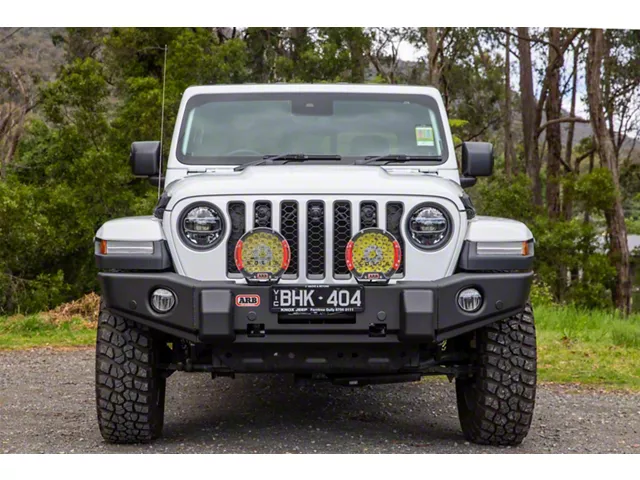
Overlanding is about going far, not just going hard. Your bumper needs to support a winch for self-recovery in remote areas, integrate cleanly with driving lights for night navigation, and ideally work with a front-mounted air compressor or accessory tray.
ARB and AEV are popular choices for overlanding rigs that prioritize long-haul reliability. Both brands engineer their bumpers to integrate seamlessly with factory systems while providing robust mounting solutions for winches, lights, and recovery gear. A full-width design is typically preferred for overlanding since maximum protection matters more than shaving a few degrees of approach angle when you are deep in the backcountry and cannot afford body damage.
If you need help picking the right bumper for your specific Wrangler, ExtremeTerrain's Sales Techs are real enthusiasts who can walk you through fitment and compatibility for your build.
Find Your Next Bumper
You now have everything you need to pick the right bumper for your Wrangler — style, features, brand, and fitment all dialed in. Ready to see what is available for your build? Explore ExtremeTerrain's full selection of Jeep Wrangler front bumpers and rear bumpers, filtered by your exact year and model, with free shipping on orders over $149.