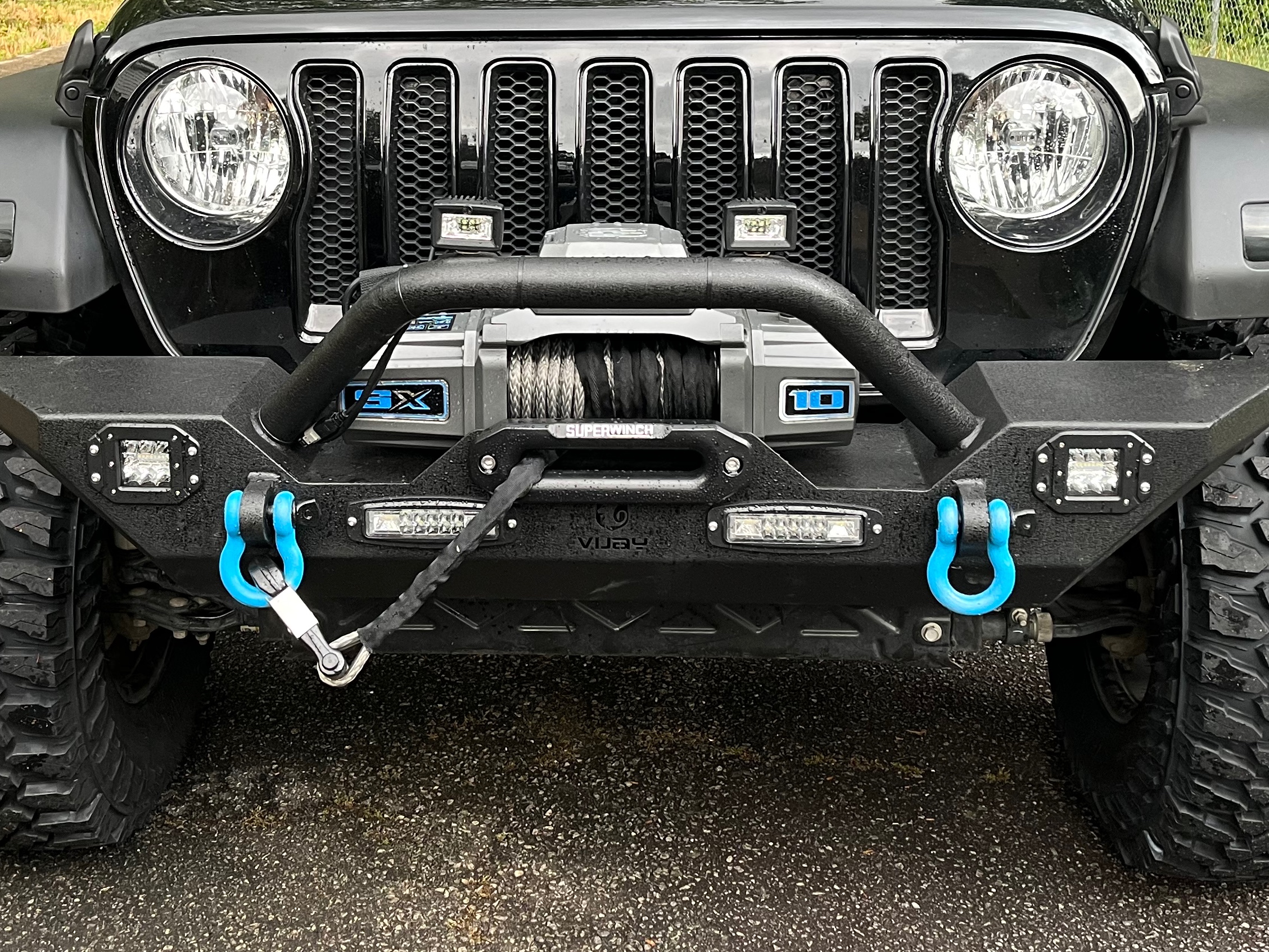
Whether you are building a dedicated trail rig or just want peace of mind on your next backroad adventure, a winch is one of the most practical upgrades you can bolt onto your Jeep. This jeep winch buyer's guide walks you through everything — from sizing and rope type to brand comparisons, budget tiers, and safe operation — so you can pick the right winch for your build and hit the trail with confidence. Have a question along the way? Our Sales Techs are real Jeep enthusiasts ready to help at 1-610-990-4559.
How To Size A Winch For Your Jeep
Multiply your Jeep's GVWR by 1.5 to find the minimum winch capacity you need. This rule of thumb accounts for the added resistance of mud, steep grades, and a stuck rig that is not rolling freely — situations where you need more pulling power than your Jeep's curb weight alone would suggest.
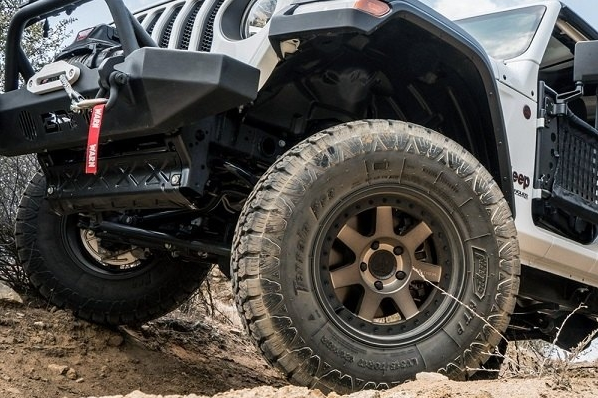
Here is a quick example: a JL Wrangler Rubicon 4-door has a GVWR around 5,800 lbs. Multiply that by 1.5 and you get 8,700 lbs minimum. In practice, you would want to step up to a 9,500 or 10,000 lb winch to give yourself a comfortable margin — especially if you are running heavier bumpers, a lift kit, or 35-inch tires that add weight beyond the factory spec.
Winch Sizing Table By Jeep Model
|
Jeep Model
|
Approx. GVWR (lbs)
|
Minimum Winch Capacity (1.5x)
|
Recommended Rating
|
|
CJ (1976–1986)
|
~3,750
|
5,625
|
6,000 lb
|
|
YJ (1987–1995)
|
~4,050
|
6,075
|
6,500 lb
|
|
TJ (1997–2006)
|
~4,450
|
6,675
|
7,000 lb
|
|
JK 2-Door (2007–2018)
|
~5,000
|
7,500
|
7,500–8,000 lb
|
|
JK 4-Door (2007–2018)
|
~5,500
|
8,250
|
8,500 lb
|
|
JL 2-Door (2018–2026)
|
~5,200
|
7,800
|
8,000 lb
|
|
JL 4-Door (2018–2026)
|
~5,800
|
8,700
|
9,000–10,000 lb
|
|
JT Gladiator (2020–2026)
|
~6,250
|
9,375
|
9,500–10,000 lb
|
Keep in mind that modifications add weight. A steel front bumper, winch, skid plates, roof rack, and a set of 37s can easily add 300–500 lbs to your Jeep. If your rig is heavily modified, size up to the next capacity level. And if you need even more pulling power, a snatch block effectively doubles your winch's line pull by redirecting the cable back to an anchor point — a must-have accessory for serious trail recovery.
Ready to narrow down your options? Browse our full selection of Jeep winches and accessories or talk to a Sales Tech at 1-610-990-4559 to find the right capacity for your specific build.
Electric Vs. Hydraulic Winches
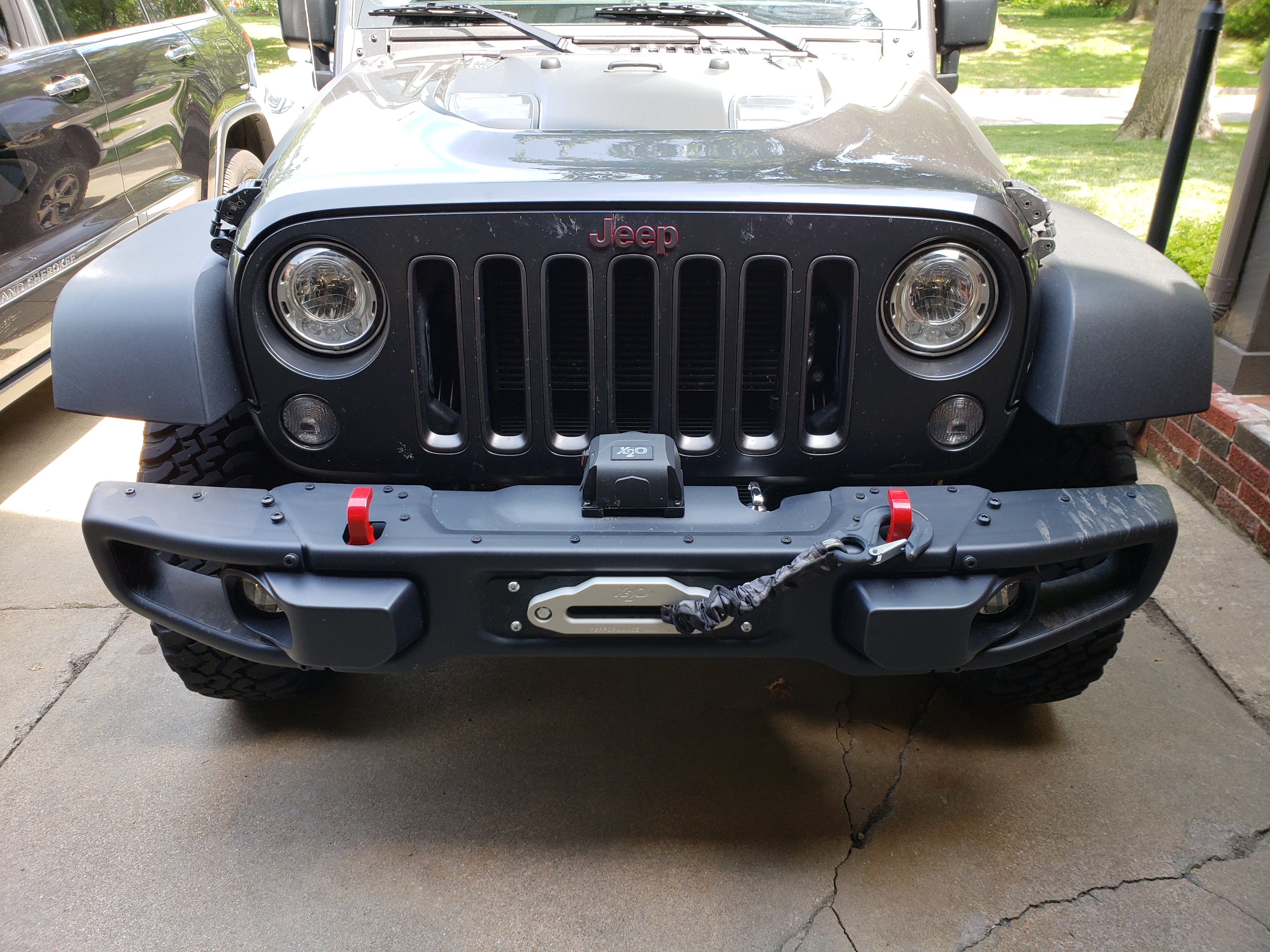
Electric winches are the standard choice for Jeep owners because they work whether the engine is running or not — a critical advantage when your rig stalls in a muddy creek bed or on a steep incline and you need to self-recover without a running engine.
How Does An Electric Winch Work?
An electric winch runs off your Jeep's 12V battery. When you press the remote, a solenoid sends power to the motor, which spins through a planetary gear train to rotate the drum and spool your rope. The main components include:
- Motor — Typically 4.5 to 7.0 HP, powering the gear train
- Solenoid pack — Directs current to the motor for in/out operation
- Planetary gear train — Multiplies torque for high pulling power at controlled speeds
- Drum — Spools your synthetic rope or steel cable
- Clutch — Lets you disengage the drum for free spooling (manually pulling out line)
The biggest advantage of electric? Independence. Even if your engine dies, your battery still powers the winch. That makes electric the clear winner for self-recovery scenarios — which is exactly why the vast majority of Jeep winches sold today are electric.
What About Hydraulic Winches?
Hydraulic winches tap into your Jeep's power steering pump, so they require the engine to be running. They offer steady, consistent pulling power without the heat buildup that electric motors can experience during long pulls. However, they are heavier, more complex to install, and lose their power source the moment your engine quits. For professional tow trucks and heavy equipment, hydraulic makes sense. For trail recovery on a Jeep? Electric is the right call.
Bottom line: An electric winch handles everything a Jeep owner needs — from self-recovery to pulling a buddy out of a ditch. Unless you are building a dedicated heavy-duty tow vehicle, electric is the way to go.
Synthetic Rope Vs. Steel Cable
Synthetic rope is lighter, safer if it breaks, and easier to handle — making it the preferred choice for most off-road Jeep owners. But steel cable still has its place. Here is how they compare so you can make the right call for your rig.

Head-To-Head Comparison
|
Feature
|
Synthetic Rope
|
Steel Cable
|
|
Weight
|
Up to 40% lighter
|
Heavier — adds front-end weight
|
|
Safety
|
Drops to the ground if it snaps
|
Whips violently if it snaps — serious injury risk
|
|
Handling
|
Flexible, easy to spool and unspool by hand
|
Stiff, can kink, requires gloves
|
|
Durability
|
Susceptible to UV and abrasion if not maintained
|
Resists abrasion, handles rough terrain
|
|
Maintenance
|
Rinse after use, inspect for fraying
|
Lubricate regularly, inspect for kinks and rust
|
|
Cost
|
Slightly higher upfront
|
Lower upfront cost
|
|
Water
|
Does not rust; floats
|
Can corrode in wet/saltwater conditions
|
Which Fairlead Do You Need?
Your rope type dictates your fairlead. Synthetic rope requires a hawse fairlead — a smooth, rounded aluminum guide that prevents abrasion. Steel cable needs a roller fairlead with spinning rollers to reduce friction on the metal cable. If you switch from steel to synthetic (or vice versa), you need to swap the fairlead too. Most modern winches include the correct fairlead for the rope they ship with.
Can You Swap Rope Types?
Yes. If your winch came with steel cable and you want to upgrade to synthetic, you can. Just replace the cable, swap the roller fairlead for a hawse fairlead, and you are good to go. Many owners make this switch because synthetic is easier to handle on the trail and significantly safer during high-tension recoveries.
For a deeper look at winch types and how they work, check out our guide on Jeep winches explained.
Best Jeep Winch Brands Compared: Warn Vs. Smittybilt Vs. Rugged Ridge
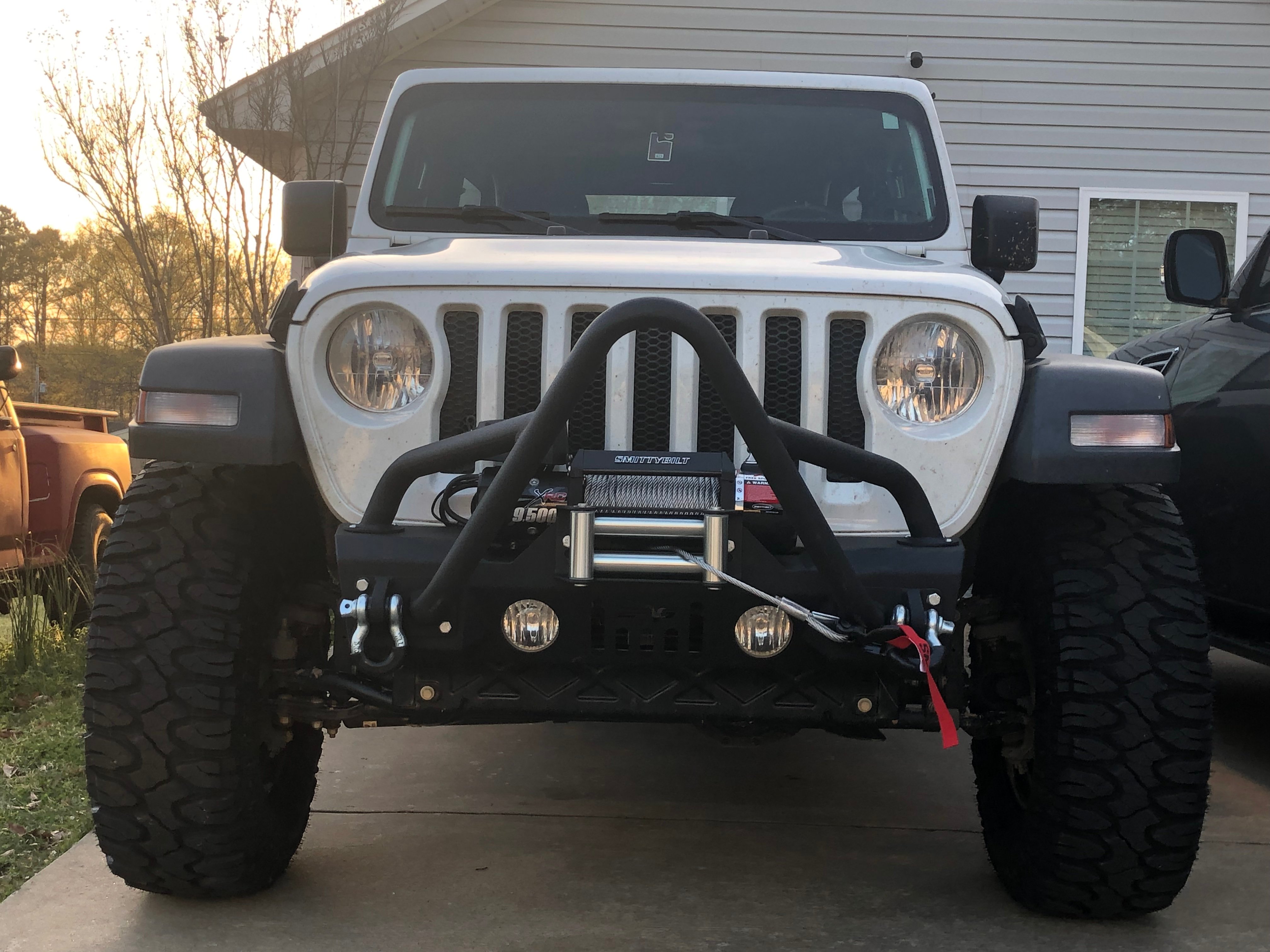
Warn is the name most Jeep owners turn to first for premium features like IP68 waterproofing and wireless remotes, while Smittybilt delivers strong performance at nearly half the price. Rugged Ridge sits in a solid middle ground with stainless hardware and clean hawse fairlead setups. Here is how the top three brands stack up — plus a few honorable mentions.
Brand Comparison Table
|
Feature
|
Warn
|
Smittybilt
|
Rugged Ridge
|
|
Price Range
|
$690–$3,560
|
$400–$730
|
$350–$500
|
|
Capacity Range
|
8,000–12,000 lb
|
9,500–12,000 lb
|
8,500–10,500 lb
|
|
Key Features
|
IP68 waterproofing, wireless remote, kill switch, smart monitoring
|
7.0 HP motor, USB wireless controller, synthetic rope standard
|
Stainless hardware, hawse fairlead, 5.5–6.6 HP motor
|
|
Warranty
|
7-year electrical + lifetime mechanical
|
Varies by model
|
Varies by model
|
|
Best For
|
Premium builds, extreme conditions, competition rigs
|
Value buyers who want strong specs without the premium price
|
Mid-range builds looking for reliable performance
|
Warn
Warn is the name most Jeep owners think of first — and for good reason. Their Zeon Platinum line offers IP68-rated waterproofing (fully submersible), wireless remote with a safety kill switch, and battery/heat monitoring. The VR EVO series delivers Warn quality at a more accessible price point with options at 8K, 10K, and 12K capacities. Both lines come with a 7-year electrical and lifetime mechanical warranty.
Smittybilt
Smittybilt has carved out a strong position as the value leader. Their X2O Gen3 series includes a 7.0 HP motor, synthetic rope, and a USB-rechargeable wireless controller — features you would normally expect from winches costing hundreds more. If you want real capability without a premium price tag, Smittybilt consistently delivers.
Rugged Ridge
Rugged Ridge winches offer stainless steel hardware and hawse fairleads as standard, with 5.5 to 6.6 HP motors across their lineup. They sit right in the sweet spot between budget and premium — solid build quality without overpaying for features you may not need.
Other Brands Worth Considering
- Rough Country — Budget-friendly options with wireless remotes included; a solid entry point
- Superwinch — The SX10 features IP68 waterproofing; the Tiger Shark line offers performance at competitive prices
Not sure which brand fits your build? Talk to a Sales Tech at 1-610-990-4559 — they have hands-on experience with every brand we carry. You can also compare our full lineup of winches and recovery gear or check out our picks for the best Jeep winches.
Budget Tiers: What To Expect At Every Price Point
How much should you spend on a Jeep winch? That depends on how often you hit the trail, what conditions you face, and which features matter most to you. Here is what each price tier gets you.
Under $400: Entry-Level Performance
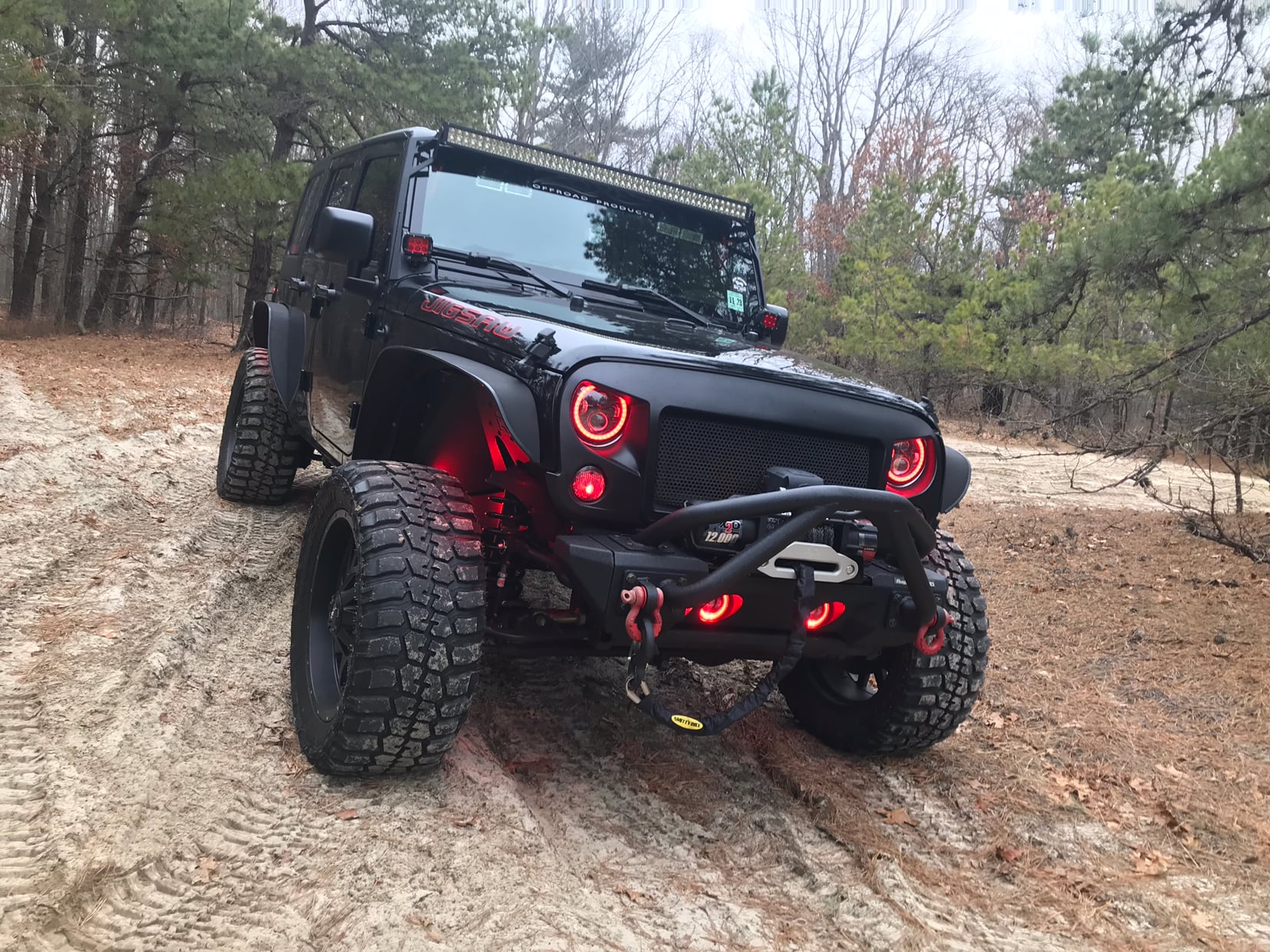
At this tier, you are looking at steel cable winches and basic synthetic setups. The Rough Country 9500 lb and Smittybilt XRC Gen3 9.5K fall into this range. You get solid pulling power for occasional trail use, but you may sacrifice features like wireless remotes and advanced waterproofing. Good option if you are building on a tight budget and want a reliable recovery tool for lighter-duty wheeling.
$400–$700: The Sweet Spot
This is where most Jeep owners land — and for good reason. In this range, you get synthetic rope, wireless remotes, strong motors, and better weatherproofing. Standout options include:
- Smittybilt X2O Gen3 10K — 7.0 HP motor, synthetic rope, USB wireless controller
- Warn VR EVO 10-S — Warn reliability with synthetic rope at a competitive price
- Superwinch SX10 — IP68 waterproofing in a mid-range package
If you want one recommendation for most Jeep builds, look here. You get the features that matter without paying for competition-grade extras.
$700–$1,200: Advanced Features
Step up to this range and you get more powerful motors, smarter electronics, and tougher sealing. The Mile Marker SEC95 and Warn VR EVO 12-S live here. These winches are built for frequent use in demanding conditions — deeper water crossings, heavier rigs, and extended pulling scenarios where heat management matters.
$1,200+: Premium And Competition
This is Warn Zeon Platinum territory — IP68 sealing, wireless remotes with kill switches, battery and heat monitoring, and lifetime mechanical warranties. The legendary Warn 8274-S also sits in this tier for owners who want the classic worm-gear design. If you compete, run extreme trails, or simply want the best, this tier delivers.
Our recommendation: The $400–$700 range covers the needs of the vast majority of Jeep owners. If you trail regularly and want proven reliability, start there.
Explore our complete roundup of best winches and recovery gear to see side-by-side options at every price point.
Mounting Your Winch: Bumper Compatibility And Installation
A winch needs a solid mounting platform. Before you order, you need to figure out how that winch is going to attach to the front of your Jeep — and that starts with your bumper.
Winch-Ready Bumpers Vs. Winch Mounting Plates
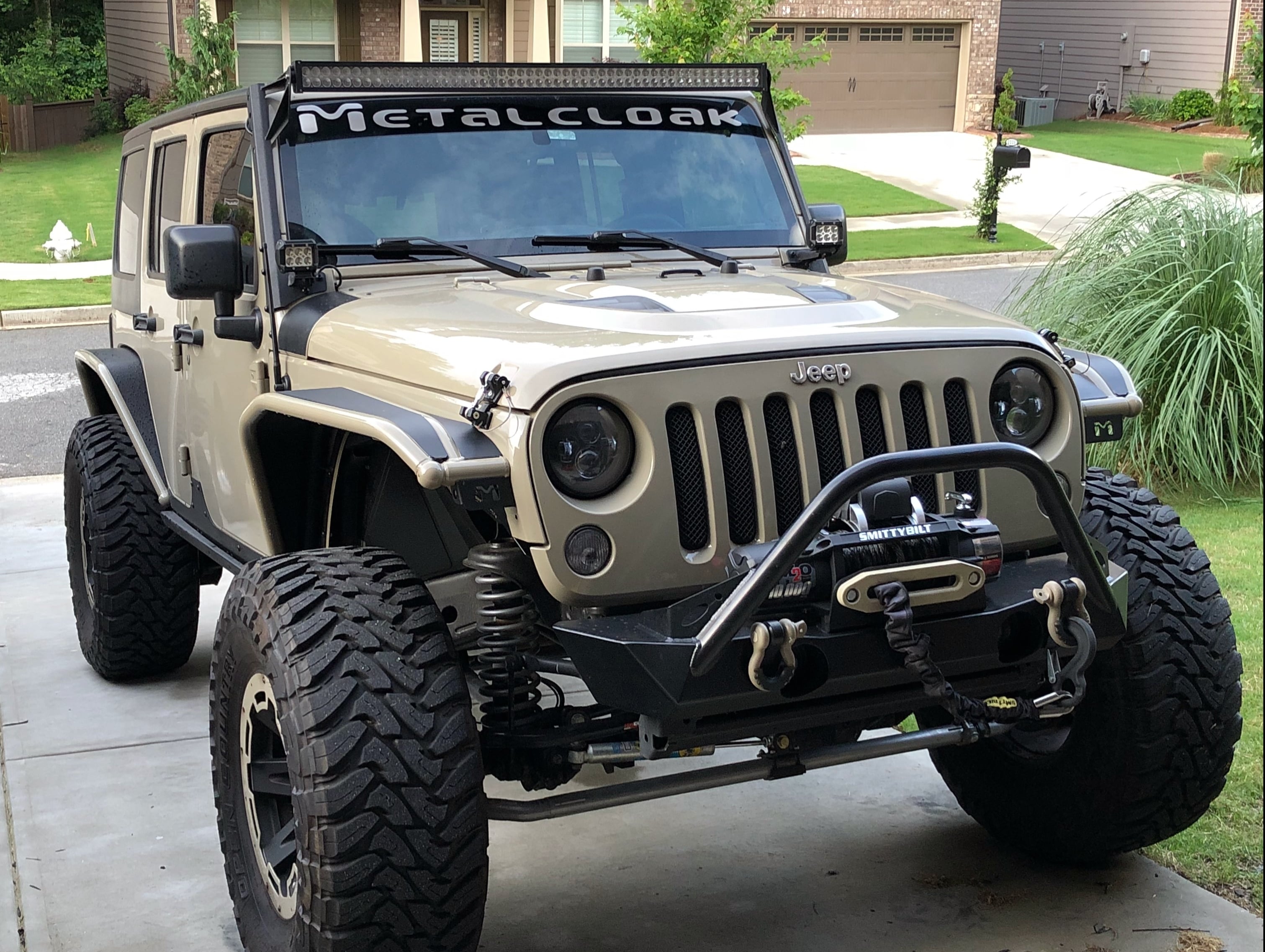
Most aftermarket front bumpers designed for Jeeps come winch-ready — meaning they include a built-in winch mounting plate with the correct bolt pattern. If you are upgrading your bumper anyway (and most Jeep owners do), a winch-ready bumper is the cleanest, strongest option. Brands like Barricade, Smittybilt, and Rugged Ridge all offer bumpers with integrated winch mounts.
If you want to keep your stock bumper, a standalone winch mounting plate bolts behind the bumper and gives you a solid platform. Keep in mind that stock bumpers are not designed to handle the stresses of a winch under full load — a proper aftermarket bumper is always the better long-term choice.
Weight Considerations
A winch adds 60–90 lbs to your front end, and a steel aftermarket bumper adds another 50–100 lbs on top of that. If you are running a stock suspension, all that weight up front can affect steering feel, braking, and ride quality. Consider upgrading your front coil springs or adding bump stops if you are stacking a bumper, winch, and auxiliary lights.
Wiring And Electrical Basics
Electric winches draw serious amperage — a 10,000 lb winch under full load can pull 400+ amps. Your wiring needs to handle that demand:
- Battery connections — Heavy-gauge cables (2 AWG or larger) run directly from the battery to the winch solenoid
- Solenoid — Controls the motor direction; usually mounts near the winch or inside the engine bay
- Circuit breaker or fuse — Protects your electrical system from overcurrent
- Battery — A healthy, fully charged battery is critical; consider a dual-battery setup if you winch frequently
Professional Vs. DIY Installation
If you are comfortable with basic wrenching, mounting a winch to a winch-ready bumper is a straightforward weekend project. Bolt the winch to the plate, run the wiring, mount the solenoid, and connect the remote. If you are less confident about running heavy electrical cables and making clean connections, a professional install ensures everything is safe and secure.
Browse our selection of Jeep front bumpers to find a winch-ready option for your rig. We also carry winch hitch mounts for rear-mounted or portable setups. For step-by-step instructions, check out our bumper and winch installation guide.
Essential Winch Accessories And Recovery Gear
Your winch is only part of the equation. Without the right recovery accessories, you cannot use it safely or effectively. Here is what you need in your recovery kit before you head out on the trail.
- Tree trunk protector — A wide nylon strap that wraps around a tree or rock to create a safe anchor point without damaging the surface. Never wrap your winch line directly around a tree — it damages both the tree and your rope.
- Snatch block — A pulley that redirects your winch line and effectively doubles your winch's pulling capacity. Essential for heavy recoveries and changing pull direction.
- Winch line dampener — A heavy padded cover draped over the winch line during operation. If the line snaps under tension, the dampener absorbs energy and keeps the line from whipping dangerously. Always use one.
- Recovery gloves — Heavy-duty gloves protect your hands from rope abrasion, heat, and sharp cable strands. Do not handle winch lines bare-handed.
- Safety glasses — Debris, mud, and rope fibers can fly during high-tension pulls. Protect your eyes every time you winch.
- Wireless remote — Many winches include one, but if yours did not, a wireless remote lets you operate the winch from a safe distance (12+ feet from the loaded line).
- Recovery kit bag — Keeps all your gear organized and accessible in one place. Throw it in your Jeep and know you are covered.
- D-rings and shackles — Connect your winch line, tree trunk protector, and snatch block. Use rated, forged shackles — never use hardware-store hooks for recovery.
A complete recovery kit runs $50–$150 and is one of the best investments you can make alongside your winch. Do not skip it.
Check out our full collection of Jeep recovery gear and our recovery jacks and accessories guide for more detail.
Winch Maintenance And Seasonal Care
A well-maintained winch lasts for years. Neglect it, and you might find out it does not work when you need it most — stuck axle-deep on a cold January morning.
<img src="https://www.extremeterrain.com/globalassets/blog/Hero_Images/Wrangler-Winches3-XT.jpg" alt="Jeep winch winter maintenance and seasonal care">
Winter-Specific Concerns
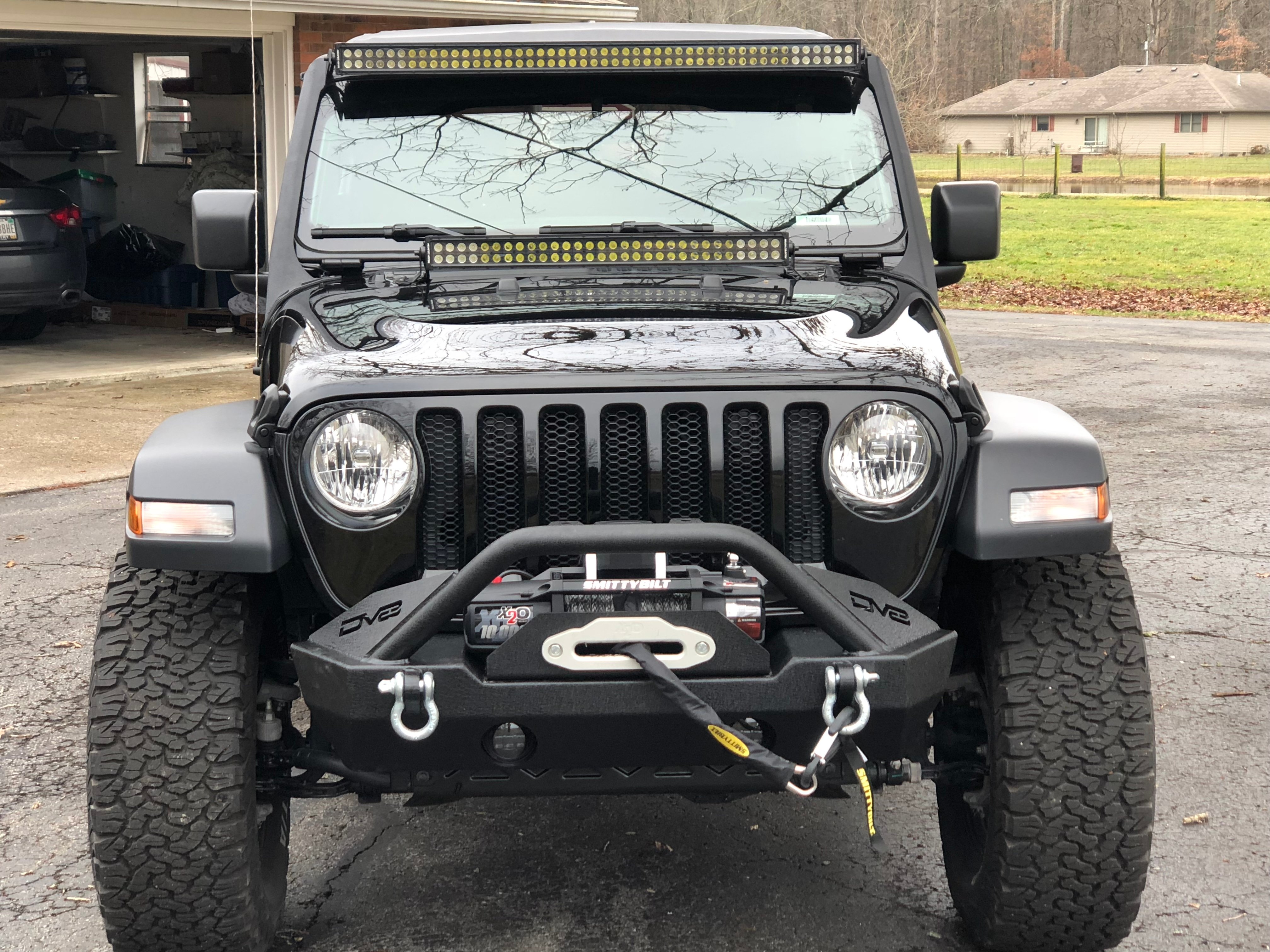
Cold weather is tough on winch equipment. Synthetic ropes can stiffen and lose flexibility in freezing temperatures, making them harder to spool and more susceptible to damage. Steel cables become rigid and difficult to manage safely. Road salt and brine coat every exposed component, accelerating corrosion on electrical connections, solenoids, and the drum housing. If you wheel in winter conditions, inspect and clean your winch more frequently.
IP Ratings Explained
You will see IP ratings listed on most quality winches. Here is what they mean:
- IP67 — Dustproof and protected against temporary submersion (up to 1 meter for 30 minutes). Good for most trail conditions.
- IP68 — Dustproof and protected against continuous submersion (depth and duration specified by manufacturer). The top tier for deep water crossings and extreme conditions.
If you regularly cross water or wheel in heavy rain and mud, an IP68-rated winch (like the Warn Zeon Platinum or Superwinch SX10) gives you extra confidence that water is not getting into the motor or solenoid pack.
Regular Maintenance Schedule
- After every trail run: Rinse the winch, drum, and rope with fresh water to remove mud, sand, and salt. Unspool the line fully, let it dry, and respool under light tension.
- Every 3–6 months: Inspect synthetic rope for fraying, cuts, or UV damage. Check steel cable for kinks, rust, and broken strands. Lubricate steel cable lightly if applicable.
- Annually: Test the winch under load. Check all electrical connections for corrosion. Inspect the solenoid, clutch operation, and remote functionality. Verify that your fairlead is secure and not worn.
When To Replace Your Rope Or Cable
Replace synthetic rope if you see significant fraying, heat damage, or the outer sheath is worn through. Replace steel cable if you find kinks, broken strands, or heavy rust. A compromised line is a safety hazard — do not gamble on it. Replacement ropes and cables are relatively inexpensive compared to the risk.
For more tips on staying prepared on the trail, check out our guide to staying safe on the trail.
How To Use A Winch Safely
A winch puts thousands of pounds of tension on a line. Used incorrectly, that tension can cause serious injury. Follow this step-by-step process every time you winch.
Step-By-Step Winch Operation
- Check your surroundings. Make sure bystanders are clear of the winch line path. Identify hazards — loose rocks, unstable ground, other vehicles.
- Disengage the clutch and free spool. Release the drum clutch so you can pull line out by hand. Walk the line to your anchor point — never let the winch motor pull it out under power.
- Connect the remote. Plug in your wired remote or pair your wireless remote. Test the in/out controls before you load the line.
- Attach to a solid anchor point. Wrap a tree trunk protector around a healthy, sturdy tree and connect your winch line to the protector using a rated D-ring or shackle. Never wrap the winch line directly around a tree.
- Re-engage the clutch and tension the line. Lock the drum clutch back in and use the remote to slowly take up slack until the line is taut with light tension.
- Place a line dampener. Drape a winch line dampener over the loaded line, roughly midway between the winch and the anchor. This absorbs energy if the line breaks.
- Winch slowly and steadily. Use the remote to pull in short, controlled bursts. Do not run the winch at full speed for extended periods — let the motor cool if it gets hot. Watch the line spool evenly on the drum.
Safety Positioning
- Never stand directly behind or in front of a loaded winch line. If the line breaks, it snaps back along its path. Always stand to the side, at a 90-degree angle.
- Use your remote from at least 12 feet away. A wireless remote or a long wired remote lead keeps you out of the danger zone.
- Keep hands away from the fairlead and drum. Fingers can get pulled into the mechanism under load.
Tree Trunk Protector Protocol
Always wrap your tree trunk protector low on the trunk (close to the base) for maximum stability. Use it on every recovery — even if the tree looks like it can handle the load. A protector distributes force across a wide area, preventing damage to bark and root systems while also protecting your winch line from abrasion.
Key Takeaways
- Size your winch using the 1.5× GVWR rule — most Wrangler and Gladiator owners need 8,000 to 10,000 pounds of line pull capacity.
- Synthetic rope is the go-to choice for off-road Jeep owners thanks to lighter weight, safer handling, and easier spooling — just pair it with a Hawse fairlead.
- Warn, Smittybilt, and Rugged Ridge cover every budget tier, with the $400–$700 range delivering the best value for most Jeep builds.
- A winch-ready bumper, proper wiring, and essential recovery accessories (tree protector, snatch block, line dampener) are just as important as the winch itself.
- Regular maintenance — rinsing after trail runs, inspecting your line, and protecting against salt and moisture — keeps your winch reliable when you need it most.
A winch transforms your Jeep from a vehicle that hopes for the best into one that is ready for anything the trail throws at it. Whether you are sizing your first winch, comparing brands, or building out a complete recovery kit, you now have everything you need to make a confident decision.
Want personalized help finding the right winch for your specific Jeep and build? Our Sales Techs are real Jeep enthusiasts with hands-on experience — no scripts, no call centers. Give them a call at 1-610-990-4559 or explore our full selection of Jeep winches and accessories to start building your recovery setup today.
Frequently Asked Questions About Jeep Winches
Whether you're shopping for your first winch or upgrading an existing setup, these are the most common questions Jeep owners ask about winch selection, sizing, and maintenance.
What Size Winch Do I Need for My Jeep?
Multiply your Jeep's gross vehicle weight rating (GVWR) by 1.5 to find the minimum winch capacity you need. For example, a Jeep Wrangler JL Rubicon with a 5,800-pound GVWR needs at least a 8,700-pound winch — so a 9,500-pound or 10,000-pound model is ideal. Go higher if you regularly tackle deep mud or steep inclines.
Is Synthetic or Steel Winch Rope Better for Off-Roading?
Synthetic rope is lighter, safer if it snaps, and easier to handle — making it the preferred choice for most off-road Jeep owners. Steel cable is more durable against abrasion and less expensive, but it can develop dangerous burrs and stores more energy if it breaks under load. Choose synthetic unless you primarily work in highly abrasive environments.
Do I Really Need a Winch for My Jeep?
If you drive off-road regularly, a winch is one of the most important recovery tools you can own. It lets you self-recover from mud, sand, snow, and steep obstacles without relying on another vehicle. Even for light trail use, a winch provides peace of mind that you can get unstuck safely and independently.
Who Makes the Best Winch for a Jeep?
Warn, Smittybilt, and Rugged Ridge are the three most popular winch brands among Jeep owners. Warn offers premium reliability and advanced features like wireless remotes and IP68 waterproofing. Smittybilt delivers strong performance at budget-friendly prices. Rugged Ridge provides solid mid-range options with stainless steel hardware.
Can I Switch From Steel Cable to Synthetic Rope on My Winch?
Yes, most winches allow you to swap steel cable for synthetic rope. The conversion requires replacing the cable and switching from a roller fairlead to a Hawse-style fairlead — roller fairleads can pinch and damage synthetic rope. Many owners make this swap for the weight savings and improved safety of synthetic line.
Is a 9,500 lb Winch Enough for a Jeep Gladiator?
A 9,500-pound winch meets the minimum 1.5× GVWR guideline for most Gladiator configurations, and many owners run them successfully. However, if you've added heavy aftermarket accessories or regularly encounter deep mud, stepping up to a 12,000-pound winch provides extra margin. Use a snatch block to double your effective pulling power when needed.
How Do I Maintain My Winch in Winter?
Inspect your winch rope or cable for ice buildup before each use — frozen lines can damage the drum and fairlead. Clean salt and road grime from the winch housing regularly to prevent corrosion. Unspool and respool the line periodically to prevent moisture from being trapped between wraps, and consider a winch cover for extended storage.
What Winch Accessories Do I Need for Off-Road Recovery?
Essential winch accessories include a tree trunk protector (to anchor without damaging trees), a snatch block (to double pulling power or change pull direction), heavy-duty gloves, a winch line dampener (to absorb energy if the line breaks), and a recovery kit bag. A wireless remote controller is also highly recommended for safe operation from a distance.
What Is the Difference Between a Hawse Fairlead and a Roller Fairlead?
A Hawse fairlead is a smooth, flat guide best suited for synthetic winch rope — it prevents the rope from being pinched or damaged. A roller fairlead uses steel rollers and works best with steel cable, guiding it smoothly under load. If you use synthetic rope, always pair it with a Hawse fairlead to protect the line from fraying.
How Much Does a Good Jeep Winch Cost?
Quality Jeep winches range from about $300 to over $2,500 depending on brand, capacity, and features. Budget options from Smittybilt and Rough Country run $300-$600 for 8,000-12,000 lb models. Mid-range picks from Superwinch and Mile Marker fall between $600-$1,000. Premium Warn models with wireless remotes and advanced waterproofing start around $700 and go up to $3,500.