Is your Grand Cherokee ZJ pulling to one side, or are your tires wearing unevenly after a lift? Your alignment is the first thing to check. Whether you are heading to the shop or handing your tech the spec sheet, this guide gives you the factory-recommended caster, camber, toe, and thrust angle values for every 1993-1998 ZJ — plus what those numbers actually mean, how to spot misalignment symptoms, and what changes when you add a lift kit over 3 inches.
ZJ Wheel Alignment Specifications Table
The factory-recommended front caster angle for a 1993-1998 Jeep Grand Cherokee ZJ is +7.0° preferred, with an acceptable range of 6.5° to 7.5°. Front total toe should be set to 0.12° toe-in, and rear total toe ranges from 0° to +0.5°.
|
Parameter
|
Preferred
|
Acceptable Range
|
|
Front
|
|
Total Toe
|
0.12°
|
0° to +0.22°
|
|
Caster
|
+7.0°
|
6.5° to 7.5°
|
|
Camber (Fixed)
|
—
|
-1.13° to +0.13°
|
|
Rear
|
|
Total Toe
|
0.00° to +0.5°
|
0° to +0.5°
|
|
Thrust Angle
|
0.00°
|
+/-0.25°
|
|
Camber
|
N/A (solid rear axle)
|
Note: Total toe is the sum of both left and right individual wheel toe settings. Positive toe (+) is toe-in; negative toe (−) is toe-out. Front camber on the ZJ is non-adjustable — values outside the acceptable range indicate worn suspension components.
Running the right Grand Cherokee ZJ tires matters just as much as keeping your alignment in spec. Mismatched or worn tires can mask alignment problems and accelerate uneven wear.
What These Alignment Values Mean
What do the four alignment angles on your ZJ actually control? Here is what each one does and why it matters for how your Grand Cherokee drives.
Caster
Caster is the forward or rearward tilt of your steering axis when viewed from the side. The ZJ's preferred +7.0° caster provides straight-line stability at highway speeds and gives you that self-centering feel after a turn. If caster drops too low, the steering wanders and feels vague. If it is too high, the wheel gets heavy and harder to turn at low speed. For a deeper dive into how caster works across Jeep platforms, check out this guide on caster angle settings.
Camber
Camber is the inward or outward tilt of the wheel when viewed from the front. On the ZJ, front camber is fixed — there is no factory adjustment. The acceptable range of -1.13° to +0.13° accounts for normal manufacturing tolerances. If your camber reads outside that window, the issue is not an alignment adjustment — it is worn ball joints, bent knuckles, or collapsed control arm bushings that need replacement.
Toe
Toe describes whether the fronts of your tires point inward (toe-in) or outward (toe-out) relative to the vehicle centerline. The ZJ uses a slight 0.12° toe-in to promote straight-line tracking. Toe is the primary adjustable alignment parameter on your ZJ's front end and the first thing a tech should check if you are seeing uneven tire wear or steering pull. Learn more about what Jeep toe means and how it affects handling.
Thrust Angle
Thrust angle is the direction the rear axle points relative to the vehicle's centerline. On a properly aligned ZJ, this should read 0.00° (within +/-0.25°). A thrust angle outside that range means your rear axle is not square to the body — you will notice the steering wheel sitting off-center even though the vehicle tracks straight, and the rear tires will wear unevenly.
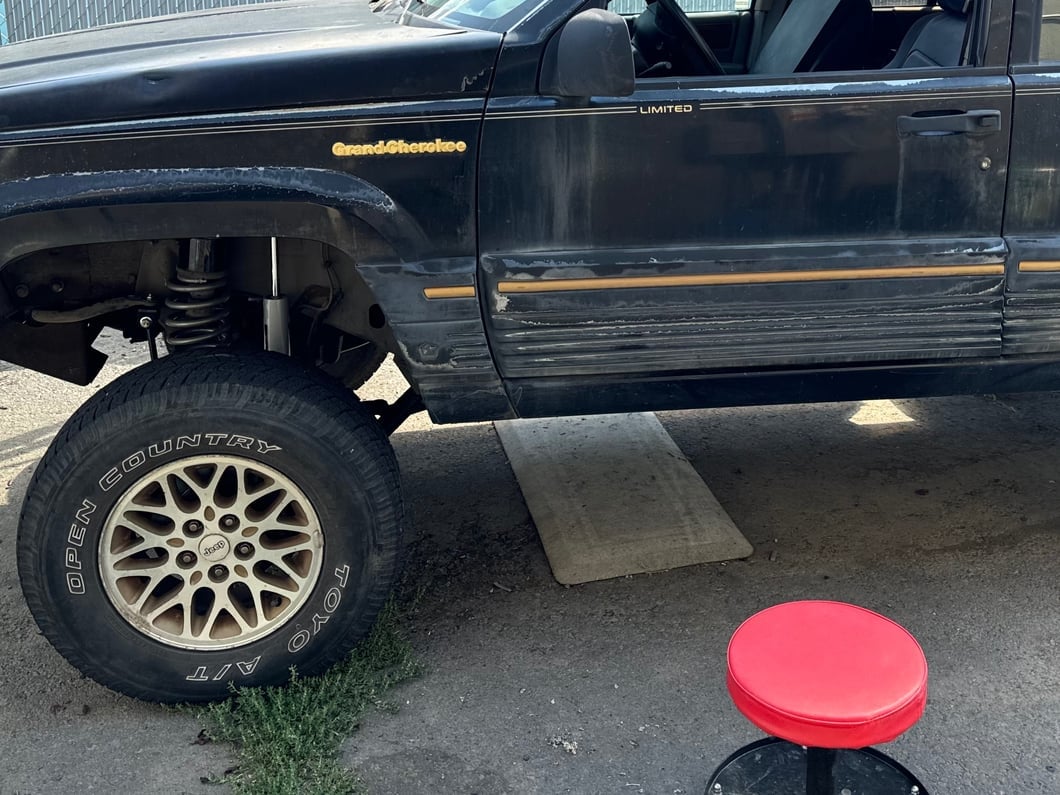
Symptoms Your Grand Cherokee ZJ Needs an Alignment
Common signs your Jeep Grand Cherokee ZJ needs a wheel alignment include the vehicle pulling to one side, uneven tire wear on the inner or outer edges, an off-center steering wheel, and loose-feeling steering — especially after installing a lift kit or hitting a pothole.
Watch for these specific symptoms:
- Vehicle pulls to one side: Consistent pull usually points to unequal caster or camber side-to-side. On a ZJ where camber is fixed, caster imbalance is the more common cause.
- Uneven tire wear: Inside-edge wear suggests excessive negative camber or toe-out. Outside-edge wear points to positive camber or toe-in beyond spec. Feathering across the tread indicates a toe problem.
- Off-center steering wheel: If the wheel sits crooked while you are driving straight, your toe settings are uneven side-to-side or your thrust angle is off.
- Loose or vague steering: Combined with wandering at highway speed, this often means your caster has dropped below spec — common after a lift without caster correction.
- Vibration at highway speeds: While vibration is more often a balance issue, it can accompany severe misalignment, especially when paired with the symptoms above.
If you are noticing any of these, have your alignment checked before the tire damage gets worse. Worn ZJ steering components like tie rod ends and ball joints can also mimic alignment symptoms, so a thorough inspection should come first.
Alignment After Lifting Your Grand Cherokee ZJ
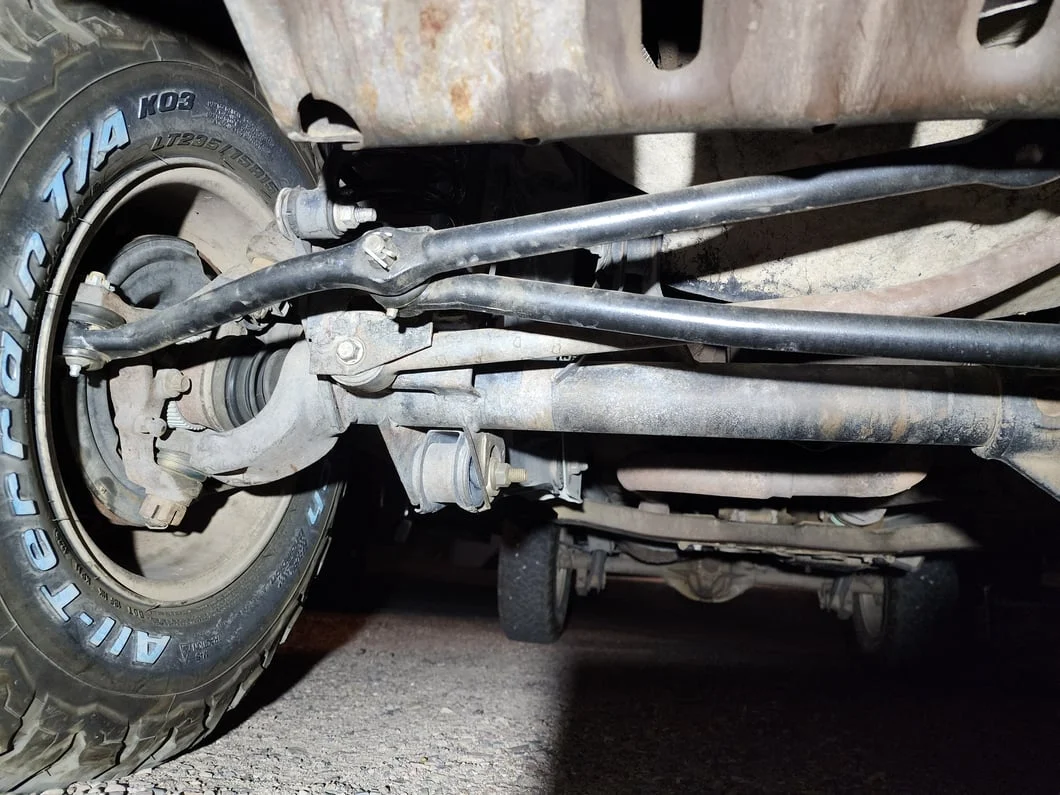
Running a lift over 3 inches on your ZJ? Installing a lift kit over 3 inches on a Jeep Grand Cherokee ZJ changes the caster angle and requires realignment. Adjustable control arms allow you to dial caster back to the factory-preferred +7.0°, restoring straight-line tracking and steering return after the modification.
Here is what you need to know about alignment on a lifted ZJ:
- The 3-inch threshold: Lifts under 3 inches generally keep caster within the acceptable 6.5°-7.5° range. Once you pass 3 inches, the suspension geometry shifts enough that your caster drops out of spec, causing steering wander and poor return-to-center.
- Adjustable control arms are the fix: Fixed-length factory control arms cannot compensate for the angle change. Adjustable control arms (ACAs) let you lengthen the arm to push the axle forward, restoring correct caster. This is not optional on a 3"+ lift — it is a safety and drivability requirement.
- Toe will need resetting: Your stock drag link and tie rod geometry changes with lift height. After installing your lift and ACAs, toe must be reset to the factory 0.12° spec. In some cases, an adjustable track bar is also needed to center the axle.
- Get a professional alignment: After any ZJ suspension modification — even a leveling kit — get a four-wheel alignment from a shop familiar with solid-axle Jeeps. Not every alignment rack handles lifted trucks well, so ask before you book.
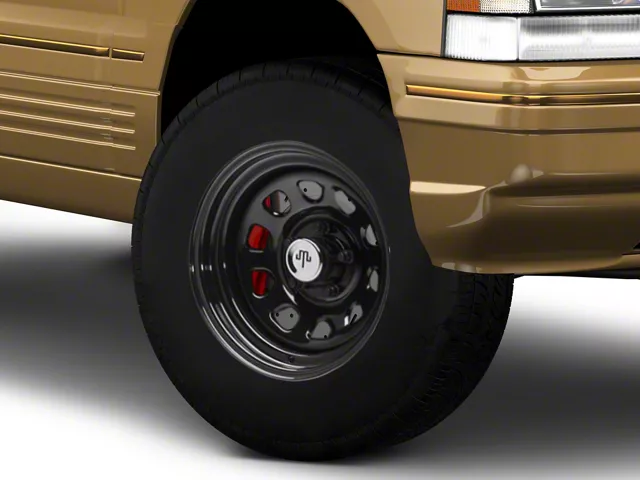
Pairing the right Grand Cherokee ZJ wheels with correct alignment ensures your tires wear evenly and your ZJ tracks true whether you are on the highway or the trail.
Whether you are maintaining a stock ZJ or dialing in a lifted build, keeping your alignment within factory spec protects your tires and keeps your Grand Cherokee handling the way it should. Not sure which adjustable control arms fit your lift height, or want a second opinion on your alignment setup? Our Sales Techs are real Jeep enthusiasts who build and drive the same rigs you do — they have the hands-on experience to point you in the right direction. Explore ZJ wheel and tire packages to get your rolling stock sorted, and browse Grand Cherokee ZJ suspension parts if your alignment issues point to worn components that need replacing.
Frequently Asked Questions About Grand Cherokee ZJ Wheel Alignment
These are the most common questions owners ask about wheel alignment on the 1993-1998 Jeep Grand Cherokee ZJ.
What Are the Wheel Alignment Specs for a Jeep Grand Cherokee ZJ?
The factory front alignment specs for a 1993-1998 Grand Cherokee ZJ are: total toe 0.12° preferred (range 0° to +0.22°), caster +7.0° preferred (range 6.5° to 7.5°), and camber -1.13° to +0.13° (non-adjustable). Rear total toe should be 0.00° to +0.5° with a 0.00° thrust angle.
What Caster Angle Should a Jeep ZJ Have?
The preferred caster angle for a stock Jeep Grand Cherokee ZJ is +7.0°, with an acceptable range of 6.5° to 7.5°. Caster controls straight-line stability and steering return. If your ZJ has a lift kit over 3 inches, adjustable control arms are needed to restore caster to factory spec.
Do You Need an Alignment After Lifting a Jeep Grand Cherokee ZJ?
Yes, you need an alignment after lifting a Jeep Grand Cherokee ZJ. Any lift over 3 inches changes the caster angle beyond the acceptable range, causing steering wander and poor handling. Adjustable control arms correct caster, and toe must be reset to the factory 0.12° specification afterward.
How Long Does an Alignment Take on a Jeep Grand Cherokee?
A standard wheel alignment on a Jeep Grand Cherokee typically takes 30 minutes to one hour at most alignment shops. If adjustable control arms need to be set for a lifted ZJ, the process can take longer as the technician dials in the correct caster angle before setting toe.
What Is the Acceptable Range for Wheel Alignment?
Acceptable alignment ranges vary by vehicle. For a Jeep Grand Cherokee ZJ, front caster should be within 6.5° to 7.5°, front total toe within 0° to +0.22°, and front camber within -1.13° to +0.13°. Values outside these ranges cause uneven tire wear, steering pull, and reduced handling.
Can You Do Your Own Alignment on a Jeep Grand Cherokee ZJ?
You can adjust front toe on a Jeep Grand Cherokee ZJ at home using basic tools and a tape measure or string method. However, caster and camber cannot be adjusted without aftermarket control arms. A professional four-wheel alignment is recommended after any suspension modification for accurate results.