Whether you just picked up a Jeep Cherokee XJ and need to figure out exactly what you have, or you are deep into a build and want to make sure every part matches your model year, this guide has you covered. We will walk through the three XJ generations, break down every trim level from Base to Limited, explain the difference between Renix and HO engines, show you how to decode your VIN, and identify every axle and transfer case option. By the time you are done reading, you will know exactly which Cherokee XJ is sitting in your driveway — and which parts it needs. If you need hands-on help along the way, ExtremeTerrain's Sales Techs are real Jeep enthusiasts who can match parts to your specific build.
What Years Were the Jeep Cherokee XJ Made?
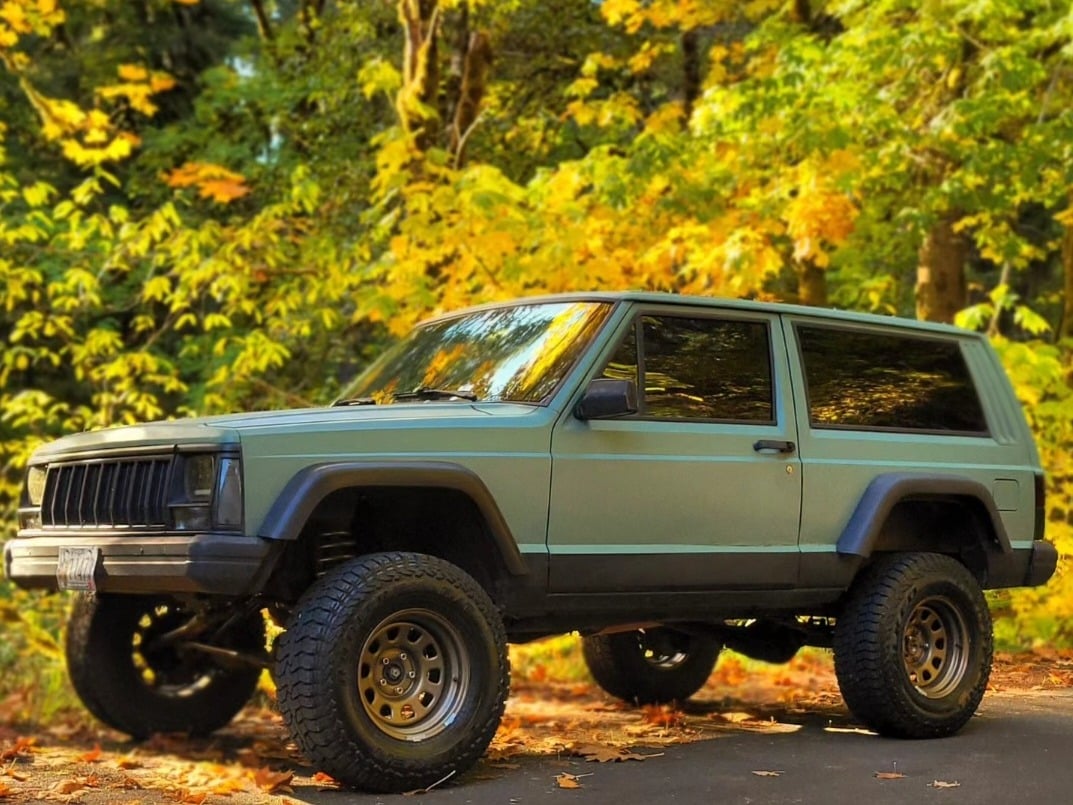
The Jeep Cherokee XJ was produced from 1984 through 2001, spanning 18 model years and three distinct visual generations. Understanding which generation your XJ belongs to is the first step toward ordering the right parts, because body panels, headlights, interior trim, and electronics all changed across the production run.
First Generation: 1984–1986 (Early AMC Era)
The earliest XJs rolled off the line under AMC ownership, featuring carbureted engines and styling that set the template for the unibody SUV segment. These trucks came standard with a five-speed manual transmission and offered either the 2.5L four-cylinder or the 2.8L GM V6. A 2.1L Renault turbodiesel joined the lineup for 1985. If you have a 1984–1986 XJ, your engine bay looks noticeably different from later models — no fuel injection, no coil pack, and a carburetor or throttle body sitting on top of a smaller powerplant.
Second Generation: 1987–1996 (The 4.0L Era)
This is where the XJ truly hit its stride. The legendary 4.0L inline-six debuted for 1987 with Renix fuel injection, producing 173 horsepower. Chrysler completed its buyout of AMC that same year, and the platform steadily improved. The HO (High Output) fuel injection upgrade arrived for 1991, bumping the 4.0L to 190 horsepower and the 2.5L to 130 horsepower. Body styling remained largely unchanged through 1996, making these XJs visually consistent — but the mechanical differences between a 1987 Renix truck and a 1996 HO truck are significant when you are shopping for sensors, wiring, and engine parts.
Third Generation: 1997–2001 (Facelifted Final Era)
Jeep gave the XJ a major facelift for 1997 with restyled front and rear fascias, a completely new dashboard, and standard dual airbags. If your XJ has the smoother, more rounded front-end look with one-piece headlights, you have a 1997-or-later model. These trucks continued with the proven 4.0L HO inline-six, but introduced OBD-II diagnostics (starting in 1996) and made several drivetrain changes — including a switch to the NV3550 manual transmission and the low-pinion Dana 30 front axle for 2000–2001 models. The last XJ rolled off the assembly line on June 22, 2001.
Jeep Cherokee XJ Trim Levels by Year
The Jeep Cherokee XJ was offered in more than ten different trim levels across its production run, though no single year had all of them available at once. Knowing your trim helps you identify factory equipment, interior materials, and wheel sizes — all of which matter when you are tracking down replacement parts or planning upgrades.
| Trim Level |
Years Available |
Key Features |
| Base / SE |
1984–2001 (SE dropped mid-2001) |
Vinyl seats, manual windows, steel wheels, minimal equipment |
| Pioneer |
1984–1992 |
Upgraded cloth seats, carpeting, AM/FM radio |
| Chief |
1984–1988 |
Two-tone paint, chrome trim, upgraded interior |
| Laredo |
1985–1992 |
Higher-trim interior, alloy wheels, woodgrain accents in some years |
| Sport |
1989–2001 |
Body-color trim, fog lights, upgraded suspension, most popular trail trim |
| Wagoneer / Wagoneer Limited |
1984–1990 |
Top-tier luxury: leather, woodgrain, power everything |
| Briarwood |
1991–1992 |
Replaced Wagoneer as the luxury trim, leather interior |
| Country |
1993–1998 (renamed Limited for 1999) |
Replaced higher trims after Grand Cherokee launch, roof rack, premium interior |
| Classic |
1996–2000 |
Mid-level trim with body-color moldings, OBD-II equipped |
| Limited |
1984–1990, 1999–2001 |
Leather standard in 1999+, Sentry Key immobilizer in 1999+, top trim in final years |
The biggest reshuffling happened in 1993 when the Grand Cherokee launched. Jeep repositioned the XJ as the more affordable, trail-capable option and dropped the luxury-oriented Wagoneer and Briarwood trims. The Country trim stepped in as the top-level Cherokee, and the Sport became the go-to choice for off-road enthusiasts. By the final years, your choices narrowed to SE, Sport, Classic, and Limited.
Jeep Cherokee XJ Engine Identification
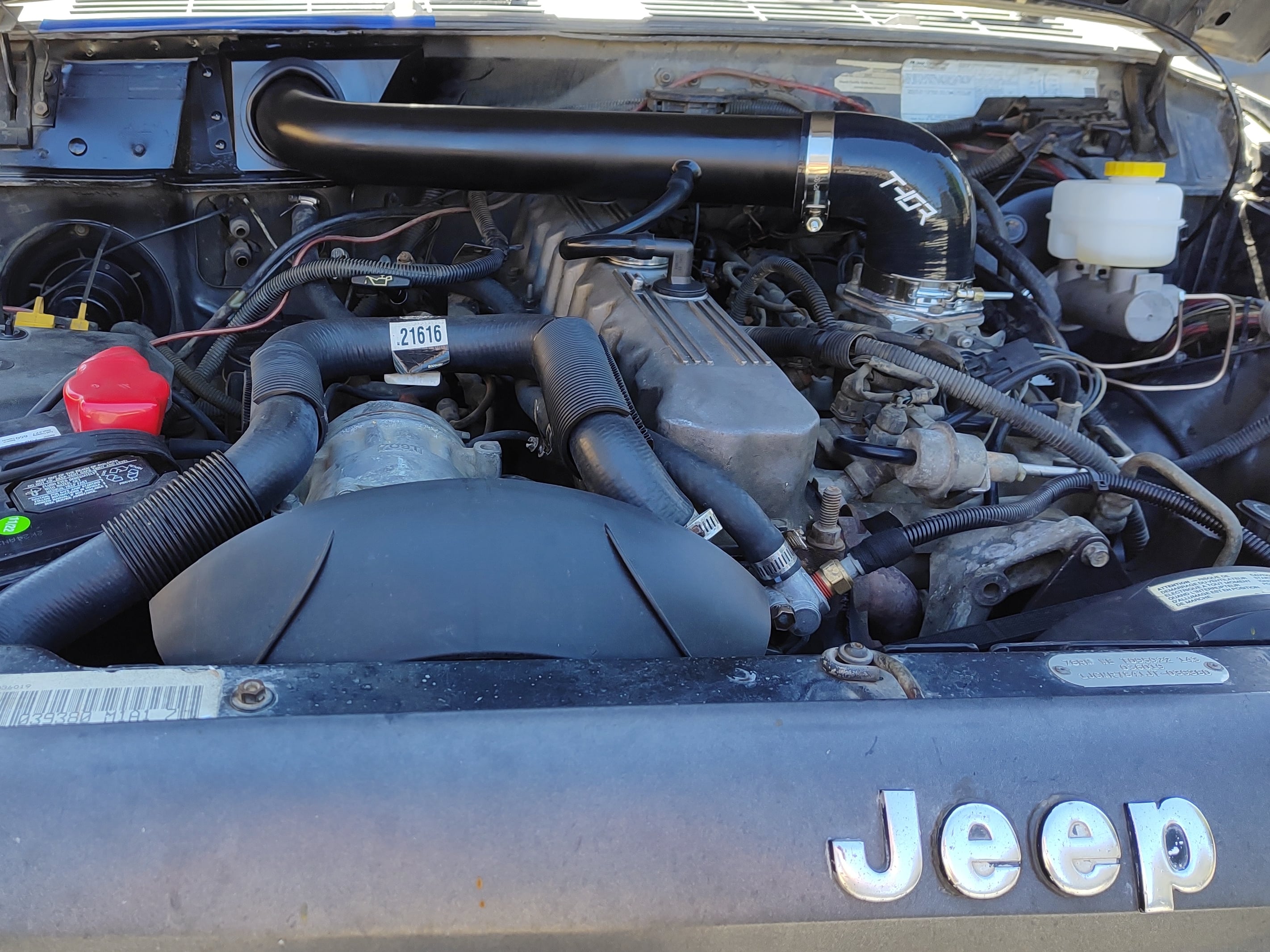
The Jeep Cherokee XJ was equipped with four different engines over its production run: the 2.5L inline-four, the 4.0L inline-six, the 2.8L GM V6, and the 2.1L Renault turbodiesel. Identifying your engine is critical because it determines which transmission, sensors, fuel system components, and XJ engine performance parts will fit your Cherokee.
2.5L AMC/Chrysler Inline-Four (1984–2000)
The 2.5L four-cylinder was the base engine for most of the XJ's life. It started as a carbureted unit producing around 105 horsepower. For 1986, it gained throttle body injection (TBI), bumping output to 117 horsepower. The biggest upgrade came in 1991 when it received multi-point fuel injection (MPI) under the HO program, pushing output to 130 horsepower. The 2.5L was dropped after the 2000 model year — if you have a 2001 XJ, it came with the 4.0L.
The 2.5L is a capable engine for a lighter build, but most XJ owners looking for trail performance opt for the 4.0L. If your four-cylinder is paired with a manual transmission, you likely have an Aisin AX4 or AX5 gearbox. Not sure which engine you are working with? Our Sales Techs can help you confirm your engine and match the right performance parts to your XJ.
4.0L AMC/Chrysler Inline-Six (1987–2001)
The 4.0L inline-six is the engine that made the XJ legendary. It debuted in 1987 with Renix fuel injection at 173 horsepower, climbed to 177 horsepower for 1988, and then jumped to 190 horsepower with the HO fuel injection upgrade in 1991. This engine is known for its torque, its reliability, and its straightforward design — there is a reason XJ owners routinely push these past 300,000 miles.
One important note: for 2000 and 2001, the 4.0L received a revised cylinder head casting (often called the "0331" head) that is prone to cracking between the third and fourth cylinders. If you are buying a late-model XJ, check for signs of coolant loss or head gasket failure. This does not affect the block or bottom end — the engine itself is still the same proven design.
2.8L GM V6 (1984–1986)
The 2.8L V6 was sourced from General Motors and only appeared in the first three years of XJ production. It produced around 115 horsepower from a carbureted setup. This engine is relatively uncommon in the XJ world because it was overshadowed by the 4.0L the moment it arrived. If you have a 2.8L XJ, parts sourcing leans heavily on the GM side — this is essentially the same engine found in S-10 Blazers and Camaros of the era.
2.1L Renault Turbodiesel (1985–1987)
The 2.1L turbodiesel was a product of the AMC-Renault partnership and appeared primarily in the 1985–1987 model years in the US market. It remained available in export markets longer. These are genuinely rare trucks in North America. The turbodiesel offered excellent fuel economy but modest power, and finding replacement parts can be a challenge. If you have one, specialist Renault diesel resources are your best bet for maintenance items.
Renix vs. HO: What Is the Difference?
![]() The difference between Renix and HO on a Jeep Cherokee XJ comes down to the fuel injection and engine management system. Renix-equipped XJs (1987–1990) use a fuel injection system co-developed by Renault and Bendix, while HO (High Output) XJs (1991–2001) use Chrysler's own multi-point fuel injection. The two systems are not interchangeable, and this distinction affects nearly every sensor, injector, and wiring harness on the engine.
The difference between Renix and HO on a Jeep Cherokee XJ comes down to the fuel injection and engine management system. Renix-equipped XJs (1987–1990) use a fuel injection system co-developed by Renault and Bendix, while HO (High Output) XJs (1991–2001) use Chrysler's own multi-point fuel injection. The two systems are not interchangeable, and this distinction affects nearly every sensor, injector, and wiring harness on the engine.
Renix (1987–1990)
Renix XJs use an external ignition coil mounted on the firewall or fender, a unique set of engine sensors (including a distinct coolant temperature sensor and throttle position sensor), and an ECU that does not use OBD-II diagnostics. The 4.0L produced 173 horsepower in 1987 (bumped to 177 for 1988), and the 2.5L made 117 horsepower with TBI. Renix-era XJs are known for being slightly more finicky to diagnose because the system predates modern scan tools.
HO / High Output (1991–2001)
The HO upgrade brought Chrysler's multi-point fuel injection, a distributorless ignition system with a coil rail (also called a coil pack), and a revised cylinder head that pushed the 4.0L to 190 horsepower and the 2.5L to 130 horsepower. HO XJs from 1991–1995 use OBD-I diagnostics, while 1996 and later models use the standardized OBD-II port. The HO system is generally easier to diagnose with modern scan tools and has a wider aftermarket support base.
Why It Matters When You Are Buying Parts
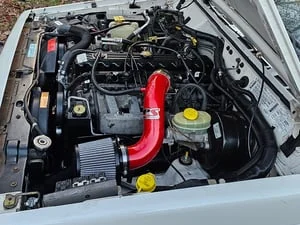
If you order an oxygen sensor, a set of fuel injectors, or a wiring harness for your XJ, the first question is always: Renix or HO? The connectors, resistance values, and pin counts are different. The same goes for ignition components — a Renix coil setup will not swap onto an HO engine without modification. The quickest way to tell which system you have: look at the ignition. If you see an external coil on the fender or firewall with a distributor, you have Renix. If you see a coil pack bolted directly to the engine with no distributor, you have HO.
Jeep Cherokee XJ Transmission Identification
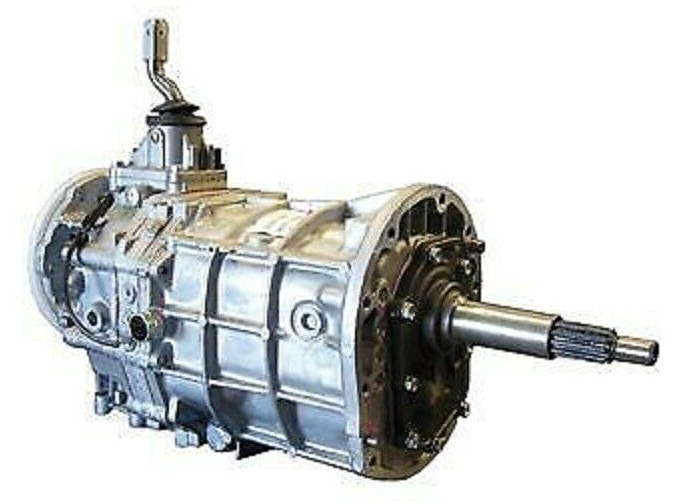
![]() The Jeep Cherokee XJ was offered with both manual and automatic transmissions across its production run, and the specific gearbox in your truck depends on the model year and engine. Identifying your XJ transmission is essential before ordering internal parts, filters, or fluid — and it matters if you are planning a swap.
The Jeep Cherokee XJ was offered with both manual and automatic transmissions across its production run, and the specific gearbox in your truck depends on the model year and engine. Identifying your XJ transmission is essential before ordering internal parts, filters, or fluid — and it matters if you are planning a swap.
Manual Transmissions
There are several manual transmissions used in the Cherokee XJs. Here are the possibilities:
- New Venture Gear NV3550 — Used if you have a 4.0L I6 engine, but only after the year 2000. This is a five-speed unit that replaced the AX15 for the final two model years. It is a heavier-duty gearbox with a smoother shift feel.
- Aisin AX4 or AX5 — The AX4 is a four-speed, sometimes used if you had a 2.5L I4 engine. The AX5 was more popular and was used with several engines, including the 2.5L I4, 2.1L turbodiesel, and the 2.8L V6. The AX5 is a five-speed and is the most common manual in four-cylinder XJs.
- Aisin AX15 — Used only after 1988. This transmission was paired with the 4.0L I6 engine and is widely regarded as one of the best manual transmissions ever put in a Jeep. It handles the torque of the 4.0L well and is a popular swap candidate for earlier XJs.
- Peugeot BA 10/5 — Used by AMC between 1987 and around 1989 in various Jeeps. It was commonly paired with the AMC 4.0L I6 during the transition from AMC to Chrysler ownership. This gearbox has a reputation for being the weakest manual option in the XJ — if yours is still intact, treat it gently or plan for an AX15 swap.
Automatic Transmissions
There were three automatic transmissions used in the Jeep Cherokee XJ. They include two versions of the same basic Chrysler three-speed and one Aisin four-speed:
- Chrysler 904 TorqueFlite — A three-speed automatic that was a staple across Chrysler vehicles for decades. AMC had been using Chrysler TorqueFlite transmissions in their vehicles for years, so pairing a 904 with the XJ was a natural choice. You will find this in early XJs with the 2.5L four-cylinder.
- 30RH — Essentially a later, updated version of the Chrysler 904. It is a three-speed automatic with minor internal improvements. If your early-to-mid XJ has an automatic behind the 2.5L, this is likely what you have.
- Aisin AW4 — A four-speed automatic that arrived with the 4.0L for 1987 and stayed through 2001. The AW stands for Aisin-Warner, because at one time, they built transmissions as a joint venture with Borg-Warner (pre-1987). This transmission is very similar to the Toyota A340 series and is known for its durability. If your XJ has the 4.0L and an automatic, you have an AW4.
Keep in mind that even though some of these transmissions were used in other vehicles, that does not mean those units will bolt up to your Jeep without modifications. Bellhousing patterns, output shaft spline counts, and electronic connections vary. Your VIN can also help confirm which transmission your XJ left the factory with.
How to Decode Your Jeep Cherokee XJ VIN
Your Jeep Cherokee XJ VIN is a 17-character code located on the dashboard at the base of the windshield on the driver's side. It is the single most reliable way to confirm your model year, engine, trim level, and assembly plant without crawling under the truck or pulling valve covers.
| VIN Position |
What It Tells You |
XJ-Specific Examples |
| 1 |
Country of origin |
1 = United States |
| 2 |
Make |
J = Jeep |
| 3 |
Vehicle type |
4 = MPV (multi-purpose vehicle) |
| 4 |
Engine code |
See engine code table below |
| 5–7 |
Body style, trim, and series |
Encodes two-door vs. four-door, 2WD vs. 4WD, and trim level |
| 8 |
Restraint system |
Identifies airbag configuration (changes in 1997+) |
| 9 |
Check digit |
Calculated verification digit — not model-specific |
| 10 |
Model year |
E = 1984, F = 1985 … V = 1997, W = 1998, X = 1999, Y = 2000, 1 = 2001 |
| 11 |
Assembly plant |
C = Toledo North, N = Bramampton (export) |
| 12–17 |
Production sequence number |
Unique serial for your specific truck |
XJ Engine Codes (VIN Position 4)
| Code |
Engine |
Years |
| B |
2.1L Renault Turbodiesel |
1985–1987 |
| C |
2.5L I4 (Carbureted) |
1984–1985 |
| E |
2.5L I4 (TBI) |
1986–1990 |
| H |
2.5L I4 (MPI/HO) |
1991–2000 |
| N |
2.8L GM V6 |
1984–1986 |
| M |
4.0L I6 (Renix) |
1987–1990 |
| S |
4.0L I6 (HO) |
1991–2001 |
If you are trying to verify your engine, trim, or model year before placing a parts order, the VIN is your fastest path. Write down the full 17 digits, match position 4 to the engine code table above, and check position 10 for your model year. That combination tells you whether you are dealing with Renix or HO fuel injection, which transmission family to expect, and which axle configuration your XJ likely came with from the factory.
Jeep Cherokee XJ Axle and Drivetrain Identification
The Jeep Cherokee XJ used several different front and rear axle configurations over its production run, and the specific axles under your rig determine which gears, lockers, U-joints, and XJ wheels will fit. Your XJ wheel bolt pattern is 5x4.5 inches (5x114.3mm) across the board, but the axle internals vary significantly.
Front Axles
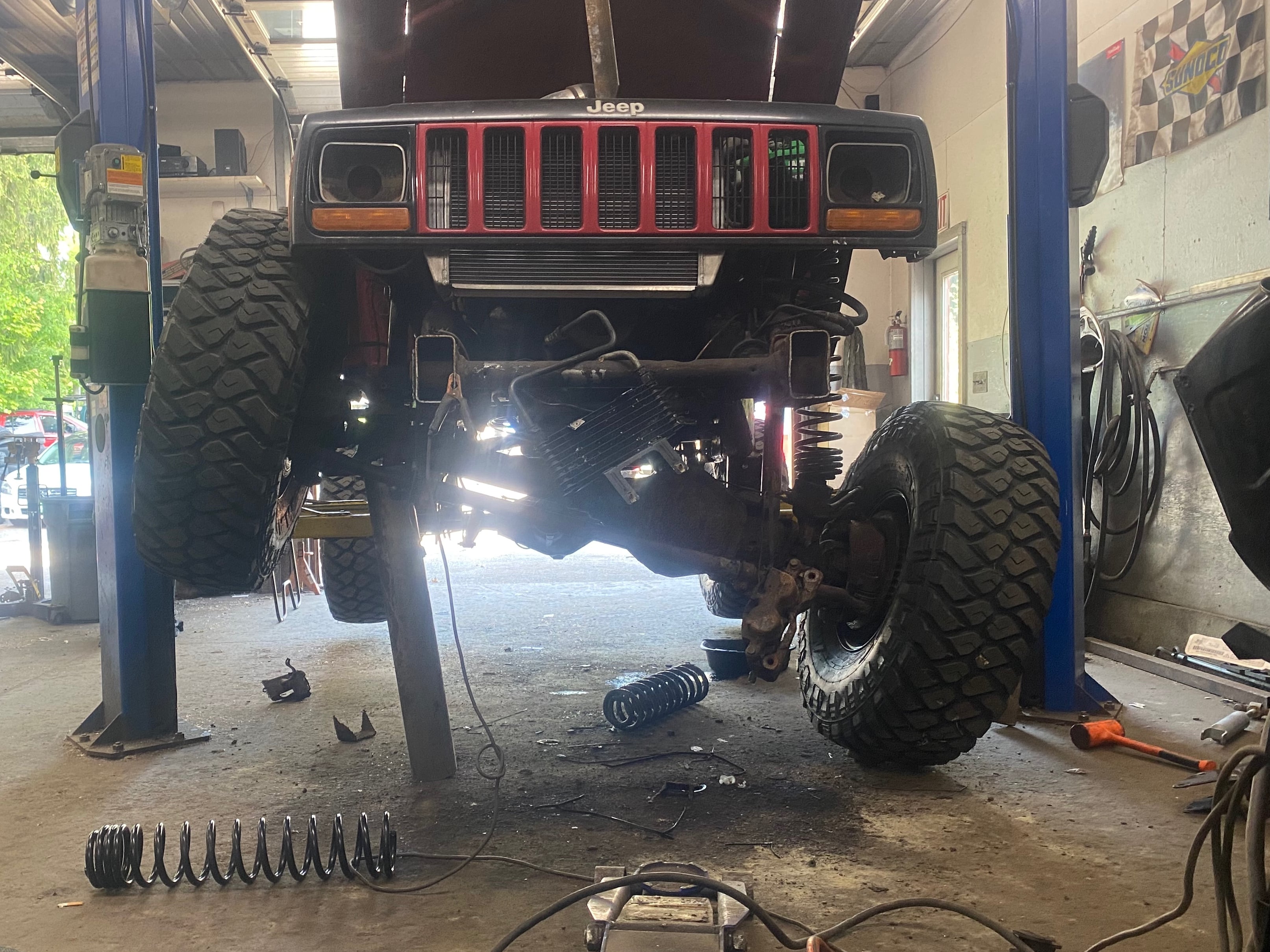
Dana 30 — The Dana 30 was the standard front axle on all 4WD Cherokee XJs. The critical detail here is the pinion orientation:
- High-pinion Dana 30 (1984–1999): The pinion gear sits above the ring gear centerline. This design provides better ground clearance and a more favorable driveshaft angle for lifted trucks. High-pinion Dana 30s are preferred by XJ builders.
- Low-pinion Dana 30 (2000–2001): The pinion drops below the ring gear centerline, similar to the Dana 30 found in TJ Wranglers. This gives slightly less ground clearance and a different gear set. If you have a 2000 or 2001 XJ, your front axle gears are not interchangeable with earlier years.
Rear Axles
The XJ used three different rear axle assemblies depending on the model year, engine, and options package:
- Dana 35 — The most common rear axle in the XJ. It is a light-duty unit that works fine for stock or mildly modified trucks, but it is the weak link if you are running larger tires or hitting aggressive trails. The Dana 35 has a distinctive cover shape and uses 27-spline axle shafts.
- Chrysler 8.25-inch — Available starting in 1991 on certain configurations (typically 4.0L models without ABS). This is a stronger axle with 29-spline shafts and better gear options. If you find a Chrysler 8.25 under your XJ, consider yourself fortunate — it handles significantly more abuse than the Dana 35.
- Dana 44 — The rarest and most desirable XJ rear axle. It was offered with the tow package on select models and is uncommon enough that finding one in a junkyard is a genuine win. The Dana 44 provides the strongest factory rear end available in an XJ.
Transfer Cases
4WD Cherokee XJs came with one of two transfer cases:
- NP231 Command-Trac — A part-time 4WD system with 2WD High, 4WD High, and 4WD Low positions. This is the more common setup. You run in 2WD on pavement and engage 4WD only on loose surfaces. The NP231 uses a 2.72:1 low range ratio.
- NP242 Selec-Trac — A full-time capable system that adds a Full-Time 4WD position with a center differential. This lets you run in 4WD on dry pavement without binding. The NP242 was typically found on higher trim levels like Country, Limited, and some Laredo models.
Both transfer cases bolt to the same transmission outputs, but they are not identical internally. If you are swapping or rebuilding, make sure you match the correct unit to your intended use — the NP242 is more versatile for daily driving, while the NP231 is simpler and lighter.
Year-by-Year Changes at a Glance
This timeline highlights the most impactful change for each model year. Use it to quickly zero in on what makes your XJ different from the year before or after — especially when those differences affect which parts you need.
| Model Year |
Key Change |
| 1984 |
XJ launches with Base, Pioneer, Chief, and Wagoneer trims. Engines: 2.5L I4 (carbureted) and 2.8L GM V6. Five-speed manual standard. |
| 1985 |
2.1L Renault turbodiesel added. Rear-wheel-drive-only models become available. Laredo trim debuts. |
| 1986 |
2.5L four-cylinder gains throttle body injection (TBI), jumping from 105 hp to 117 hp. Last year for the 2.8L GM V6. |
| 1987 |
4.0L inline-six debuts with Renix fuel injection (173 hp). NP231 and NP242 transfer cases introduced. Chrysler completes AMC buyout. |
| 1988 |
4.0L bumped to 177 hp. Turbodiesel dropped from US market. AX15 manual transmission now available with the 4.0L. |
| 1989 |
Sport trim debuts — becomes the most popular off-road-oriented XJ. Anti-lock brakes (ABS) available as an option. Chief trim dropped. |
| 1990 |
Last year for Renix fuel injection and Wagoneer trim. Laredo continues as mid-level option. |
| 1991 |
HO (High Output) fuel injection arrives — 4.0L jumps to 190 hp, 2.5L to 130 hp. Briarwood replaces Wagoneer. Chrysler 8.25-inch rear axle option added. |
| 1992 |
Last year for Pioneer, Laredo, and Briarwood trims. Lineup consolidates ahead of Grand Cherokee launch. |
| 1993 |
Grand Cherokee launches — XJ repositioned as the value/trail model. Country trim replaces higher trims. Simplified lineup. |
| 1994 |
Minor updates. Country and Sport remain the primary trims alongside SE. |
| 1995 |
Continued refinement. No major mechanical changes. |
| 1996 |
Classic trim added. OBD-II diagnostic port now standard (significant for emissions and troubleshooting). |
| 1997 |
Major facelift — new front fascia, new rear, completely redesigned dashboard, standard dual airbags. Trims: SE, Sport, Country. This is the most significant visual change in XJ history. |
| 1998 |
Refinements to the facelifted body. Sport and Country continue as volume trims. |
| 1999 |
Country trim renamed Limited. Leather seating standard on Limited. Sentry Key immobilizer system introduced. |
| 2000 |
Dana 30 front axle switches from high-pinion to low-pinion. 16-inch wheels on Classic and Limited. NV3550 manual replaces AX15. 4.0L receives revised (problematic) 0331 head casting. |
| 2001 |
Final year. 2.5L four-cylinder dropped entirely. SE trim dropped mid-year. Last Jeep Cherokee XJ built on June 22, 2001. |
When you are shopping for parts, pay close attention to the 1987, 1991, 1997, and 2000 model year boundaries. Those are the years where engines, fuel injection systems, body panels, and axle components changed in ways that directly affect fitment. If you are looking for XJ lift kits, suspension components are generally more consistent across years — but always confirm compatibility with your specific model year. ExtremeTerrain's Sales Techs can help you match parts to your exact build if you are not sure which side of a production change your XJ falls on.
Key Takeaways
![]() The Jeep Cherokee XJ spans three generations (1984–1986, 1987–1996, and 1997–2001), each with distinct body styling, engines, and electronics that directly affect parts fitment.
The Jeep Cherokee XJ spans three generations (1984–1986, 1987–1996, and 1997–2001), each with distinct body styling, engines, and electronics that directly affect parts fitment.- The 4.0L inline-six is the most desirable XJ engine — identify whether yours runs Renix (1987–1990) or HO (1991–2001) fuel injection before ordering sensors, injectors, or wiring.
- XJ trim levels shifted frequently across 18 model years, with Sport, Country, Classic, and Limited being the most common in later production.
- Your VIN is the fastest identification tool — position 4 gives you the engine code, position 10 gives you the model year, and positions 5–7 encode body style and trim.
- Front Dana 30 axles switched from high-pinion (preferred for off-road) to low-pinion in 2000, and rear axle options range from the basic Dana 35 to the rare Dana 44.
Whether you are identifying your XJ to order the right parts, planning a full trail build, or just figuring out exactly what is sitting in your driveway, the details above should give you a solid foundation. When you are ready to start upgrading, explore ExtremeTerrain's full lineup of Cherokee XJ parts — from XJ lift kits and XJ front bumpers to XJ exterior accessories and wheels — all backed by enthusiasts who know these trucks inside and out.
Frequently Asked Questions About the Jeep Cherokee XJ
These are the most common questions XJ owners and buyers ask when identifying their Cherokee — answered with the specifics you need to make confident parts and build decisions.
What Is the Most Sought After Jeep XJ?
The 1997–2001 Sport trim is the most sought after Jeep Cherokee XJ for off-road builds because it combines the facelifted body, the proven 190 hp 4.0L HO inline-six, and a no-frills feature set that keeps the weight down. For collectors, low-mileage 1984–1986 two-door models and any XJ with a factory Dana 44 rear axle command a premium.
How Do I Tell Which Jeep Cherokee I Have?
The fastest way to identify your Jeep Cherokee XJ is to check your VIN on the driver's side dashboard at the base of the windshield. Position 4 tells you the engine code, position 10 gives you the model year, and positions 5–7 encode the body style and trim. You can also identify the generation visually: 1984–1996 XJs have square headlights, while 1997–2001 models have the facelifted front end with smoother lines.
Which Year Is the Best for a Jeep Cherokee XJ?
The 1996–1999 model years are widely considered the sweet spot because you get the 190 hp HO 4.0L engine, the high-pinion Dana 30 front axle preferred for off-road builds, and either the pre-facelift or post-facelift body depending on your preference. Avoid the 2000–2001 models if the 0331 head casting issue concerns you.
What Year Does the XJ Have the High-Pinion Dana 30?
All 4WD Jeep Cherokee XJs from 1984 through 1999 came with a high-pinion Dana 30 front axle. The switch to a low-pinion Dana 30 happened for the 2000 model year and carried through 2001. The high-pinion design offers better ground clearance and is preferred by most XJ builders for lifted trail rigs.
What Engines Came in the Jeep Cherokee XJ?
The Jeep Cherokee XJ was offered with four engines: the 2.5L AMC/Chrysler inline-four (1984–2000), the 4.0L AMC/Chrysler inline-six (1987–2001), the 2.8L GM V6 (1984–1986), and the 2.1L Renault turbodiesel (1985–1987). The 4.0L inline-six is by far the most common and most desirable for daily driving and trail use.
What Is the Difference Between Renix and HO on a Jeep XJ?
Renix refers to the Renault/Bendix fuel injection system used on 1987–1990 XJ engines, producing 173–177 hp from the 4.0L. HO (High Output) refers to Chrysler's multi-point fuel injection from 1991–2001, producing 190 hp. The two systems use different sensors, ECUs, and wiring harnesses. Visually, Renix has an external coil with a distributor; HO uses a coil pack with no distributor.
What Are the Jeep Cherokee XJ Trim Levels?
Across all model years, the XJ was available in these trims: Base/SE, Pioneer, Chief, Sport, Laredo, Country, Classic, Limited, Briarwood, and Wagoneer/Wagoneer Limited. Not all trims were available every year. The Sport (1989–2001) and Country (1993–1998) were the most common trims during the XJ's later production years.
How Do I Decode My Jeep XJ VIN?
Your XJ VIN is 17 characters long, located on the driver's side dashboard. Position 1 is country of origin (1 = USA), position 2 is make (J = Jeep), position 4 is the engine code (S = 4.0L HO, M = 4.0L Renix, H = 2.5L MPI), position 10 is the model year, and position 11 is the assembly plant. Use the full VIN to verify engine, trim, and year before ordering parts.